


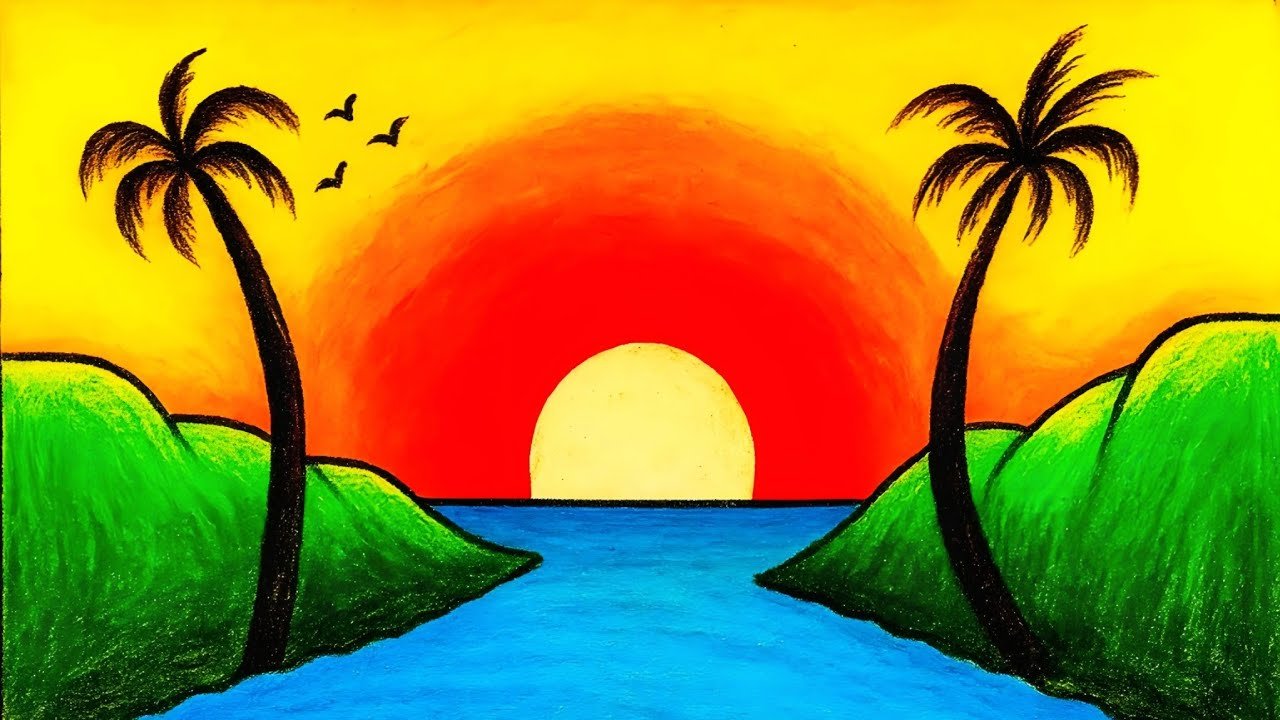
A sunset drawing is a beautiful and beginner-friendly art project that allows you to experiment with colors, landscapes, light, and shading. You can create a simple sunset scene with just a pencil and colored pencils, or develop a more detailed artwork using paints, markers, or digital drawing tools.
Sunsets are especially enjoyable to draw because there is no single correct way to represent them. You can create a peaceful beach scene, a mountain landscape, a forest silhouette, or a simple sky filled with warm colors.
This easy sunset drawing guide for beginners explains how to build your artwork step by step. From sketching the horizon to blending the sky and adding silhouettes, each stage is designed to make the process simple and enjoyable.
Why Sunset Drawings Are Great for Beginners
Sunset scenes are useful for learning fundamental art techniques because they combine simple shapes with gradual color transitions. Beginners can practice blending, perspective, contrast, and light without needing to draw complicated objects.
A sunset also gives you plenty of creative freedom. Even if your drawing does not perfectly match a photograph, a thoughtful combination of colors and shapes can still create a convincing and attractive landscape.
With regular practice, sunset drawings can help you become more comfortable with pencils, brushes, colors, and shading techniques.
Materials You Need
You can create a simple sunset drawing using basic art supplies. A pencil and eraser are useful for creating the initial sketch, while drawing paper provides a clean surface for your artwork.
For a colorful sunset, colored pencils, crayons, markers, oil pastels, watercolor paints, or acrylic paints can all work well. If you prefer digital art, a tablet and drawing application can provide additional control over layers, blending, and lighting effects.
You do not need expensive materials to begin. The most important tools are patience, practice, and a willingness to experiment.
Step 1: Draw the Horizon Line
Begin by lightly drawing a horizontal line across your paper. This is the horizon and separates the sky from the land, water, or other landscape elements.
Try placing the horizon slightly below the center of the page if you want the sky to be the main focus of your artwork.
Keep the line light because you may need to adjust it later as you add other elements to the scene.
Step 2: Sketch the Setting Sun
Draw a simple circle near the horizon to represent the sun. Depending on the composition, you can position it in the center or slightly toward one side.
A partially visible sun can create a realistic sunset effect because it appears to be disappearing behind the horizon.
Don’t worry about making the circle perfectly detailed. The surrounding colors and silhouettes will help establish the atmosphere.
Step 3: Create the Main Sky Layers
Now divide the sky into several loose color zones. A typical sunset can transition from yellow or orange near the sun to pink, red, purple, and blue farther toward the upper part of the sky.
These transitions do not have to be perfectly straight. Soft, uneven blending often creates a more natural appearance.
If you are using colored pencils or pastels, apply lighter colors first and gradually build stronger shades. With paint, blend neighboring colors while they are still workable.
Step 4: Add Warm Colors Around the Sun
The area surrounding the sun should usually be brighter than the rest of the sky.
Use yellow, golden orange, or light peach around the sun and gradually transition into deeper orange and red.
Keeping the area immediately around the sun lighter creates the impression that it is producing intense light.
Step 5: Blend the Sunset Colors
Blending is one of the most important parts of a sunset drawing.
Instead of creating sharp boundaries between every color, gently overlap neighboring shades. This produces a smooth transition and makes the sky appear deeper.
When using colored pencils, apply light pressure and build several layers. For paints, use a clean or slightly damp brush where appropriate to soften transitions.
Avoid over-blending everything into one flat color. Some variation in the sky makes the artwork more interesting.
Step 6: Add Clouds
Clouds can make your sunset drawing much more dramatic.
Use loose horizontal or slightly curved shapes rather than perfectly rounded outlines. Clouds near the sun can be highlighted with yellow, orange, pink, or red, while the underside can contain darker purple or gray tones.
The contrast between bright cloud edges and darker areas creates a stronger sense of depth.
You don’t need to fill the entire sky with clouds. A few carefully placed shapes can be enough to make the scene visually appealing.
Step 7: Draw the Landscape Silhouette
Once the sky is complete, add a dark foreground silhouette along the horizon.
You could draw mountains, trees, buildings, rocks, grass, or distant hills. Keep these elements darker than the sky so they appear in front of the setting sun.
Mountain ranges can be created with simple triangular or irregular shapes, while trees can be drawn using thin trunks and uneven clusters of branches.
The silhouette does not need many details because the lack of visible detail is what creates the backlit effect.
Step 8: Add Water or Ground Details
If you are drawing a beach or lake sunset, extend the scene below the horizon.
Use horizontal strokes to represent water and reflect some of the sunset colors across its surface. Keep the reflection slightly broken rather than creating one perfectly smooth mirror image.
For a land-based sunset, add small grasses, rocks, flowers, or other foreground details to give the scene more depth.
Step 9: Create the Sun’s Reflection
A reflection can make a sunset scene feel much more realistic.
If the sun is above water, draw a narrow bright area directly beneath it and gradually widen or break the reflection as it moves toward the foreground.
Use yellow, orange, and light red shades while allowing some darker water to remain visible between the strokes.
This creates the impression of sunlight moving across the surface.
Step 10: Add Final Details and Shading
Look over your entire drawing and identify areas that need stronger contrast.
Darken the foreground where necessary and add a few highlights to the clouds, water, or landscape. You can also strengthen the colors near the horizon to make the sun appear brighter.
Use an eraser carefully if you want to create small highlights in a pencil-based drawing. In a painted artwork, lighter paint can be used to add final touches.
Easy Sunset Drawing Ideas
Once you understand the basic process, you can experiment with different scenes.
A sunset over the ocean is one of the easiest choices because the horizon and water can be created with simple horizontal lines. Adding a few birds or distant clouds can complete the composition.
A sunset behind mountains provides a dramatic landscape with strong silhouettes. Use layered mountain shapes to create the illusion of distance.
A sunset in a forest can be created by placing dark tree silhouettes in front of a colorful sky. Tall trees around the edges can naturally frame the setting sun.
You can also draw a sunset beach scene with palm trees, sand, waves, and a glowing horizon. This is a great option when you want a peaceful and tropical atmosphere.
How to Draw a Sunset With Colored Pencils
Colored pencils are particularly beginner-friendly because they allow you to build color gradually.
Start with light yellow around the sun, then add orange, pink, red, purple, and blue as you move upward. Apply each color lightly at first and overlap the edges to create smoother transitions.
Layering is more effective than pressing extremely hard with the pencil. Once the colors are established, increase the pressure in selected areas to strengthen shadows and contrast.
How to Draw a Sunset With Watercolors
Watercolor can create beautiful soft sunset skies because the pigments naturally blend together.
Begin with a light wash and gradually introduce warmer and darker colors. Work carefully around the sun so that its brightest area remains visible.
Allowing some areas to remain lighter can create natural variations in the sky. Avoid repeatedly brushing the same area because excessive mixing can make the colors look muddy.
How to Draw a Sunset With Acrylic Paint
Acrylic paint is useful when you want stronger, more opaque colors.
Paint the background first, beginning with lighter shades near the horizon and adding deeper colors toward the top. Blend neighboring colors while working quickly enough to prevent harsh transitions.
Once the sky has dried, add the dark foreground silhouettes. This separation makes the landscape stand out clearly against the colorful background.
Common Sunset Drawing Mistakes
One common mistake is using too many colors without blending them properly. A sunset can contain many shades, but they should generally transition naturally rather than appearing as separate stripes.
Another mistake is making the foreground too bright. Objects between the viewer and the setting sun are often darker because they are backlit.
Beginners may also make the sun excessively large. Unless the scene is intentionally stylized, keeping the sun relatively small can make the landscape feel more natural.
Finally, avoid adding too many details too early. Build the major shapes and color relationships first, then work on smaller elements near the end.
Tips for Creating a Realistic Sunset Drawing
Pay attention to the direction of light before adding shadows and highlights. The setting sun should influence the appearance of nearby clouds, water, mountains, and other objects.
Use contrast carefully. A bright yellow-orange area around the sun becomes more powerful when surrounded by darker reds, purples, or blues.
Vary your strokes rather than making every mark identical. Natural landscapes contain irregular shapes, subtle color changes, and uneven textures that make the final drawing more convincing.
Most importantly, practice different sunset scenes. Every attempt gives you another opportunity to understand color mixing, composition, and atmospheric depth.
Creative Sunset Drawing Ideas for 2026
Modern sunset artwork can go beyond traditional landscapes. Try creating minimalist sunset line art, colorful abstract skies, digital sunset wallpapers, dreamy fantasy landscapes, or stylized sunset illustrations.
You can also combine a sunset with meaningful elements such as birds, a person standing on a beach, a bicycle, a boat, or a silhouette of trees.
For digital artists, experimenting with gradients, glow effects, textured brushes, and atmospheric layers can produce highly polished results.
Frequently Asked Questions
Is sunset drawing easy for beginners?
Yes. A basic sunset scene can be created with simple shapes, a horizon line, a circle for the sun, blended colors, and a dark foreground silhouette.
What colors are best for a sunset drawing?
Yellow, orange, red, pink, purple, and blue are popular choices. You can combine different shades depending on the mood and style you want to create.
How can I make my sunset drawing look realistic?
Focus on smooth color transitions, strong contrast around the sun, natural cloud shapes, and darker foreground silhouettes. Observing real sunsets can also help you understand how colors and light change.
Can I draw a sunset without painting?
Absolutely. Colored pencils, crayons, oil pastels, markers, graphite pencils, and digital tools can all be used to create sunset artwork.
What is the easiest sunset scene to draw?
A sunset over the ocean is one of the simplest options. It requires only a horizon, sun, colorful sky, water, and a few reflection strokes.
Conclusion
Creating a sunset drawing is a simple and enjoyable way for beginners to learn about color, shading, light, and landscape composition. By starting with basic shapes and gradually adding blended colors, clouds, silhouettes, and reflections, you can create an attractive sunset scene without advanced artistic skills.
The key is to work in layers and avoid trying to perfect every detail immediately. Start with the large shapes, establish the colors, build contrast, and then add smaller details that give the artwork personality.
With regular practice, you can move from simple sunset sketches to detailed landscapes, watercolor paintings, digital illustrations, and creative fantasy scenes. The more you experiment with colors and compositions, the easier it becomes to develop your own unique sunset drawing style.
Take your sunset drawing further https://curamagazine.co.uk/
