


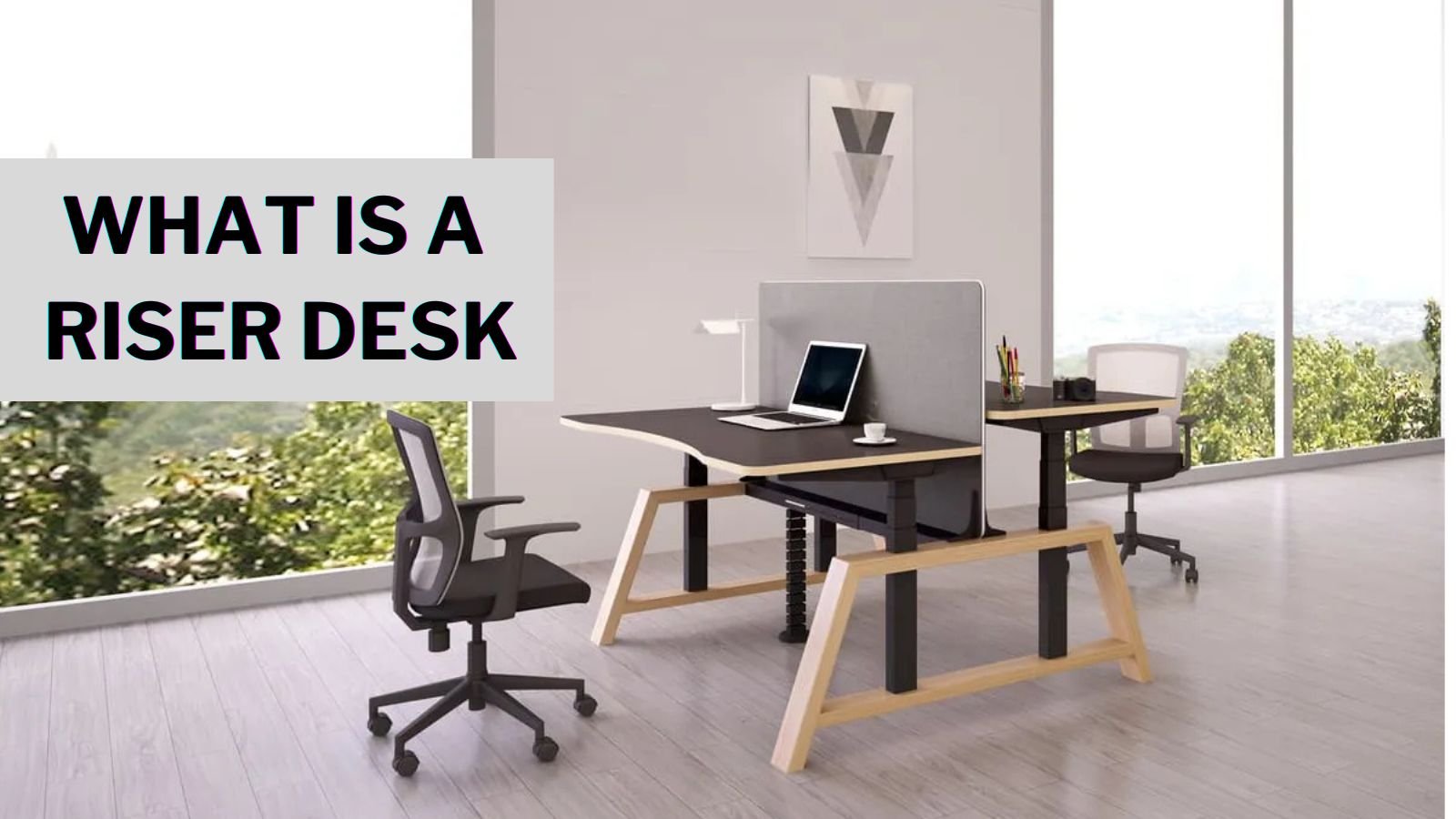
A riser desk is an adjustable workstation accessory or desk system designed to raise a computer monitor, keyboard, laptop, or entire working surface to a more comfortable height. Unlike a traditional fixed desk, a riser desk can help users change their working position and create a more flexible workspace.
Riser desks are commonly associated with sit-stand working because many models allow the user to alternate between sitting and standing throughout the day. Depending on the design, a riser may sit on top of an existing desk or function as part of a complete height-adjustable workstation.
What Is a Riser Desk?
A riser desk is a workspace solution that elevates the working area above the surface of a conventional desk. It is generally designed to improve workstation flexibility by allowing users to adjust the height of their equipment or work surface.
Some riser desks are compact platforms intended primarily for a monitor and keyboard, while larger models provide enough space for a laptop, monitor, keyboard, mouse, and other office equipment. The main purpose is to make it easier to work at different heights without replacing an existing desk.
The term can sometimes be used interchangeably with desk riser, desktop riser, or standing desk converter. Although the exact design varies, these products generally focus on improving the height and positioning of a workstation.
How Does a Riser Desk Work?
A riser desk works by using a lifting or height-adjustment mechanism to move the work surface or equipment upward and downward. Depending on the model, this mechanism may be powered by electricity, controlled manually, or operated with a spring-assisted system.
When the riser is lowered, it can be used while sitting at a standard desk. When raised, it creates a higher working position that can allow the user to work while standing.
The amount of adjustment depends on the design and specifications of the riser. Some models provide a limited range intended for monitor positioning, while full-size converters can offer a much larger height range suitable for changing between sitting and standing.
Types of Riser Desks
Riser desks are available in several designs to accommodate different workspace requirements. Choosing the right type depends on available desk space, equipment weight, adjustment needs, and how frequently the user plans to change positions.
Desktop Riser
A desktop riser is placed directly on top of an existing desk and raises the computer equipment or working surface above the original tabletop. It is one of the most practical choices for people who want to modify their current workspace without purchasing a completely new desk.
These risers are available in different sizes and configurations. Some are designed for a single monitor, while others provide a broad platform for a complete computer setup.
Standing Desk Converter
A standing desk converter is a larger type of riser designed specifically to convert a conventional desk into a sit-stand workstation. It usually has a platform or work surface that moves vertically while keeping the equipment positioned on the desk.
This option is particularly useful for home offices and workplaces where replacing existing desks would be expensive or inconvenient. A converter can provide additional flexibility while preserving the original desk underneath.
Electric Riser Desk
An electric riser uses a motorized mechanism to adjust the height of the workstation. The user can typically raise or lower the surface by pressing a control button.
Electric models are convenient for frequent adjustments because they generally require less physical effort. Some advanced models may also include programmable height settings that allow users to return to preferred sitting or standing positions.
Manual Riser Desk
A manual riser uses a hand-operated mechanism to change its height. Depending on the design, adjustment may involve a lever, handle, crank, or other mechanical system.
Manual risers can be a practical option when users do not need to change height constantly. They can also provide a straightforward alternative to motorized models.
Fixed Monitor Riser
A fixed monitor riser is designed primarily to elevate a computer monitor rather than create a complete sit-stand workstation. It can help position the display at a more suitable viewing height.
These risers are generally smaller and simpler than full desktop converters. They may be useful when the main goal is to improve monitor placement rather than alternate between sitting and standing.
Benefits of a Riser Desk
One of the main benefits of a riser desk is greater flexibility in workstation positioning. A traditional desk keeps the user at one fixed height, while an adjustable riser can provide multiple working positions.
Changing the height of the workstation can also make it easier to customize the setup according to the user’s body dimensions, chair height, monitor position, and preferred working posture. A properly arranged workstation can make everyday computer work more comfortable.
Supports Sit-Stand Working
A riser desk can make it easier to alternate between sitting and standing during the workday. Instead of remaining in one position for extended periods, users can raise or lower the workstation when they want to change their posture.
This flexibility is particularly useful for people who spend many hours working at a computer. However, a riser should be viewed as a workstation adjustment tool rather than a substitute for regular movement and healthy work habits.
Saves Desk Replacement Costs
A desktop riser can be an economical way to introduce height adjustment without purchasing a completely new standing desk. Users can keep their existing desk and place the riser on top of it.
This makes riser desks appealing for home offices, shared workspaces, and temporary work environments where purchasing new furniture may not be practical.
Improves Workspace Flexibility
Because the height can be adjusted, a riser desk can accommodate different users and working preferences. This can be especially useful in environments where several people share the same workspace.
The ability to change height can also help users experiment with different workstation arrangements until they find a position that feels comfortable and functional.
Helps Organize Computer Equipment
Many riser desks provide a dedicated surface for monitors, laptops, keyboards, and other accessories. By elevating equipment from the original tabletop, they can create a more structured workstation.
Some models also include areas for cable management or additional accessories. The exact organization features depend on the design and size of the riser.
Common Uses of a Riser Desk
Riser desks are widely used in home offices, corporate workplaces, study areas, creative workspaces, and other environments where people spend significant amounts of time at a desk.
They can be particularly useful for computer-based tasks such as writing, programming, graphic design, online meetings, research, administration, and general office work. Their adjustable design allows the workstation to be adapted to different activities.
Home Office
A riser desk can be a convenient addition to a home office because it allows an existing desk to become more flexible. This can be useful when space or budget limitations make purchasing a full standing desk difficult.
A compact riser can also be removed or repositioned when the desk needs to be used for other purposes.
Workplace
In professional offices, riser desks can provide employees with more control over workstation height. Adjustable workstations can be especially useful in shared environments where different employees have different height and equipment requirements.
Organizations can also use risers as a way to introduce adjustable workstations without replacing every existing desk.
Study Area
Students and home learners can use riser desks to create a more adaptable study environment. A laptop or monitor can be positioned at a different height depending on whether the user prefers to sit or stand.
The ability to change the setup can also make a small study area more versatile.
Gaming Setup
A riser can also be used in gaming workstations to elevate monitors, keyboards, or other equipment. For users with multiple screens, an appropriately sized riser can help create a more organized desktop arrangement.
However, the riser should be selected according to the total weight and dimensions of the gaming equipment.
Riser Desk vs. Standing Desk
Although the terms are sometimes used interchangeably, a riser desk and a traditional standing desk are not always the same thing. A riser generally sits on an existing desk and elevates the working surface, whereas a standing desk is usually an entire desk designed with adjustable legs or a height-adjustable frame.
A riser can therefore be a convenient upgrade for an existing workstation. A full standing desk may provide a larger and more integrated working surface, particularly when users want extensive height adjustment.
The better option depends on the user’s workspace, budget, equipment, available floor space, and preference for replacing or modifying an existing desk.
How to Choose a Riser Desk
Selecting the right riser desk requires more than simply choosing the largest or most adjustable model. The riser should match the equipment being used and provide enough height adjustment for the intended working positions.
Consider the available desk area and measure the dimensions before purchasing. The riser should fit securely on the existing desk without interfering with nearby walls, shelves, monitors, or other equipment.
Weight capacity is another important consideration. Check that the riser can safely support the monitor, laptop, keyboard, speakers, and other equipment that will be placed on it.
The adjustment mechanism should also match how frequently the riser will be used. An electric model may be convenient for frequent changes, while a manual system may be sufficient for occasional adjustments.
Proper Riser Desk Setup
A riser desk works best when the entire workstation is arranged ergonomically. Simply raising the monitor or keyboard does not automatically create a comfortable workstation.
The monitor should generally be positioned so that the user can view the screen without repeatedly bending or extending the neck. The keyboard and mouse should be placed at a height that allows the arms and shoulders to remain relaxed.
When standing, the workstation should also allow the user to maintain a comfortable upright position. Frequently changing position and taking regular movement breaks can complement an adjustable workstation.
Are Riser Desks Worth It?
For many users, a riser desk can be a practical way to make an existing workstation more adjustable. It can provide sit-stand flexibility, improve equipment positioning, and avoid the need to replace an entire desk.
However, the value depends on the user’s specific needs. Someone who rarely changes working positions may prefer a simple monitor riser, while someone who wants frequent sitting and standing transitions may benefit from a full-size adjustable converter or electric riser.
Final Thoughts
A riser desk is a flexible workstation solution that raises a computer setup or working surface above a conventional desk. Available in desktop, manual, electric, monitor, and standing-desk-converter designs, risers can accommodate a wide range of home and professional workspaces.
Their biggest advantage is adjustable positioning, which can make it easier to alternate between sitting and standing and customize the height of computer equipment. With the right size, weight capacity, adjustment range, and ergonomic setup, a riser desk can be a useful addition to a modern workspace.
