


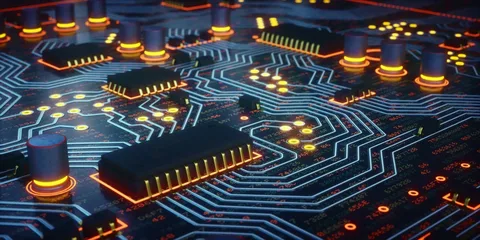
3D electronics refers to electronic components, circuits, and systems that are designed or manufactured with structures extending beyond a traditional flat, two-dimensional surface. Instead of arranging electronic elements only across a planar circuit board, 3D electronics can integrate components vertically, within different layers, or into three-dimensional objects.
This approach combines electronics, advanced manufacturing, materials science, and design techniques to create compact and highly integrated devices. Depending on the technology, 3D electronics can be used in sensors, wearable devices, medical equipment, automotive systems, consumer electronics, robotics, and industrial applications.
What Are 3D Electronics?
3D electronics are electronic systems in which components or conductive structures are arranged in three dimensions. Traditional printed circuit boards generally organize electrical connections across a flat surface, whereas 3D electronic technologies can stack, embed, conform, or directly integrate electronic elements into complex shapes.
The term can describe several different technologies rather than one specific type of electronic device. These may include three-dimensional circuit structures, stacked electronic components, embedded electronics, flexible electronics, and electronics produced using additive manufacturing techniques.
The main goal is to achieve greater functionality and integration while making more efficient use of available space.
How Do 3D Electronics Work?
The way 3D electronics work depends on the specific manufacturing technology being used. Some systems build multiple electronic layers and connect them vertically, while others embed conductive pathways and components directly into a three-dimensional structure.
Manufacturing may involve techniques such as additive manufacturing, printed conductive materials, semiconductor packaging, microfabrication, or conventional electronic assembly combined with advanced structural designs.
Conductive materials create pathways for electrical current, while components such as sensors, processors, resistors, capacitors, and integrated circuits perform specific functions. By arranging these elements in three dimensions, designers can create compact electronic systems with complex geometries.
Types of 3D Electronics
3D electronics can be categorized according to their structure, manufacturing method, and intended application. Different approaches provide different levels of flexibility, miniaturization, integration, and manufacturing complexity.
3D Printed Electronics
3D printed electronics use additive manufacturing techniques to create electronic structures layer by layer. Specialized conductive and insulating materials can be deposited or incorporated into a printed object.
This approach can allow electrical pathways, sensors, antennas, and other structures to be integrated into shapes that would be difficult to produce using conventional manufacturing.
Embedded Electronics
Embedded electronics integrate electronic components or conductive pathways directly into a physical structure. Instead of placing all components on the outside of a conventional circuit board, some elements can be incorporated within the product itself.
This can help reduce the space required for electronic assemblies and create cleaner, more integrated product designs.
Stacked Electronics
Stacked electronics arrange multiple electronic layers vertically. Components or semiconductor structures can be positioned on top of one another and connected through specialized interconnections.
The approach can increase functional density while reducing the footprint of an electronic system.
Flexible 3D Electronics
Flexible 3D electronics combine electronic functionality with materials or structures that can bend, stretch, or conform to curved surfaces. These systems are useful where rigid circuit boards are impractical.
They can be particularly valuable in wearable technology, medical devices, smart textiles, and flexible sensors.
Conformal Electronics
Conformal electronics are designed to follow the shape of a three-dimensional surface. Instead of forcing a flat circuit board onto a curved object, the electronic structure can be shaped to fit the product.
This can be useful in automotive components, aerospace systems, wearable devices, and compact consumer products.
3D Semiconductor Packaging
Advanced semiconductor packaging can arrange chips, memory, and other components in stacked or closely integrated configurations. These technologies can improve the use of physical space and create shorter connections between certain components.
Three-dimensional packaging is an important part of modern efforts to increase computing performance and electronic integration.
Benefits of 3D Electronics
One of the most important advantages of 3D electronics is the ability to use physical space more efficiently. By arranging components vertically or integrating them into three-dimensional structures, designers can potentially achieve greater functionality within a smaller footprint.
This can be particularly valuable as modern products become smaller while requiring increasingly sophisticated electronic capabilities.
Compact Design
3D electronic structures can reduce the space required for certain electronic assemblies. Components that would traditionally occupy separate areas can potentially be stacked or integrated into a smaller volume.
This is useful for compact devices such as wearable technology, portable electronics, medical instruments, and miniature sensors.
Higher Integration
Multiple electronic functions can be incorporated into a single three-dimensional structure. This can reduce the need for separate boards, connectors, or external components in certain designs.
Higher integration can also create opportunities for products with more features in a smaller physical package.
Efficient Use of Space
Three-dimensional construction allows designers to make use of vertical space rather than relying entirely on a flat surface. This can be especially beneficial when a product has strict size or shape limitations.
For example, electronic systems can potentially be designed around curved surfaces or within available internal cavities.
Greater Design Flexibility
Advanced manufacturing techniques can produce electronic structures with unusual geometries. Designers are not always limited to the rectangular shapes associated with traditional circuit boards.
This can support more innovative product designs and allow electronics to become part of the physical structure of a device.
Potential Weight Reduction
By integrating electronic functions more efficiently, some designs may reduce the number of separate components, boards, connectors, or supporting structures required.
The resulting weight reduction depends on the specific design and manufacturing method, so it should not be assumed for every 3D electronic system.
Supports Miniaturization
As electronic products become smaller, conventional layouts can face increasing space limitations. Three-dimensional integration provides another way to increase functionality without simply expanding the footprint.
This makes 3D electronics particularly relevant to miniaturized sensors, medical devices, mobile technology, and advanced computing systems.
Uses of 3D Electronics
3D electronics can be applied across a wide range of industries because their structures can be adapted to different physical and electrical requirements. Their applications include consumer products, healthcare, transportation, industrial automation, aerospace, and research.
Consumer Electronics
Smartphones, wearable devices, smart home products, and portable electronics increasingly require compact electronic systems. 3D integration can help designers fit more functions into limited physical space.
The technology can also support curved, compact, and customized electronic structures.
Medical Devices
Medical technology can benefit from compact sensors and electronics that conform to specific shapes or operate within small devices. Flexible and miniaturized electronics can be useful for monitoring and diagnostic applications.
Research into advanced 3D electronic structures is also supporting the development of specialized biomedical devices and wearable health-monitoring technologies.
Automotive Applications
Modern vehicles contain large numbers of electronic systems, including sensors, controllers, communication systems, and driver-assistance technologies.
3D electronics can potentially help integrate these functions into compact spaces and curved vehicle components. They may also support the development of lightweight and highly integrated automotive electronics.
Aerospace
Aerospace systems place strong demands on size, weight, reliability, and functionality. More compact electronic structures can help engineers use limited space efficiently.
Advanced 3D packaging and embedded electronics can therefore be valuable in aircraft, spacecraft, sensors, communication equipment, and other aerospace systems.
Robotics
Robots often require sensors, processors, actuators, and communication systems within relatively compact bodies. Three-dimensional electronic integration can help distribute these components throughout complex structures.
This can create opportunities for robots with integrated sensing and control capabilities.
Wearable Technology
Wearable devices need to remain lightweight and comfortable while providing electronic functionality. Flexible and conformal electronics can be designed to follow the shape of clothing, accessories, or the human body.
Potential applications include smart clothing, fitness devices, flexible sensors, and other wearable systems.
Industrial Automation
Factories use sensors and electronic control systems to monitor equipment and automate processes. Compact embedded electronics can potentially be incorporated into machines, tools, and industrial components.
This can support smart manufacturing systems where physical equipment and electronic intelligence are closely integrated.
3D Electronics in 3D Printing
One particularly interesting area is the combination of 3D printing and electronics. Instead of manufacturing a plastic structure first and adding electronics afterward, advanced processes can incorporate conductive and insulating materials during fabrication.
This can make it possible to create objects with integrated electrical pathways, sensors, antennas, and other electronic functions.
However, manufacturing reliable electronic components through additive processes can be technically challenging. Material compatibility, electrical conductivity, precision, thermal performance, and production repeatability all need to be carefully controlled.
Materials Used in 3D Electronics
Different materials are selected according to the electrical, mechanical, and thermal requirements of the application. Conductive materials may include metals, conductive polymers, or specialized composite materials.
Insulating materials are used to separate conductive pathways and provide structural support. Flexible applications may use polymers or other materials capable of bending without damaging the electronic structure.
The material selection process is important because conductivity, flexibility, durability, temperature resistance, and manufacturing compatibility can all influence performance.
Applications in Sensors
Sensors are an important area for 3D electronics because sensing structures can sometimes be integrated directly into three-dimensional surfaces. This can allow a device to detect physical conditions across a larger or more complex area.
Examples include pressure sensors, temperature sensors, motion sensors, strain sensors, and environmental monitoring systems.
Three-dimensional sensor structures can be particularly useful when a flat sensor cannot adequately match the shape or function of the object being monitored.
Challenges of 3D Electronics
Despite their potential benefits, 3D electronics present several manufacturing and engineering challenges. Creating reliable electrical connections in three-dimensional structures can be more difficult than producing conventional flat circuit boards.
Heat management is another concern. Compactly packed components may generate heat in a smaller area, requiring careful thermal design.
Manufacturing consistency can also be challenging, particularly when advanced printing or embedding processes are involved. Small variations in material properties, dimensions, or electrical pathways can affect performance.
3D Electronics vs. Traditional Electronics
Traditional electronics commonly rely on planar circuit boards where components are mounted on one or both sides of a relatively flat substrate. This approach is mature, widely available, and suitable for a huge range of products.
3D electronics take a more spatial approach by stacking, embedding, bending, or integrating components into three-dimensional structures. This can provide greater design flexibility and packaging density.
However, traditional electronics often remain easier and less expensive to manufacture for many applications. Therefore, 3D technology is generally most valuable when its additional integration or geometric flexibility provides a meaningful advantage.
Future of 3D Electronics
The future of 3D electronics is closely connected to advances in materials, additive manufacturing, semiconductor packaging, flexible electronics, and miniaturization. As manufacturing techniques improve, electronic functionality may become increasingly integrated into the physical structure of products.
Developments in conductive materials, advanced sensors, embedded components, and three-dimensional semiconductor technologies could expand the range of applications.
The technology may contribute to smaller, smarter, lighter, and more integrated devices across consumer electronics, healthcare, automotive systems, robotics, aerospace, and industrial technology.
Final Thoughts
3D electronics represent a broad group of technologies that arrange or integrate electronic functions within three-dimensional structures. From 3D-printed circuits and embedded electronics to stacked semiconductor packages and flexible systems, these approaches provide new ways to design and manufacture electronic devices.
Their major benefits include compactness, higher integration, efficient space utilization, design flexibility, and support for miniaturized products. As materials and manufacturing processes continue to develop, 3D electronics are likely to play an increasingly important role in the design of advanced electronic systems.
