


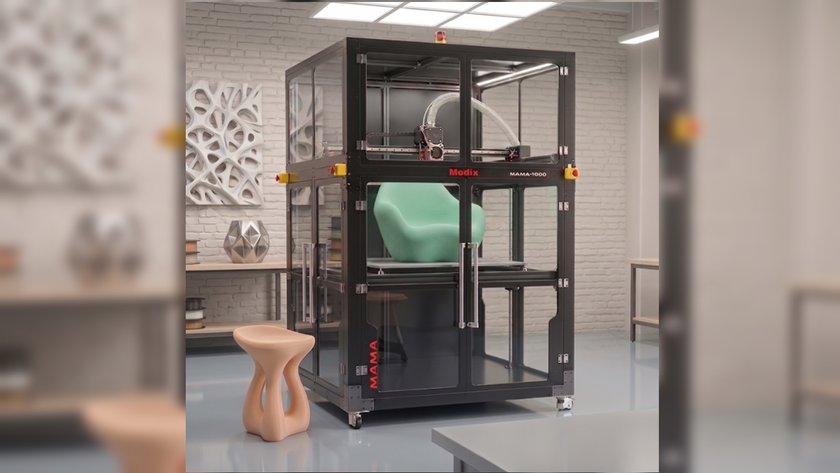
3D printing continues to develop from a primarily prototyping-focused technology into a broader manufacturing solution used across industries. In 2026, the latest 3D printing news is increasingly centered on production, automation, advanced materials, software, artificial intelligence, sustainability, and applications that can deliver measurable manufacturing value.
Recent industry research and reporting show that additive manufacturing is expanding across metal, polymer, ceramic, and service markets. Additive Manufacturing Research reported that the global 3D printing and additive manufacturing market reached approximately $4.48 billion in the second quarter of 2026, representing 12% year-over-year growth.
What Is 3D Printing?
3D printing, also known as additive manufacturing, is a production method that creates physical objects layer by layer from a digital design. Instead of removing material from a solid block, the printer builds the required geometry by depositing, curing, sintering, or otherwise consolidating material.
The technology can be used to create simple prototypes, customized consumer products, industrial components, medical devices, tooling, architectural models, and highly complex engineering parts.
Its ability to produce complicated shapes and customized designs is one of the reasons additive manufacturing has attracted attention across engineering, healthcare, aerospace, automotive, education, and consumer markets. Recent academic reviews also highlight customization, complex geometries, multi-material printing, AI-driven optimization, and Industry 4.0 integration as important areas of development.
Latest 3D Printing News in 2026
One of the biggest themes in current 3D printing news is the movement toward real production rather than simple prototyping. Industry analysts and manufacturers are increasingly focusing on repeatability, automation, production economics, material performance, and integration with existing manufacturing systems.
The Wohlers Report 2026 describes a growing focus on market maturity and real-world adoption, including technologies, applications, materials, processes, regional markets, mergers and acquisitions, patents, and regulatory developments.
Recent announcements also illustrate this shift. Stratasys introduced the F870 large-format FDM system for applications including automotive, aerospace, and defense manufacturing, while BMW has been working toward using wire-arc additive manufacturing components in series production.
Automation Is Becoming More Important
Automation is one of the major trends shaping modern 3D printing. Industrial users want systems that can reduce manual intervention while improving consistency, throughput, quality control, and production efficiency.
Automation can involve material handling, machine setup, print monitoring, part removal, post-processing, inspection, and production scheduling. Industry observers have identified automation and improved workflows as important developments for increasing the practical use of additive manufacturing.
As production volumes increase, automated systems can become especially important because manually managing every stage of a print workflow can increase labor requirements and introduce opportunities for inconsistency.
Artificial Intelligence and 3D Printing
Artificial intelligence is becoming increasingly connected with additive manufacturing software and production workflows. AI can potentially assist with design optimization, process monitoring, defect detection, parameter selection, simulation, and manufacturing planning.
The broader industry trend is moving toward software that understands both the geometry of a part and the requirements of the printing process. A 2026 review of additive manufacturing developments identifies AI-driven process optimization as one of the emerging areas alongside multi-material printing and Industry 4.0 integration.
AI is therefore not simply about automatically generating 3D models. Its larger role may involve helping engineers understand how a design will behave during manufacturing and identifying process conditions that can improve quality and efficiency.
Advanced 3D Printing Materials
Materials remain one of the most important areas of 3D printing development. Traditional desktop printers commonly use materials such as PLA, PETG, ABS, and other thermoplastics, while industrial systems can work with engineering polymers, composites, metals, ceramics, and specialized materials.
Research into metal additive manufacturing continues to examine powder characteristics, process stability, material behavior, and relationships between manufacturing conditions and final part properties.
High-performance polymers, reinforced materials, metal powders, wire-based feedstocks, and multi-material approaches are expanding the range of applications available to manufacturers.
Multi-Material 3D Printing
Multi-material printing is another important topic in current 3D printing news. Rather than manufacturing an entire object from one material, advanced systems can combine different materials or material properties within a single production process.
This can allow designers to create components with different mechanical, thermal, electrical, or functional characteristics in different areas of the same part.
Industry experts have identified multi-material metal printing as one of the technologies attracting significant attention in 2026, particularly for specialized industrial and medical applications.
Metal 3D Printing Continues to Expand
Metal additive manufacturing is particularly important for industries that require complex, lightweight, durable, or customized components. Technologies such as laser powder bed fusion, directed energy deposition, electron-beam processes, and binder jetting provide different approaches to manufacturing metal parts.
Current research continues to examine metal AM processes, including powder-based systems, process control, material properties, and emerging applications.
Metal printing can be valuable when traditional manufacturing would require extensive machining, tooling, assembly, or material removal. However, production economics, qualification, material costs, process control, and post-processing remain important considerations.
Large-Format 3D Printing
Large-format 3D printing is also receiving increased attention. Instead of producing small components on desktop-sized machines, large-format systems can manufacture substantially bigger parts or structures.
Large-format additive manufacturing can be useful in areas such as automotive production, aerospace components, industrial tooling, construction, and specialized manufacturing.
Recent product announcements demonstrate continuing investment in large-format industrial systems, including Stratasys’ F870 FDM platform designed for large-scale manufacturing applications.
3D Printing in Healthcare
Healthcare remains one of the most interesting applications of 3D printing because additive manufacturing can produce customized geometries.
Medical applications include anatomical models, surgical planning tools, dental products, prosthetics, implants, and specialized instruments. The technology can be particularly useful where products need to match individual anatomical requirements.
Researchers and industry specialists are also exploring increasingly sophisticated implant designs and multi-material approaches. These applications require strict regulatory controls and extensive validation, meaning technological feasibility does not automatically translate into routine clinical use.
3D Printing in Automotive Manufacturing
The automotive industry uses 3D printing for prototyping, tooling, fixtures, replacement parts, customization, and increasingly for production components.
One advantage is the ability to modify a design digitally without creating entirely new traditional tooling for every iteration. This can make additive manufacturing useful during product development and for specialized or lower-volume components.
BMW’s work toward integrating wire-arc additive manufacturing into series production illustrates the broader movement toward treating additive manufacturing as part of industrial production rather than solely as a prototyping technique.
Aerospace and Defense Applications
Aerospace is another major area for additive manufacturing because lightweight structures and complex geometries can provide important engineering benefits.
3D printing can also support the production of specialized components and tooling where conventional manufacturing may be expensive or difficult.
However, aerospace applications typically involve demanding requirements for material consistency, traceability, qualification, inspection, and certification. These requirements make industrial-scale adoption more complex than simply producing a functional prototype.
Sustainable 3D Printing
Sustainability is becoming an increasingly visible part of the 3D printing conversation. Additive manufacturing can reduce material waste in certain applications because material is added primarily where it is needed.
The environmental impact nevertheless depends on the material, printer, energy source, production method, part design, failed prints, post-processing, and product lifespan.
New developments are also focusing on recycling and material reuse. For example, Creality’s 2026 product lineup included filament recycling alongside 3D printing, scanning, laser processing, and other digital fabrication technologies.
3D Printing Software Is Becoming Critical
Modern additive manufacturing increasingly depends on software as much as hardware. CAD programs, slicing platforms, simulation tools, print-management systems, monitoring software, and manufacturing-planning platforms all influence the final result.
One major trend is the integration of design, simulation, toolpath generation, monitoring, and production management into more connected workflows.
Industry discussions in 2026 have specifically highlighted software development, simulation-driven toolpath optimization, and more sophisticated control of manufacturing processes as important areas for future growth.
3D Printing for Home Users
Desktop 3D printers remain popular with hobbyists, makers, educators, designers, and small businesses. Modern consumer machines increasingly offer features such as automatic bed leveling, enclosed designs, faster printing, multi-color or multi-material capabilities, remote monitoring, and simplified software.
The consumer market is also moving toward broader digital fabrication ecosystems. Recent product launches have combined 3D printing with scanning, recycling, laser processing, and other manufacturing capabilities.
This makes 3D printing more accessible to users who want to experiment with customized products, replacement components, models, educational projects, and small-scale manufacturing.
From Prototypes to Production
One of the most important changes in the industry is the transition from prototype production to end-use manufacturing.
For many years, 3D printing was particularly associated with quickly creating prototypes before committing to traditional production. Today, manufacturers are increasingly exploring additive manufacturing for finished products and production tooling.
Industry analysis in 2026 points toward automation, better materials, improved economics, and supply-chain requirements as factors supporting this transition.
This does not mean 3D printing will replace injection molding, CNC machining, casting, or other manufacturing methods in every situation. Instead, additive manufacturing is becoming another production option whose suitability depends on volume, geometry, material, cost, performance, and other requirements.
Digital Inventory and On-Demand Manufacturing
Another developing concept is the use of digital files instead of storing large inventories of physical replacement parts.
A company could potentially maintain validated digital designs and manufacture selected components when they are needed. This approach may be especially useful for spare parts, customized products, remote locations, and products with relatively low demand.
The concept connects 3D printing with digital supply chains and distributed manufacturing. However, organizations still need to address intellectual-property protection, file security, quality assurance, certification, and manufacturing consistency.
What Makes 3D Printing News Important?
Following 3D printing news can help manufacturers, engineers, designers, hobbyists, investors, educators, and technology enthusiasts understand where additive manufacturing is heading.
The most useful news is not limited to announcements of new printers. Important developments can also involve materials, software, industrial applications, production economics, research, regulations, sustainability, and successful real-world deployments.
For example, current industry data shows continued market expansion, while recent product and manufacturing announcements demonstrate increased attention to production-scale applications.
Challenges Facing 3D Printing
Despite rapid development, 3D printing still has important limitations. Printing speed, material costs, surface finish, dimensional accuracy, repeatability, post-processing, machine costs, and qualification requirements can affect whether additive manufacturing makes economic sense.
Industrial metal printing can also require extensive process monitoring and validation. Recent research continues to identify scalability, standardization, material limitations, and qualification as significant challenges for wider adoption.
For this reason, the future of 3D printing will likely depend not only on faster machines but also on better materials, software, automation, quality control, and complete production workflows.
The Future of 3D Printing
The future direction of additive manufacturing appears increasingly connected to scalable production and practical applications. Current 2026 industry discussions emphasize automation, software, advanced materials, multi-material manufacturing, industrial adoption, and application-specific solutions.
Another important development is the growing relationship between 3D printing and other digital manufacturing technologies. Artificial intelligence, simulation, scanning, robotics, cloud software, digital inventories, and automated production systems can work together to create more connected manufacturing environments.
As these technologies mature, 3D printing may become less of a standalone novelty and more of an integrated manufacturing process.
Final Thoughts on 3D Printing News
3D printing news in 2026 reflects an industry that is becoming increasingly focused on real-world production. The most important developments are no longer limited to individual printers; they include materials, automation, software, artificial intelligence, industrial applications, sustainability, and complete digital manufacturing workflows.
From desktop machines and multi-color printing to metal additive manufacturing and factory-scale production, the technology continues to expand into new areas.
For anyone following the industry, understanding these broader trends provides a more useful picture of where 3D printing is developing and how additive manufacturing could influence the future of design and production.
