


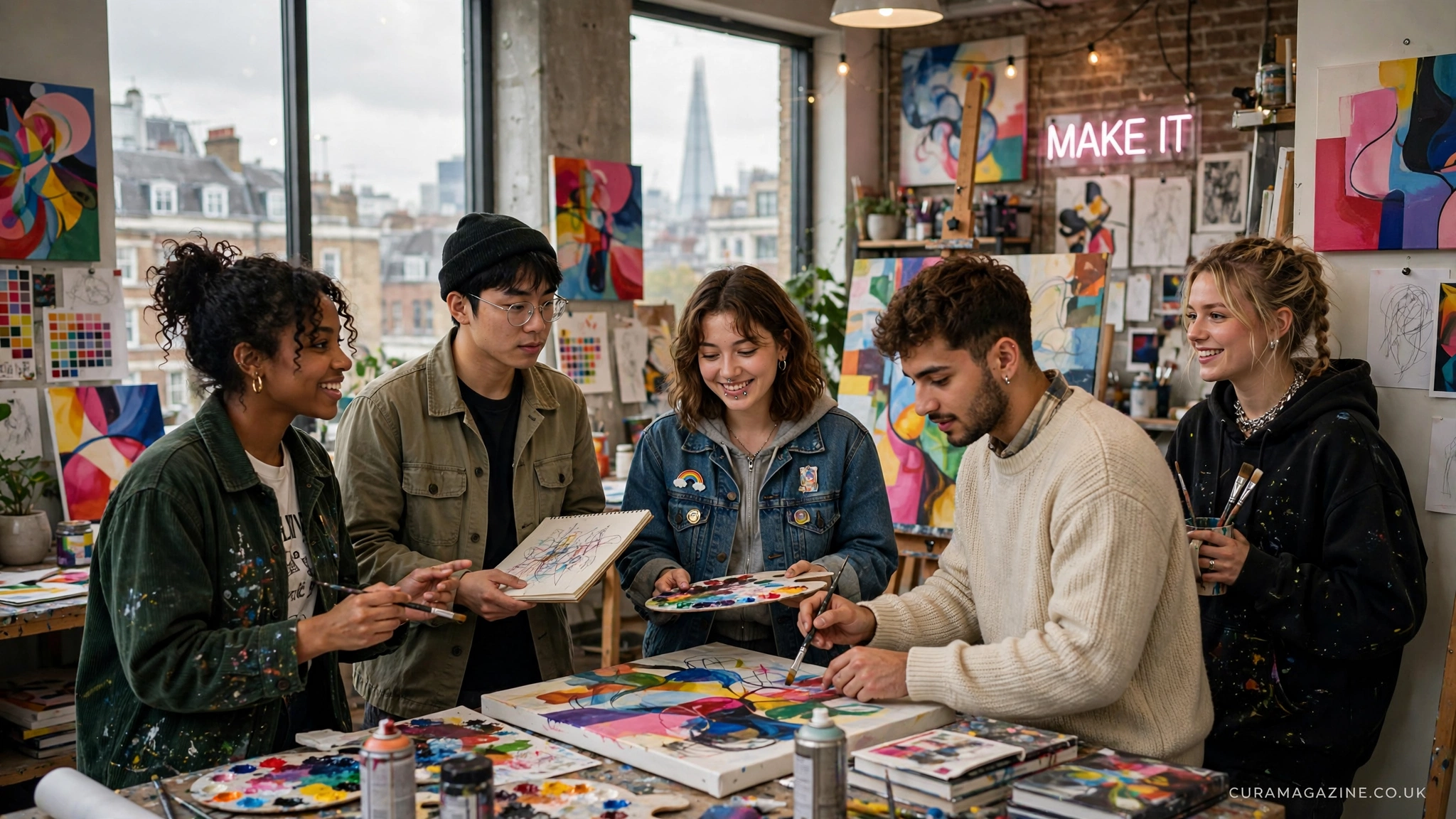
In 2026, the UK art world is undergoing a dynamic phase of creative exploration, as emerging artists challenge established conventions and reshape the ways contemporary art is created, exhibited, and interpreted. From expressive painting and experimental sculpture to digital installations, photography, and interdisciplinary practice, emerging artists are developing distinctive approaches that reflect the complexities of modern society. Their work explores identity, cultural heritage, technology, environmental change, memory, and the relationship between individual experience and collective history.
New Generation Artists UK 2026 – Emerging Art Stars celebrates the artists contributing fresh perspectives to Britain’s evolving cultural landscape. Across London, Manchester, Glasgow, Bristol, Liverpool, Birmingham, and other creative centres, artists are experimenting with materials, questioning established traditions, and discovering new ways to connect with audiences. Their growing visibility reflects the importance of independent galleries, contemporary art fairs, artist-led initiatives, graduate exhibitions, and specialist art publications in introducing new creative voices.
The phrase “emerging art stars” encompasses more than artists gaining public recognition. It also includes practitioners developing ambitious ideas, building independent careers, and contributing to conversations that may influence the future direction of contemporary art. Understanding their work means looking beyond popularity to consider the artistic methods, cultural questions, and creative communities that shape their practices.
The Changing Landscape of UK Contemporary Art in 2026
The contemporary British art scene is increasingly characterised by diversity in both artistic expression and professional pathways. While traditional media such as painting, drawing, and sculpture remain important, many emerging artists combine these forms with film, sound, performance, textiles, digital technology, and research-based approaches. This willingness to move between disciplines reflects a broader understanding of art as an evolving process rather than a fixed category.
The development of new artistic talent is supported by an extensive network of galleries, museums, independent exhibition spaces, educational institutions, residencies, and cultural organisations. These platforms provide opportunities for artists to test ideas, present new work, establish professional relationships, and reach audiences beyond their immediate communities. Exhibitions and artist-development programmes also help curators, collectors, and critics identify practitioners whose work demonstrates originality, intellectual depth, and long-term potential.
In 2026, the visibility of emerging artists is influenced by both physical exhibitions and digital communication. Online portfolios, artist interviews, virtual exhibitions, and social media can introduce work to international audiences, while traditional gallery presentations provide opportunities to experience artworks in person. The relationship between these channels allows artists to develop different kinds of engagement without relying exclusively on a single institution or commercial platform.
Emerging UK Artists to Watch in 2026
Okiki Akinfe: Contemporary Painting and Cultural Identity
Okiki Akinfe is an artist whose painting practice engages with questions of identity, representation, and the cultural references that shape contemporary life. Her work combines a considered approach to composition with subjects and visual traditions that invite viewers to examine how people understand themselves and others. Through painting, she explores the relationship between individual experience and broader cultural narratives, demonstrating how a traditional medium can remain responsive to contemporary concerns.
Akinfe’s work has attracted attention within London’s contemporary art scene, including presentations associated with Frieze Focus. Her practice illustrates how emerging artists can draw on the history of painting while developing personal approaches to visual storytelling. Rather than treating painting as an isolated discipline, she uses it as a way to investigate the social and cultural meanings attached to images, identity, and representation.
Laurie Smith: Memory, Place, and Queer Histories
Laurie Smith is an artist whose work explores the relationships between memory, identity, urban environments, and queer cultural histories. Her painting practice considers how spaces associated with social gathering and community can carry layers of personal and collective meaning. These locations may also reveal broader questions about visibility, redevelopment, surveillance, and the ways changing cities affect the communities that inhabit them.
Smith’s participation in Frieze Focus 2026 has brought attention to her work within an international contemporary art setting. Her approach demonstrates how painting can become a form of historical and cultural investigation, using visual composition to revisit overlooked experiences and question how places are remembered. For audiences interested in the connections between art and social history, her practice offers a compelling example of contemporary painting engaging with complex cultural subjects.
Ella Fleck: Installation and Digital Culture
Ella Fleck exemplifies a new wave of contemporary artists whose multidisciplinary practices bring together installation, sound, sculptural forms, and research-driven approaches to artistic expression. Her work investigates the ways technology, commercial systems, and digital environments influence contemporary relationships and cultural narratives. By bringing different media into a shared exhibition space, she creates opportunities for viewers to encounter ideas through sound, movement, physical objects, and spatial experience.
Her presentation at Frieze London 2026 reflects the continuing interest in experimental installation and conceptually driven work by emerging artists. Fleck’s practice highlights how contemporary art can address digital culture without being limited to screens or computer-generated imagery. Instead, the installation becomes a means of examining how technology shapes everyday experiences, social expectations, and the boundaries between physical and virtual life.
Kat Anderson: Art Across Disciplines
Kat Anderson works across visual art, music, and filmmaking, reflecting an interdisciplinary approach that challenges conventional boundaries between creative fields. This combination of practices allows artists to explore the relationships between image, sound, movement, and narrative while developing projects that may change form according to their context. Such flexibility has become increasingly relevant as contemporary artists seek ways to connect different audiences and modes of expression.
Anderson was included in the Contemporary Art Society’s Spring 2026 On Our Radar selection, which highlights artists developing distinctive practices Artist-centred initiatives can broaden a practitioner’s visibility by connecting them with curators, cultural institutions, and wider audiences who might otherwise remain unfamiliar with their work . Her multidisciplinary approach also demonstrates how contemporary artistic careers can develop through experimentation rather than adherence to a single medium.
Maya Hewitt: Painting, Sculpture, and Imaginative Worlds
Maya Hewitt combines painting and ceramic sculpture to explore personal experience, memory, fantasy, and the emotional qualities of domestic environments. Her work brings together different materials to create visual relationships between objects and images, encouraging viewers to consider how ordinary surroundings can become sites of imagination and symbolic meaning. By moving between two- and three-dimensional forms, she creates a practice that balances familiarity with experimentation.
Hewitt’s presentation within Frieze London’s Focus section in 2026 has contributed to her visibility among audiences following emerging contemporary art. Her work demonstrates how artists can move beyond conventional distinctions between painting and sculpture to create interconnected bodies of work. For viewers, this approach offers a reminder that contemporary art often develops through the relationships between materials, ideas, and the environments in which artworks are encountered.
Editorial note: These artists represent a selection of practitioners associated with recent contemporary art presentations and artist-development platforms. The list is illustrative rather than a definitive ranking of Britain’s most promising artists.
The Major Trends Shaping Britain’s New Generation of Artists
Identity, Heritage, and Representation
Identity continues to be an important subject for emerging artists across the UK. Many practitioners investigate how family histories, cultural traditions, migration, language, race, gender, and community influence individual experience. These concerns appear in painting, photography, sculpture, textiles, film, and installation, with artists using personal narratives to examine larger historical and social structures.
The significance of this work extends beyond autobiography. By questioning familiar representations and introducing perspectives that have received limited attention, artists can encourage audiences to reconsider how cultural identities are constructed and understood. Their practices contribute to a more diverse picture of contemporary British life, acknowledging that identity is shaped by changing relationships between people, places, histories, and institutions.
Artificial Intelligence and Digital Creativity
Emerging artists are increasingly engaging with the creative possibilities and cultural consequences of digital technologies. Artificial intelligence, algorithmic image-making, virtual environments, interactive installations, and digital photography provide new tools for experimentation, while raising questions about authorship, originality, ownership, and creative labour. Artists may use these technologies to generate visual forms, investigate online identities, or examine how digital platforms influence what people see and believe.
The most compelling digital practices often go beyond technical novelty to explore the social systems surrounding technology. Artists may address surveillance, data collection, misinformation, automation, or the changing relationship between physical experience and digital representation. In this context, technology functions both as a creative medium and as a subject for critical investigation, allowing emerging practitioners to respond to some of the defining questions of contemporary life.
Sustainability and Environmental Awareness
Environmental concerns are influencing the materials, subjects, and working methods of contemporary artists. Some practitioners incorporate recycled materials, discarded objects, reclaimed textiles, or natural substances into their work, while others explore climate change, biodiversity, landscape, and the impact of human activity on ecosystems. These approaches connect the visual qualities of artworks with broader questions about consumption, resource use, and environmental responsibility.
Sustainable artistic practice also involves considering how exhibitions are produced and maintained. Decisions about material sourcing, transport, installation structures, and reuse can affect the environmental footprint of a project. For emerging artists, these considerations offer opportunities to rethink established methods and investigate how creative work might respond to ecological challenges through both its subject matter and its production process.
Social Change and Community-Based Art
Many emerging British artists are exploring social inequality, housing, migration, labour, public space, and the relationships between individuals and institutions. Their work may combine documentary research, personal testimony, archival materials, and imaginative interpretation to investigate experiences that are often simplified in public debate. By bringing these subjects into exhibitions, artists can create opportunities for reflection and discussion.
Community-based projects extend this approach by involving residents, local organisations, and participants in the development of artistic work. These collaborations can preserve local histories, explore shared experiences, and create opportunities for people to contribute their perspectives to cultural projects. They also demonstrate that artistic value can emerge through research, relationships, and participation as well as through the production of individual objects.
Beyond London: Emerging Art Stars Across the UK
London remains an influential centre for contemporary art, with international galleries, major museums, commercial art fairs, and independent exhibition spaces. However, the development of new artistic talent is not limited to the capital. Cities including Glasgow, Manchester, Bristol, Birmingham, Liverpool, Cardiff, Belfast, and Newcastle support creative communities that contribute distinctive approaches to contemporary practice.
Regional galleries, artist-led organisations, universities, and independent studios provide important opportunities for artists to develop their work and connect with local audiences. These environments may encourage projects shaped by particular industrial histories, cultural traditions, landscapes, or community experiences. Such regional influences add depth to the wider British art scene and challenge the assumption that artistic recognition must originate in London.
For audiences discovering emerging artists in 2026, exploring regional exhibitions can be as rewarding as visiting major metropolitan institutions. Graduate shows, local art festivals, open studios, artist residencies, and independent gallery programmes can reveal practitioners whose work is developing outside the most visible commercial networks. Supporting these spaces helps maintain a diverse artistic ecosystem in which different communities and creative approaches can flourish.
How Emerging Artists Gain Recognition
Recognition in the contemporary art world often develops through a combination of artistic development, professional relationships, exhibitions, critical writing, and sustained engagement with audiences. Emerging artists may first gain visibility through graduate exhibitions, open calls, independent galleries, residencies, or artist-development programmes. These opportunities allow practitioners to present their work publicly, receive feedback, and build connections with curators, writers, collectors, and other artists.
Art fairs and group exhibitions can provide additional exposure by introducing artists to audiences who might not encounter them through individual studio practice. However, visibility alone does not guarantee long-term success. Sustained artistic development also depends on access to resources, affordable working spaces, time for research, and opportunities to experiment without the immediate pressure of commercial results.
Publications and artist interviews contribute to this process by providing context for an artist’s ideas and methods. A thoughtful profile can explain the influences behind a body of work, explore the relationship between materials and concepts, and introduce an artist’s practice to readers outside the exhibition venue. For this reason, contemporary art magazines remain valuable platforms for discovering and documenting emerging creative voices.
The Role of Galleries, Curators, and Collectors
Galleries and curators play an important role in identifying and supporting artists whose work introduces new perspectives or challenges established conventions. Through exhibitions, commissions, acquisitions, and research projects, they help create the conditions in which artistic practices can develop. Independent galleries are particularly important because they may be able to respond quickly to new ideas and provide space for experimental work that does not fit conventional exhibition formats.
Collectors can also contribute to the development of emerging artists by engaging thoughtfully with their work and supporting sustainable artistic careers. Collecting contemporary art involves more than predicting future popularity; it can include understanding an artist’s practice, learning about the context of individual works, and recognising the importance of supporting creative production. Public collections and institutional acquisitions may further extend an artist’s visibility by preserving work for future audiences.
The relationship between artists, galleries, curators, collectors, and publications forms a wider network that shapes the contemporary art ecosystem. When these participants support a range of artistic practices rather than concentrating exclusively on established names, they help create opportunities for new voices to contribute meaningfully to British cultural life.
Where to Discover New Generation Artists in 2026
Readers interested in discovering emerging British artists can explore a variety of exhibitions, publications, and artist-development programmes. New Contemporaries provides a platform for emerging and early-career artists, while contemporary art fairs and independent galleries offer opportunities to encounter new practices across different media. Public museums and regional art institutions also present exhibitions that connect emerging talent with wider historical and cultural themes.
The Contemporary Art Society’s On Our Radar selections are another useful starting point for readers researching artists attracting curatorial attention. Specialist magazines, artist interviews, studio visits, and exhibition reviews can provide additional context, helping audiences understand not only which artists are receiving attention but also why their work matters.
It is worth approaching artist discovery with curiosity rather than relying entirely on popularity or commercial visibility. An artist’s work may be significant because of its conceptual depth, material experimentation, social engagement, or contribution to a particular community, even if it has not yet received widespread recognition. Visiting exhibitions and reading about artists’ methods can help audiences develop a more informed understanding of contemporary practice.
The Future of Britain’s Emerging Art Scene
The future of contemporary British art will be shaped by the interaction between artistic ambition and the practical conditions that allow creative work to develop. Affordable studios, funding, mentorship, exhibition opportunities, education, and professional networks can make a significant difference to an artist’s ability to sustain a career. Supporting emerging talent therefore requires more than identifying promising names; it involves creating an environment in which artists from different backgrounds can continue to experiment and produce work.
At the same time, the diversity of current artistic practice suggests that the next generation will not be defined by one dominant style or movement. Painting and sculpture will continue to develop alongside digital media, performance, photography, installation, and interdisciplinary research. Artists will draw on local histories and international influences while responding to technological change, ecological uncertainty, and evolving social relationships.
The most important emerging art stars may ultimately be those who establish distinctive practices and contribute new ideas to the cultural conversation over time. Their significance will depend not only on early recognition but also on the depth, consistency, and relevance of their artistic investigations.
Conclusion: New Generation Artists UK 2026 – Emerging Art Stars
The new generation of UK artists in 2026 represents a diverse and evolving field of creative practice. From contemporary painting and sculpture to experimental installation, digital culture, and interdisciplinary projects, emerging practitioners are developing new ways to examine identity, memory, technology, sustainability, and social change. Artists such as Okiki Akinfe, Laurie Smith, Ella Fleck, Kat Anderson, and Maya Hewitt illustrate the variety of approaches gaining attention through contemporary exhibitions and artist-development platforms.
Discovering these artists involves looking beyond headlines and rankings to understand the ideas, methods, and cultural contexts that shape their work. Independent galleries, public institutions, contemporary art fairs, curators, and specialist publications all contribute to making new artistic voices visible. Their support helps build a cultural environment in which experimentation and diversity can thrive.
For art enthusiasts, collectors, students, and creative professionals, following emerging British artists offers an opportunity to engage with contemporary culture as it develops. The new generation’s importance lies not simply in its potential for future recognition, but in its ability to question established assumptions, create meaningful visual experiences, and expand the possibilities of art in Britain and beyond.
Frequently Asked Questions
Who are the emerging UK artists to watch in 2026?
Artists attracting attention through recent exhibitions and development programmes include Okiki Akinfe, Laurie Smith, Ella Fleck, Kat Anderson, and Maya Hewitt. This selection is illustrative rather than exhaustive, and emerging-artist status can vary according to career stage and institutional context.
What are the main trends among young British artists in 2026?
Important themes include identity, cultural heritage, artificial intelligence, digital creativity, environmental responsibility, social change, and interdisciplinary practice. Many artists combine traditional media with experimental techniques to explore contemporary questions.
Where can I discover emerging artists in the UK?
Explore graduate exhibitions, independent galleries, regional museums, artist-led spaces, contemporary art fairs, open studios, and programmes such as New Contemporaries. Specialist art magazines and curator-selected artist lists can also help identify new practitioners.
How do emerging artists gain recognition?
Artists often build visibility through exhibitions, residencies, commissions, open calls, professional collaborations, publications, and relationships with curators and galleries. Sustained recognition generally requires continued artistic development as well as opportunities to present and document work.
Why is supporting emerging artists important?
Supporting emerging artists encourages creative experimentation, strengthens regional and independent art communities, and ensures that contemporary culture reflects a wider range of perspectives. It also helps artists access the resources and opportunities needed to sustain their practices.
