


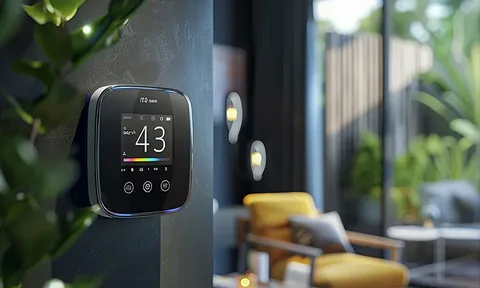
A smart thermostat is one of the most practical ways to improve home comfort, manage heating and cooling, and reduce unnecessary energy consumption in 2026. Unlike traditional thermostats that rely on manual temperature adjustments, smart models use programmable schedules, sensors, learning technology, and internet connectivity to regulate indoor temperatures more efficiently.
The biggest advantage is convenience combined with better energy management. Homeowners can control temperatures through a smartphone, adjust settings remotely, create automatic schedules, and monitor their heating or cooling habits without constantly changing the thermostat manually.
However, choosing the right smart thermostat involves more than comparing prices or looking at the latest features. Compatibility with your HVAC system, connectivity requirements, installation costs, and actual energy-saving potential all play an important role.
What Is a Smart Thermostat?
A smart thermostat is a connected temperature-control device that automatically manages a home’s heating, ventilation, and air conditioning (HVAC) system. It connects to a home Wi-Fi network and allows users to monitor and adjust indoor temperatures through a mobile application or compatible smart home platform.
Traditional thermostats generally operate according to manually selected temperatures or basic programmed schedules. Smart thermostats offer more advanced controls, including occupancy detection, adaptive scheduling, remote access, and energy-use monitoring.
Some models can also learn household routines over time. For example, if a family regularly leaves home in the morning and returns in the evening, the thermostat may adjust its schedule to reduce unnecessary heating or cooling while the house is empty.
These devices are designed to make temperature management more responsive to everyday life. Instead of maintaining the same temperature throughout the day, a smart thermostat can adjust settings according to occupancy, outdoor conditions, and individual preferences.
How Does a Smart Thermostat Work?
Smart thermostats work by communicating with a home’s HVAC equipment and using temperature sensors to determine when heating or cooling is needed. Once the indoor temperature moves beyond the selected range, the thermostat sends instructions to the heating or cooling system.
The device’s built-in software manages these adjustments according to the user’s settings. Depending on the model, it may also consider occupancy patterns, humidity levels, weather information, and temperature readings from additional wireless sensors.
Wi-Fi connectivity makes remote control possible. A homeowner can open an application while away from home, check the current indoor temperature, and change the settings without physically touching the thermostat.
More advanced models use machine-learning features to identify recurring household patterns. Over time, these systems can suggest or automatically create schedules that balance comfort with energy efficiency.
However, not every smart thermostat uses artificial intelligence or automatically learns user behavior. Some rely primarily on manually created schedules, motion sensors, and straightforward automation rules.
Key Smart Thermostat Features to Look for in 2026
Smart thermostat technology has become increasingly sophisticated, but the most useful features are those that solve everyday problems. Before purchasing a device, it is important to understand which capabilities genuinely improve comfort and energy management.
Wi-Fi Connectivity and Remote Control
Wi-Fi connectivity is one of the defining features of a smart thermostat. It allows homeowners to control their HVAC systems through a smartphone, tablet, or compatible voice assistant.
This feature is particularly useful when daily plans change unexpectedly. If someone returns home earlier than usual, they can adjust the temperature remotely rather than arriving to an uncomfortable indoor environment.
Remote access can also help prevent unnecessary energy consumption. For instance, if the heating or cooling system has been left running while everyone is away, users can change the settings from almost anywhere with an internet connection.
Automatic Scheduling
Automatic scheduling allows users to establish different temperature settings for different times of the day. A typical schedule might include comfortable temperatures in the morning, reduced heating or cooling during working hours, and another adjustment before bedtime.
This approach helps avoid maintaining unnecessary temperatures when nobody is home or when household members are sleeping. It also removes the inconvenience of manually adjusting the thermostat several times a day.
Some models provide flexible scheduling based on weekdays, weekends, and individual household routines. Others allow more advanced automation through occupancy sensors and smart home integrations.
Learning and AI-Powered Technology
Learning technology is becoming an important feature in modern smart thermostats. These devices can analyze temperature adjustments and recurring patterns to develop schedules that reflect household preferences.
For example, a thermostat may recognize that occupants usually prefer a cooler bedroom at night and a warmer living area in the morning. It can use this information to make automatic adjustments, depending on the model’s capabilities.
AI-powered features may also help identify unusual energy consumption patterns or recommend more efficient settings. However, their effectiveness depends on sensor quality, available data, software capabilities, and compatibility with the HVAC system.
A learning thermostat should be viewed as a convenience tool rather than a guarantee of lower energy bills.
Geofencing and Occupancy Detection
Geofencing uses smartphone location information to determine whether household members are approaching or moving away from home. Based on configured settings, the thermostat can adjust temperatures when occupants leave or return.
Occupancy detection works differently by using motion or presence sensors to identify activity inside the home. Some devices include these sensors directly, while others require additional room sensors.
These features can be useful for households with unpredictable schedules. Rather than relying entirely on fixed programming, the thermostat can respond to changes in daily activity.
Privacy settings deserve attention, particularly when location tracking is involved. Homeowners should understand what information the application collects and how location permissions can be managed.
Energy Monitoring and Usage Reports
Energy monitoring provides insight into how frequently the heating or cooling system operates. Depending on the thermostat, users may receive daily, weekly, or monthly reports showing runtime patterns and estimated energy consumption.
These reports can reveal opportunities to improve efficiency. For example, unusually long cooling cycles may indicate poor insulation, an incorrectly sized HVAC system, dirty filters, or inefficient temperature settings.
Some devices also provide personalized recommendations based on usage patterns and local weather conditions. These insights can help homeowners make informed decisions instead of relying on guesswork.
It is important to distinguish between estimated energy information and actual utility-meter readings. Not every smart thermostat measures electricity or gas consumption directly.
Voice Assistant Integration
Many smart thermostats work with popular voice assistants, allowing users to adjust indoor temperatures through simple spoken commands.
This can be convenient when cooking, relaxing, or moving around the house without having a smartphone nearby. Depending on compatibility, users may also include the thermostat in automated smart home routines.
For example, a bedtime routine might turn off selected lights, adjust the bedroom temperature, and activate other connected devices.
Before purchasing, check whether the thermostat supports your preferred smart home ecosystem. Compatibility is not universal, and some advanced functions may require additional hubs or subscriptions.
Multi-Room Temperature Sensors
A single thermostat usually measures temperature in the room where it is installed. This can create problems when different areas of a home experience different temperatures.
Wireless room sensors help address this issue by measuring conditions in multiple locations. Some smart thermostats can use these readings to prioritize occupied rooms or balance temperatures according to selected preferences.
This feature is particularly useful in larger homes, multi-story buildings, and properties where certain rooms receive more sunlight or have different insulation levels.
However, room sensors do not automatically provide independent temperature control for every room. That generally requires a compatible zoning system or additional HVAC equipment.
Benefits of Installing a Smart Thermostat
The benefits of smart thermostats extend beyond controlling temperatures through a smartphone. When properly selected and configured, these devices can improve household comfort, reduce unnecessary HVAC operation, and make energy management easier.
Lower Heating and Cooling Costs
One of the main reasons homeowners consider smart thermostats is the possibility of reducing energy bills. Heating and cooling systems often consume significant amounts of household energy, especially when they operate for long periods.
A smart thermostat can reduce unnecessary operation by adjusting temperatures when occupants are away or asleep. Automatic schedules and occupancy-based controls help prevent the system from maintaining maximum comfort settings throughout the entire day.
Actual savings depend on existing thermostat habits, local climate, energy prices, insulation quality, and HVAC efficiency. Homes that already use well-optimized programmable schedules may experience smaller improvements than properties where heating or cooling previously operated unnecessarily.
Improved Indoor Comfort
Maintaining a comfortable indoor temperature can be challenging when outdoor conditions change throughout the day. Smart thermostats make it easier to respond to these changes through automatic adjustments and flexible scheduling.
Some models offer humidity monitoring and additional temperature sensors, providing more information about indoor conditions. This can help homeowners identify uncomfortable rooms and adjust their HVAC settings accordingly.
The ability to control temperatures remotely is another practical advantage. Users can prepare their homes before arriving instead of waiting for the HVAC system to reach a comfortable temperature after they return.
Better Control Over Energy Consumption
Smart thermostats make energy management more understandable by showing how often heating and cooling systems operate. Instead of receiving a monthly utility bill without much explanation, homeowners can review patterns and identify potential areas of waste.
This information is especially valuable when energy prices fluctuate or household budgets require closer monitoring.
By experimenting with schedules and temperature settings, users can find a balance between comfort and consumption. Small adjustments made consistently can be more effective than extreme temperature changes that make indoor spaces uncomfortable.
Greater Convenience for Busy Households
Managing household temperatures manually can become inconvenient, particularly for families with different work schedules, school routines, and daily activities.
Smart thermostats simplify this process by allowing users to create automatic schedules and make adjustments from their phones. Multiple household members may also be able to access the same system through shared applications, depending on the device.
This reduces the need to constantly monitor temperature settings and makes everyday home management more straightforward.
Integration With Smart Home Systems
Smart thermostats can become part of a larger connected home environment. Depending on compatibility, they may work alongside smart lights, security systems, occupancy sensors, and voice-controlled devices.
These integrations allow homeowners to create automated routines based on time, location, or occupancy. For example, a home automation system may activate an energy-saving temperature setting when the security system indicates that everyone has left.
Such features can make a smart home more coordinated, although they are not essential for basic thermostat operation.
How Much Energy Can a Smart Thermostat Save?
Smart thermostats can reduce heating and cooling energy consumption, but the amount saved varies considerably between households. The greatest improvements generally occur when a device replaces inefficient manual temperature control or eliminates long periods of unnecessary HVAC operation.
Savings are influenced by several factors, including the local climate, household occupancy, building insulation, heating and cooling equipment, and how aggressively the thermostat adjusts temperatures.
A household that already follows an efficient programmable schedule may see relatively modest benefits. On the other hand, a family that regularly forgets to adjust the thermostat before leaving home may have more opportunities to reduce consumption.
Consider a household that maintains a constant cooling temperature throughout the day, even when nobody is home. A smart thermostat can automatically raise the cooling setpoint during those empty hours and restore a comfortable setting before occupants return.
This reduces the amount of work required from the cooling system without necessarily sacrificing comfort.
It is also important to understand that a smart thermostat does not make an inefficient air conditioner or heating system energy-efficient by itself. Poor insulation, leaking ducts, blocked filters, and outdated HVAC equipment can continue to increase energy consumption regardless of the thermostat installed.
Smart Thermostat vs. Traditional Thermostat
The main difference between smart and traditional thermostats is the level of automation, connectivity, and control they provide.
Traditional thermostats generally require manual adjustments or operate using basic programmed schedules. They are often affordable and straightforward, making them suitable for households that prefer simple temperature management.
Smart thermostats offer more advanced functionality, including remote access, occupancy detection, energy reports, and integration with other connected devices. Some models also provide adaptive scheduling and learning capabilities.
In terms of everyday convenience, smart thermostats have a clear advantage. However, their additional features may not be necessary for every household.
A traditional thermostat can still provide reliable temperature control, particularly when occupants are comfortable maintaining settings manually. The decision ultimately depends on whether the additional automation and monitoring features justify the purchase and installation costs.
Best Smart Thermostat Types for Different Homes
Not every household needs the same type of smart thermostat. Understanding the available categories makes it easier to choose a device that matches the property’s size, HVAC equipment, and lifestyle.
Basic Wi-Fi Smart Thermostats
Basic Wi-Fi thermostats offer smartphone connectivity, remote temperature adjustments, and programmable schedules. They are generally a practical choice for homeowners who want the convenience of remote access without paying for advanced learning features.
These models are suitable for many small and medium-sized homes with compatible heating and cooling systems. They provide the essential benefits of smart temperature management without introducing unnecessary complexity.
Learning Smart Thermostats
Learning thermostats are designed to recognize household patterns and automate temperature adjustments over time. They can be useful for people who prefer a system that gradually adapts to their routines.
Some models also provide energy reports, occupancy detection, and advanced scheduling features. Their higher purchase prices may be justified when these capabilities are regularly used.
Smart Thermostats With Room Sensors
Thermostats that support additional room sensors are particularly helpful in larger homes where temperature differences between rooms are common.
A sensor placed in a bedroom, for example, can provide more relevant temperature information during nighttime hours than a thermostat installed in a hallway.
These systems can improve comfort in selected areas, although their effectiveness depends on the HVAC configuration and the thermostat’s ability to use multiple sensor readings.
Smart Thermostats for Multi-Zone HVAC Systems
Multi-zone systems allow different areas of a home to maintain separate temperature settings. This is useful for properties with multiple floors, large living spaces, or rooms that experience different heating and cooling requirements.
A compatible smart thermostat can help manage these zones through automated schedules and centralized controls. However, homeowners must ensure that the thermostat supports their particular zoning equipment before purchasing.
Popular Smart Thermostat Brands in 2026
Several manufacturers offer smart thermostats with different combinations of connectivity, automation, and energy-management features. The best choice depends on the HVAC system and the features a household actually needs.

Known for learning-based scheduling, modern design, and smart home integration. It is worth considering for homeowners who want automated temperature adjustments and a polished user experience.

Offers advanced room-sensing capabilities, smart home features, and indoor comfort monitoring. It is particularly interesting for households that want more information about conditions in different rooms.
Features and compatibility can vary by model, hardware generation, and region. Always check the manufacturer’s current specifications before making a purchase, particularly if you are buying an imported device.
Smart Thermostat Installation: What You Need to Know
Installing a smart thermostat is often straightforward, but compatibility should always be checked before removing an existing thermostat. Different HVAC systems use different wiring configurations, and not every smart thermostat supports every heating or cooling setup.
Many conventional systems use a C-wire, also known as a common wire, to provide continuous electrical power to the thermostat. Some smart models can operate without one, while others require an adapter or a compatible power solution.
Homeowners should also check the voltage and equipment type. A thermostat designed for conventional low-voltage central HVAC equipment may not work with certain high-voltage electric heating systems or specialized air-conditioning units.
The installation process usually involves switching off the HVAC system’s power, identifying existing wires, connecting them to the correct terminals, mounting the new thermostat, and completing the setup through its application.
Although many manufacturers provide step-by-step installation instructions, professional installation is recommended when wiring is unfamiliar or the HVAC system uses a complex configuration.
After installation, users should test heating, cooling, fan operation, and scheduling to confirm that everything works correctly.
Are Smart Thermostats Worth It in Pakistan?
Smart thermostats can be useful in Pakistan, particularly in homes with compatible central air-conditioning systems, heat pumps, or other automated HVAC equipment. However, their practicality depends heavily on the type of cooling and heating equipment installed.
Many Pakistani households rely on individual inverter split air conditioners rather than centralized HVAC systems. In such homes, a conventional smart thermostat may not directly control the air conditioner because split units often use manufacturer-specific electronic controls and remote-control communication.
Some smart infrared controllers can provide smartphone-based control for compatible split AC units. These devices imitate commands from an air-conditioner’s infrared remote, allowing users to manage temperature and operating schedules through an application.
Before purchasing, homeowners should verify compatibility with their exact air-conditioner model and available functions. Not every infrared controller supports every brand or advanced feature.
