


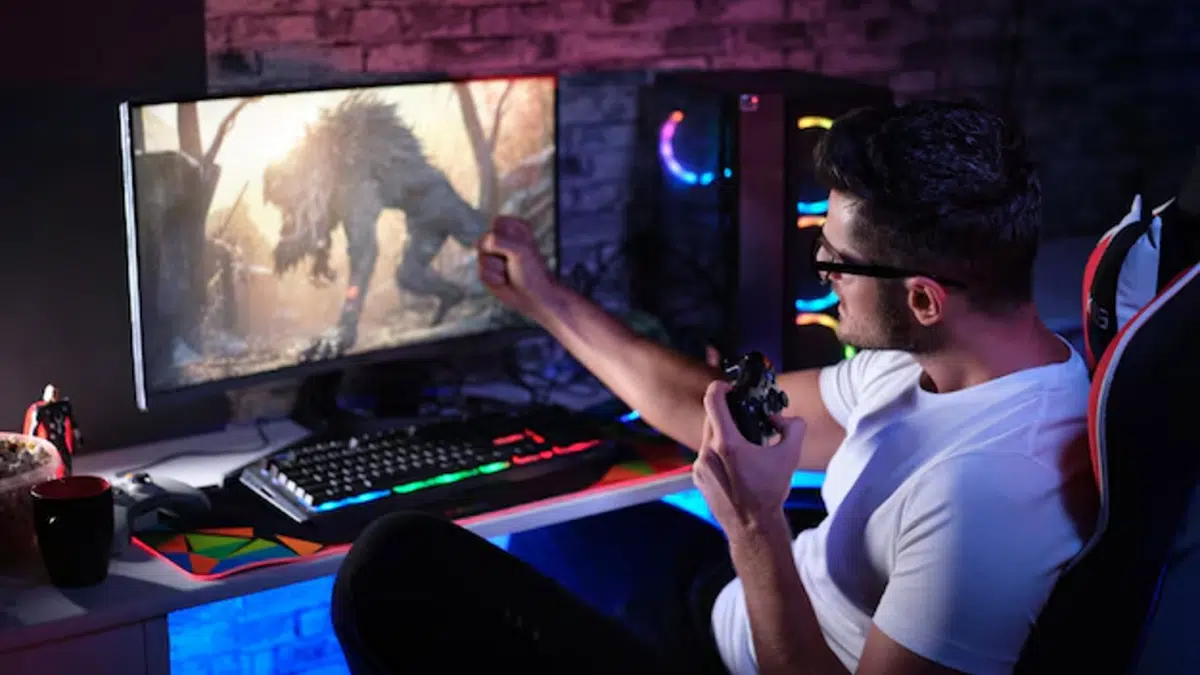
The term Gamer Challenger is commonly used in competitive gaming to describe a player who actively seeks difficult challenges, competitive matches, and opportunities to improve. It can refer to a mindset rather than a specific game, platform, or official title.
In some gaming communities, “Challenger” also refers to an elite rank within a competitive ranking system. Because the phrase is used in more than one way, beginners may find it confusing when they first encounter it online.
This guide explains what Gamer Challenger means, how the concept relates to competitive gaming, what skills challengers develop, and how beginners can start building a stronger competitive approach.
What Is Gamer Challenger?
A Gamer Challenger is generally a player who does more than simply play games for entertainment. The player actively looks for ways to test their abilities, overcome difficult objectives, compete against stronger opponents, and improve through practice.
This can include climbing ranked ladders, participating in tournaments, attempting difficult game modes, completing self-imposed challenges, or studying previous matches to identify mistakes. The central idea is continuous improvement rather than simply winning every game.
The phrase does not describe one universal official gaming program. Its meaning can change depending on the community, game, or website where you encounter it.
What Does Challenger Mean in Competitive Gaming?
In some competitive games, Challenger is an elite ranking tier. For example, League of Legends uses Challenger as one of its highest competitive ranks, making the word strongly associated with high-level ranked play.
However, ranking structures differ between games. Some titles use completely different names, divisions, rating systems, or regional leaderboards, so reaching a “Challenger” level in one game should not automatically be compared with another game’s ranking system.
The broader idea is that a challenger represents someone attempting to reach a very high level of competitive performance.
Gamer Challenger as a Mindset
The Gamer Challenger concept is not limited to an official rank. It can also describe a competitive mindset built around learning, persistence, and deliberate practice.
A challenger understands that losing can provide useful information. Instead of treating every defeat as a failure, the player can examine positioning, decision-making, timing, communication, or mechanical mistakes and use that information during future matches.
This approach makes gaming more purposeful. Every session becomes an opportunity to identify weaknesses and develop specific skills.
How Is a Gamer Challenger Different From a Casual Gamer?
Casual gaming and competitive gaming can both be enjoyable, but their goals are often different.
A casual player may primarily play to relax, socialize, explore a story, or enjoy a favorite game. A challenger may place greater emphasis on performance, improvement, rankings, difficult objectives, and measurable progress.
Neither approach is better for everyone. The important difference is the player’s objective and how seriously they want to pursue improvement.
Skills Every Gamer Challenger Should Develop
Game Knowledge
Understanding the rules and mechanics of a game is one of the foundations of competitive improvement.
A strong player learns how characters, weapons, maps, abilities, resources, objectives, and game systems interact. This knowledge allows them to make better decisions rather than relying only on quick reactions.
Strategic Thinking
Competitive gaming requires more than fast reflexes.
Players need to recognize patterns, predict opponents’ actions, manage resources, choose favorable positions, and understand when to attack or defend. Strategy becomes particularly important as opponents become more experienced.
Mechanical Skills
Mechanical ability refers to the physical execution of actions inside a game.
Depending on the title, this can involve aiming, movement, timing, combinations, accuracy, reaction speed, or precise ability usage. Regular focused practice can gradually make these actions more consistent.
Communication
Communication is especially important in team-based games.
A challenger should learn how to provide useful information without creating unnecessary distractions. Clear callouts, good timing, teamwork, and respectful communication can have a major influence on team performance.
Adaptability
Game environments constantly change.
Opponents use different strategies, updates can modify game mechanics, and new competitive trends can appear. Successful players therefore need to adapt instead of relying on one strategy forever.
Why Losing Is Important for a Gamer Challenger
Losing can be frustrating, but it is also one of the most valuable sources of feedback.
A player who immediately blames teammates, opponents, or luck may miss an opportunity to improve. A challenger instead tries to determine what could have been done differently.
Reviewing a defeat can reveal repeated mistakes such as poor positioning, unnecessary aggression, weak resource management, predictable movement, or ineffective communication. Fixing one recurring problem can eventually produce more improvement than simply playing additional matches without reflection.
How to Become a Gamer Challenger
Beginners do not need professional equipment or exceptional natural talent to adopt the challenger mindset.
Start by choosing one game and setting a realistic improvement goal. Instead of trying to improve everything simultaneously, focus on one area at a time, such as aiming, movement, map knowledge, decision-making, or communication.
Practice with a specific purpose and review your results afterward. This creates a more structured learning process and makes it easier to recognize genuine progress.
Practice Quality Matters More Than Simply Playing Longer
Playing for many hours does not automatically guarantee improvement.
A long session filled with repeated mistakes can reinforce bad habits. Focused practice, on the other hand, gives players an opportunity to isolate weaknesses and deliberately work on them.
Short, consistent practice sessions can therefore be more productive than extremely long sessions without a clear objective.
How to Avoid Tilt
Tilt is a state in which frustration begins to negatively affect decision-making and gameplay.
It can happen after repeated losses, unfair-feeling situations, communication problems, or a series of mistakes. Once frustration takes over, players may become impatient and make decisions they normally would avoid.
Taking a break, changing the game mode, muting disruptive communication, and returning with a calmer mindset can help. Competitive improvement requires mental control as well as mechanical ability.
Does a Gamer Challenger Need Expensive Equipment?
Not necessarily.
A reliable computer or console, comfortable controls, stable internet, and a setup that allows you to play consistently are usually more important than buying the most expensive hardware available.
Better equipment can sometimes improve comfort or consistency, but it cannot replace game knowledge, practice, strategy, and decision-making. Beginners should therefore focus on developing their skills before assuming that expensive equipment is the key to becoming competitive.
Gamer Challenger and Esports
The challenger mindset naturally overlaps with esports, where players compete in organized tournaments and professional leagues.
However, being a Gamer Challenger does not automatically mean someone is a professional esports player. Competitive gaming exists across many levels, from casual ranked matches and community tournaments to organized amateur competitions and professional events.
A player can therefore pursue challenging gameplay simply for personal achievement without intending to make gaming a career.
Common Mistakes Beginners Make
One common mistake is trying to improve everything at once.
A beginner may attempt to master mechanics, strategy, communication, game knowledge, and advanced tactics simultaneously. This can become overwhelming and make progress difficult to measure.
Another mistake is focusing entirely on the result. Winning is obviously important in competitive games, but concentrating only on wins can prevent players from identifying the smaller improvements that eventually lead to better results.
Comparing your progress with highly experienced players can also be discouraging. Every competitor starts somewhere, and meaningful improvement is usually easier to measure against your own previous performance.
Is Gamer Challenger Suitable for Beginners?
Yes.
You do not need to already be an elite player to adopt the Gamer Challenger approach. The concept is based primarily on your willingness to accept challenges, learn from mistakes, and improve.
A beginner can start with simple objectives and gradually increase the difficulty. Over time, consistent practice can build confidence, knowledge, and competitive experience.
Frequently Asked Questions
What is a Gamer Challenger?
A Gamer Challenger is generally a player who actively seeks difficult gameplay, competitive experiences, and continuous improvement. The phrase can also refer to players pursuing an elite Challenger rank in games that use that ranking system.
Is Gamer Challenger a specific game?
Not necessarily. The phrase is used broadly across gaming discussions and can describe a competitive player or mindset rather than one particular title.
Do I need to be a professional gamer?
No. You can adopt a challenger mindset while playing ranked matches, completing difficult single-player objectives, participating in community tournaments, or simply trying to improve your personal performance.
Can beginners become Gamer Challengers?
Absolutely. The concept is based on improvement and willingness to take on challenges rather than starting at an advanced skill level.
Do I need expensive gaming equipment?
No. Reliable equipment can make gaming more comfortable, but practice, strategy, game knowledge, and consistency are much more important foundations for improvement.
Final Thoughts
Gamer Challenger is best understood as a combination of competitive ambition, challenging gameplay, and a commitment to improvement. In some games, Challenger is also an elite rank, but the broader concept extends beyond any single ranking system.
For beginners, the most important step is not trying to become the best immediately. Instead, choose a game you enjoy, set realistic goals, practice deliberately, learn from losses, and maintain a healthy approach to competition.
With patience and consistent effort, the Gamer Challenger mindset can turn ordinary gaming sessions into meaningful opportunities to develop skill, strategy, focus, and confidence.
