


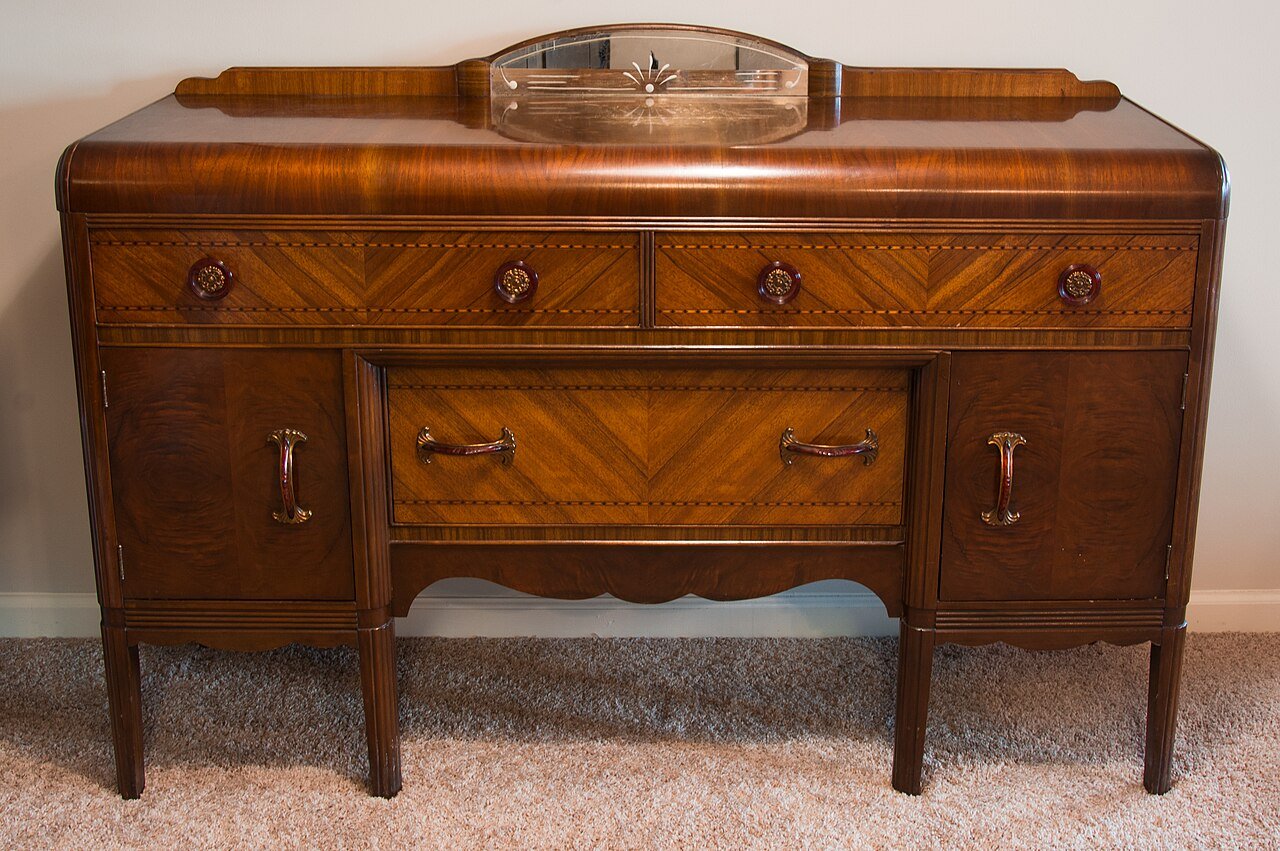
Antique dressers are more than practical pieces of furniture. They can reflect the design preferences, craftsmanship, materials, and social trends of the period in which they were made.
For beginners, identifying an antique dresser can seem difficult because many styles share similar features. A dresser may have curved legs, carved decorations, brass hardware, or a dark wood finish, but those details alone do not necessarily reveal its age or origin.
The key is to examine the overall design, construction, wood, hardware, proportions, joinery, and signs of age together. Learning how these characteristics work together can help you make a much more informed identification.
What Is an Antique Dresser?
An antique dresser is generally a storage piece made in an earlier historical period, often valued for its craftsmanship, materials, design, and age.
The term “antique” can vary depending on context and market conventions, so age alone should not be the only factor used to identify a piece.
Vintage, reproduction, and antique furniture can sometimes look remarkably similar. Modern manufacturers frequently recreate historical styles, making construction details especially important when determining whether a dresser is genuinely old.
Why Is Identifying a Dresser Style Important?
Identifying the style can help you estimate when and where a dresser was produced.
It can also provide clues about the furniture’s original purpose and the design influences of its period.
For collectors, correct identification may affect the piece’s historical significance and potential value. For homeowners, understanding the style can make it easier to choose appropriate restoration methods and complementary décor.
Common Antique Dresser Styles
Queen Anne
Queen Anne furniture is associated with the late 17th and early 18th centuries.
It is known for graceful proportions, curved shapes, cabriole legs, pad or slipper feet, and relatively restrained decoration.
A Queen Anne-style dresser often looks elegant rather than heavily ornate.
Look for flowing curves and carefully shaped legs rather than the massive appearance associated with some earlier furniture.
Chippendale
Chippendale furniture became influential during the 18th century and is named after English cabinetmaker Thomas Chippendale.
The style can include elaborate carving, cabriole legs, ball-and-claw feet, Gothic-inspired details, and decorative pierced elements.
American Chippendale furniture developed its own characteristics, so not every piece that resembles Chippendale will have exactly the same features.
A dresser with elaborate carving and dramatic feet may be worth investigating as a possible Chippendale-inspired piece.
Georgian
Georgian furniture encompasses several periods and design influences associated with the reigns of British monarchs George I through George IV.
Many Georgian pieces emphasize symmetry, balanced proportions, quality wood, and restrained ornamentation, although later examples can become considerably more decorative.
Mahogany became particularly important during this period.
Federal
Federal furniture developed in the late 18th and early 19th centuries, particularly in the United States.
It often features symmetrical designs, tapered legs, fan or shell motifs, inlaid decoration, and classical influences.
A Federal dresser may appear more refined and architectural than heavily carved furniture from earlier periods.
Victorian
Victorian furniture became popular during the 19th century and is often recognized for its elaborate decoration.
Dressers from this period may feature dark woods, substantial proportions, carved ornaments, turned elements, mirrors, marble tops, and complex drawer arrangements.
Because Victorian furniture covers a long period, there is considerable variation within the style.
Eastlake
Eastlake furniture emerged during the Victorian era and was influenced by British designer Charles Eastlake.
It typically emphasizes geometric decoration rather than the elaborate naturalistic carving seen in some earlier Victorian pieces.
Straight lines, incised patterns, spindles, and repeated geometric motifs can be useful clues when identifying Eastlake-inspired furniture.
Arts and Crafts
Arts and Crafts furniture generally emphasizes craftsmanship, simple forms, natural materials, and functional construction.
The style became especially influential around the late 19th and early 20th centuries.
An Arts and Crafts dresser may have straight lines, visible wood grain, simple hardware, and relatively limited ornamentation.
Art Nouveau
Art Nouveau furniture is known for flowing, organic forms.
Curved lines, botanical motifs, asymmetrical decoration, and stylized flowers or leaves are common characteristics.
A dresser with sweeping curves and nature-inspired ornamentation may have Art Nouveau influences.
Art Deco
Art Deco furniture generally favors geometric shapes, symmetry, streamlined forms, and decorative materials.
Dressers from the Art Deco period may incorporate veneers, contrasting woods, mirrored surfaces, chrome or geometric hardware, and strong horizontal or vertical lines.
This style is particularly useful to recognize because its visual language differs considerably from ornate Victorian furniture.
Examine the Dresser’s Shape
The overall silhouette is one of the first things you should examine.
Look at whether the dresser is tall, wide, narrow, curved, rectangular, or highly symmetrical.
Pay attention to the arrangement of drawers and whether the upper section includes a mirror, cabinet, or additional storage.
A tall chest of drawers has a different historical function and appearance from a low, wide dresser, even when both use similar decorative details.
Study the Legs and Feet
Legs can provide valuable clues about furniture style.
Cabriole legs curve outward and inward and are strongly associated with styles such as Queen Anne and Chippendale.
Straight tapered legs are common in several later classical and Federal-inspired designs.
Turned legs, bracket feet, bun feet, and ball-and-claw feet can also help narrow down the period or stylistic influence.
However, avoid identifying a dresser based on its feet alone. Reproduction furniture can copy historical leg designs very convincingly.
Examine the Drawer Construction
Drawer construction is one of the most useful clues when determining whether a dresser may be genuinely old.
Older drawers were commonly assembled using handmade or early machine-cut dovetail joints.
Look closely at the corners where the drawer sides meet the front and back.
Irregularly spaced dovetails, variations in size, tool marks, and other handmade characteristics can suggest older construction, although they are not absolute proof of age.
Modern reproduction furniture often uses highly uniform machine-cut joints.
Look at the Wood
The type and appearance of wood can provide additional information.
Common woods found in historical furniture include oak, walnut, mahogany, maple, cherry, pine, and ash, depending on location and period.
Examine the grain, color, veneer, and construction.
Keep in mind that wood identification alone cannot establish the age of a dresser. Modern furniture can use the same species of wood as historical furniture.
Check for Veneer
Veneer was widely used in high-quality furniture.
Thin pieces of attractive wood could be applied over a less expensive structural wood to create decorative grain patterns while conserving valuable timber.
Look carefully at drawer fronts, tabletops, and decorative panels.
Bookmatched veneer, figured wood, crossbanding, and contrasting strips can provide clues about craftsmanship and design period.
Inspect the Hardware
Handles, pulls, escutcheons, locks, hinges, and decorative mounts can help narrow down a dresser’s style.
Look for evidence that the hardware is original.
If screw holes, finish differences, or marks indicate that handles have been replaced, the current hardware may tell you more about a later renovation than the original furniture.
Older hardware can show irregularities and manufacturing characteristics that differ from modern reproductions.
Check the Back of the Dresser
Beginners often focus on the front and overlook the back.
The backboards can reveal important construction information, including board thickness, saw marks, nail types, screws, and how the pieces were attached.
Older furniture may contain hand-cut or irregularly shaped boards, while newer reproductions often have highly uniform construction.
The back is also a useful place to look for labels, stamps, handwritten notes, or manufacturer’s marks.
Look for Maker’s Marks and Labels
A manufacturer’s label, stamp, signature, or paper tag can be extremely valuable when identifying furniture.
Search inside drawers, on the back, underneath the dresser, or on other less visible surfaces.
A maker’s mark can sometimes identify the manufacturer, location, approximate production period, or collection.
Do not remove labels or alter markings during inspection because they can contribute significantly to the furniture’s provenance.
Signs of Genuine Age
Natural aging can provide supporting evidence that a dresser has been around for many years.
You may notice surface wear around drawer pulls, changes in finish, small separations caused by wood movement, oxidation of hardware, or uneven fading.
Older furniture can also develop a distinctive patina.
However, signs of wear are not proof of authenticity. Artificial aging techniques can make newer furniture appear old.
The best identification combines visible aging with construction methods and historical design characteristics.
Original Finish vs. Refinished Furniture
Many antique dressers have been refinished during their lifetime.
A new finish does not automatically make a piece worthless, but it can make identification more difficult.
Look carefully inside drawers, underneath the dresser, and in protected areas where the original finish may still remain.
Differences between exposed and protected surfaces can provide clues about previous restoration.
Before stripping or refinishing a potentially valuable antique, consider having it evaluated by a qualified furniture specialist.
How to Tell an Antique From a Reproduction
Distinguishing an antique from a reproduction is one of the most challenging parts of furniture identification.
A reproduction may intentionally copy the appearance of a historical style while using modern construction techniques.
Check the entire piece rather than relying on one characteristic.
Modern screws, uniform machine-cut joints, contemporary materials, artificial distressing, modern drawer slides, and recently manufactured hardware can all provide clues.
At the same time, repairs and replacement components can appear on genuinely old furniture, so one modern-looking element does not automatically mean the entire dresser is modern.
Don’t Confuse Style With Age
This is one of the most important lessons for beginners.
A dresser described as “Queen Anne style” does not necessarily date from the Queen Anne period.
Furniture manufacturers have reproduced historical styles for centuries. A dresser made in the 20th century can deliberately imitate an 18th-century design.
Therefore, style identification and age identification are two different tasks.
The style tells you what historical design language the furniture follows, while construction, provenance, materials, and documentation help determine when the particular piece was actually made.
How to Research an Antique Dresser
Once you have documented the dresser’s characteristics, compare them with reliable furniture references.
Photograph the front, sides, back, feet, hardware, drawer joints, labels, and any unusual construction details.
Search museum collections, antique furniture references, auction archives, and specialist publications for similar examples.
Comparing multiple examples is usually more reliable than matching your dresser to one photograph online.
When to Get a Professional Appraisal
If the dresser appears particularly old, unusual, or valuable, professional evaluation can be worthwhile.
An experienced antique furniture appraiser can assess construction, style, condition, provenance, restoration, and comparable market examples.
This can be especially important before selling, insuring, extensively restoring, or modifying an important piece.
Avoid making major restoration decisions based solely on an online identification.
Common Mistakes Beginners Make
One common mistake is assuming that dark wood automatically means the dresser is antique.
Another is treating decorative hardware as proof of age.
Some people also rely too heavily on a single feature, such as dovetail joints or carved feet.
Perhaps the biggest mistake is assuming that an attractive or heavily distressed dresser must be old.
A proper identification requires several independent clues pointing toward the same conclusion.
Frequently Asked Questions
How can I tell what style my antique dresser is?
Start by examining its overall shape, legs, feet, drawer arrangement, decorative motifs, wood, hardware, and construction techniques. Compare these characteristics with documented examples of historical furniture styles.
What is the easiest way to identify an old dresser?
Look for manufacturer labels, construction details, drawer joints, hardware, and distinctive stylistic features. A professional appraisal can provide greater confidence when the piece appears valuable.
Do dovetail joints mean a dresser is antique?
No. Dovetail joints can indicate traditional construction, but they are still used in modern furniture. Their shape, regularity, cutting method, and relationship to other construction details matter.
Does old-looking furniture mean it is antique?
Not necessarily. Reproductions can be intentionally distressed to look old. Construction methods and provenance are generally more useful than surface wear alone.
Should I refinish an antique dresser?
Think carefully before refinishing a potentially valuable antique. Removing an original finish can affect its historical character and value, so professional advice may be appropriate.
Final Thoughts
Identifying antique dresser styles becomes much easier when you learn to look beyond surface appearance.
Start with the overall silhouette, then examine the legs, feet, drawers, wood, veneer, hardware, backboards, labels, and construction methods. Each detail provides a small piece of the puzzle.
Most importantly, remember that a historical style does not automatically mean a piece was made during that historical period. Reproductions can imitate famous furniture styles extremely closely.
If a dresser appears unusually old or valuable, document its features carefully and consider getting a professional opinion before making repairs or refinishing it. With patience and careful observation, even a beginner can develop a much better understanding of antique dresser styles and the history behind these fascinating pieces.
