


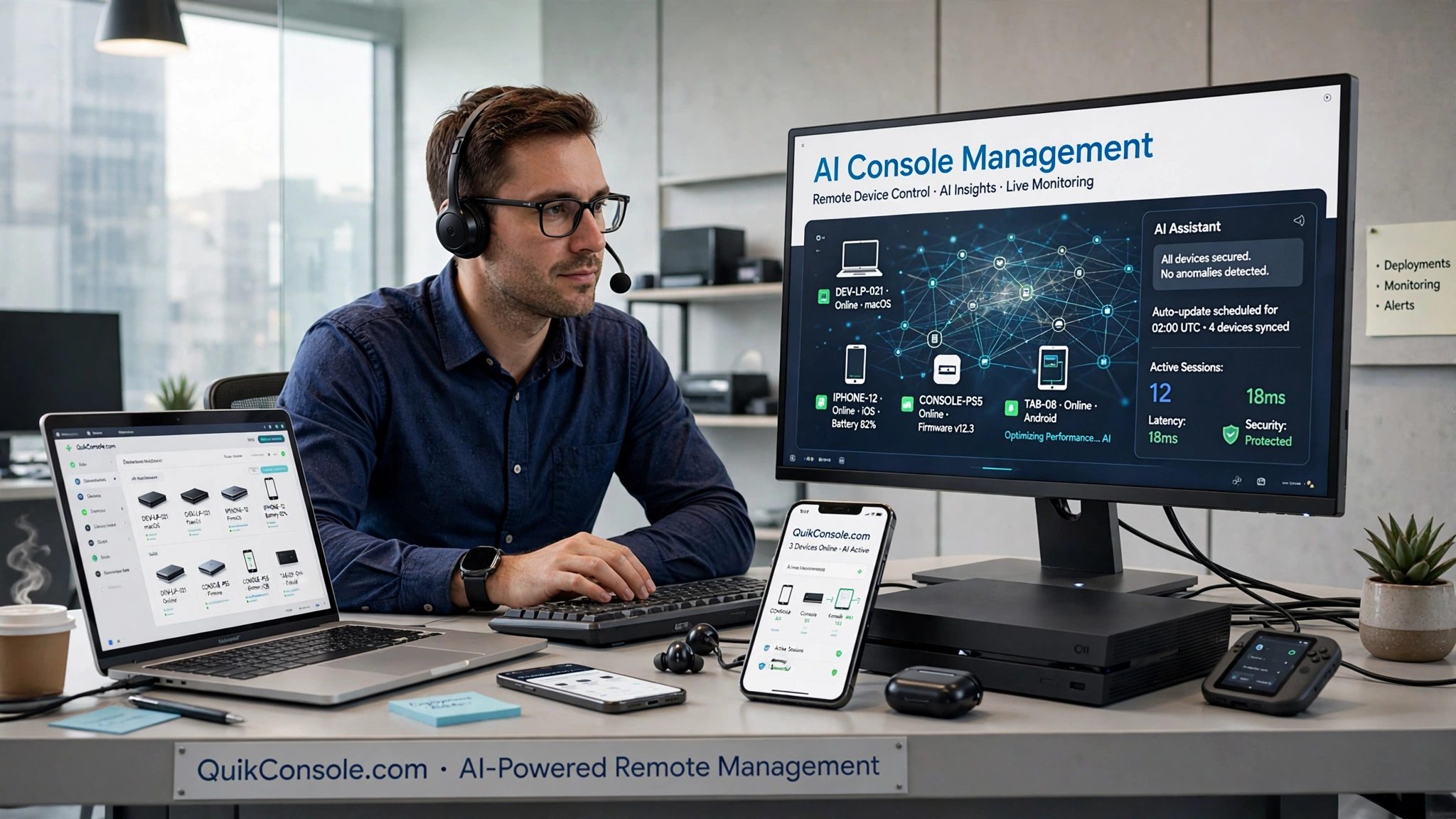
As businesses continue to adopt artificial intelligence, cloud computing, and connected devices, managing technology across multiple environments has become increasingly complex. Organizations need solutions that simplify device administration, improve operational visibility, strengthen security, and reduce the time spent on repetitive IT tasks.
QuikConsole.com is a name worth examining in the broader conversation about modern device management and AI-powered IT operations. However, choosing the right platform requires more than an attractive product name or promising technology claims. Businesses must understand what a service actually offers, how it works, which devices it supports, and whether its features deliver measurable value.
In this comprehensive QuikConsole.com review, we explore the platform from the perspective of businesses, IT administrators, technology professionals, and organizations evaluating device management solutions in 2026. We also examine the features that matter most, the potential benefits and limitations, the security considerations, and the factors readers should verify before deciding whether QuikConsole.com deserves a place in their technology strategy.
What Is QuikConsole.com?
QuikConsole.com is the subject of this review as a potential solution in the evolving device management and IT administration market. The name suggests a console-oriented approach to managing technology, but a website name alone does not establish the platform’s actual capabilities, supported operating systems, deployment model, or use of artificial intelligence.
For that reason, it is important to distinguish between the general capabilities of modern AI device management platforms and features that have been independently confirmed for QuikConsole.com. Without verified product documentation or reliable evidence of its current functionality, claims about specific integrations, automation tools, pricing plans, or performance should not be treated as established facts.
Modern device management platforms typically help organizations oversee computers, smartphones, tablets, and other connected endpoints through a centralized administrative interface. Depending on the product, they may also support software deployment, configuration policies, security monitoring, inventory tracking, remote troubleshooting, and compliance reporting.
AI can extend these capabilities by identifying unusual device behavior, summarizing technical alerts, recommending troubleshooting steps, and automating selected administrative workflows. Whether QuikConsole.com provides these capabilities must be confirmed through its official documentation, product demonstrations, and current service information.
Why AI Device Management Matters in 2026
The proliferation of network-connected devices has reshaped how organizations oversee, operate, and sustain their information technology environments. Employees may use company-issued laptops, personal smartphones, remote workstations, tablets, and specialized equipment across offices, homes, and international locations.
Managing every endpoint manually can create unnecessary administrative work, particularly when IT teams must handle software updates, access permissions, configuration changes, troubleshooting requests, and security incidents simultaneously. Centralized device management helps consolidate these responsibilities, while automation can reduce repetitive work and make operational processes more consistent.
Artificial intelligence adds another potential layer of efficiency. Instead of relying entirely on administrators to review every alert or investigate every reported problem, AI-assisted systems can help prioritize information, identify patterns, and recommend possible solutions.
However, AI is not automatically a guarantee of better device management. Its value depends on the quality of the underlying data, the accuracy of its recommendations, the reliability of its integrations, and the safeguards used when automated actions could affect business operations.
Key Features to Look for in an AI Device Management Platform
Centralized Device Monitoring and Management
A centralized management console gives administrators a consolidated view of registered devices, configuration settings, software versions, and device health. This enhanced level of insight is particularly beneficial for businesses managing remote workforces and IT operations across geographically dispersed offices.
A well-designed console should make it easy to identify devices that require attention, review their current status, and apply authorized management policies without navigating several disconnected tools. Clear reporting and practical filtering options can further reduce the time required to investigate routine IT issues.
For QuikConsole.com, prospective customers should verify which device categories and operating systems are supported, whether management takes place through an agent or a native integration, and whether the platform offers real-time status information. Such information plays a crucial role in assessing whether a solution aligns with an organization’s current infrastructure and operational requirements.
AI-Powered Automation and Troubleshooting
Automation is one of the most important considerations when evaluating an AI-enabled management solution. Based on the tools available, automated processes can simplify application distribution, enforce consistent configuration settings, flag recurring system faults, and support IT teams in diagnosing and addressing technical challenges.
AI-assisted troubleshooting can also help organize technical information and suggest possible causes of recurring incidents. When implemented effectively, these capabilities can reduce repetitive manual work and help IT teams respond more consistently to common support requests.
However, organizations must evaluate whether a platform’s AI capabilities execute tasks independently, provide suggested solutions, or depend on administrative authorization before carrying out changes. The distinction matters because automated device changes can affect availability, user productivity, and information security.
Security Monitoring and Access Control
Device management and cybersecurity are closely connected because every endpoint can become a potential entry point for unauthorized access. Clearly defined administrative policies allow organizations to keep device settings consistent, enforce appropriate access controls, and detect endpoints that do not satisfy established cybersecurity requirements.
Depending on the solution, relevant capabilities may include role-based access control, device compliance checks, audit logs, authentication integrations, and alerts for suspicious activity. Organizations should also assess the strength of data encryption, the security of communication channels, and the policies governing how long information is stored and when it is deleted.
Organizations evaluating QuikConsole.com should review its published security documentation and determine how administrative access is protected. They should also establish whether the platform supports multi-factor authentication, records sensitive administrative actions, and explains how customer information is stored and processed.
Software Deployment and Update Management
Keeping software current is a fundamental responsibility for IT administrators. Running obsolete software can expose systems to security risks, create compatibility conflicts, and increase the effort required for ongoing maintenance.
A capable device management platform may provide centralized software deployment, update scheduling, configuration enforcement, and reporting on installation status. These features can help organizations coordinate maintenance while reducing disruptions to employees.
Before choosing QuikConsole.com, businesses should verify whether software distribution is supported, which applications and operating systems are covered, and whether administrators can schedule updates around business requirements. Rollback options, deployment approvals, and clear failure reports are particularly useful when updates affect critical systems.
Reporting, Analytics, and Compliance Visibility
Reporting helps organizations understand the condition of their technology environment and identify areas that require improvement. Useful reports may cover device inventories, operating system versions, update status, configuration compliance, security findings, and administrative activity.
AI-assisted analytics can make this information easier to interpret by summarizing recurring issues or highlighting patterns that deserve investigation. However, useful analytics must be based on accurate, sufficiently detailed data rather than unsupported predictions or incomplete device records.
For regulated or security-conscious organizations, auditability is particularly important. Before adopting QuikConsole.com, decision-makers should confirm which reports are available, how long records are retained, whether data can be exported, and whether the platform supports the organization’s applicable compliance requirements.
Potential Benefits of Using QuikConsole.com
Improved IT Efficiency
One of the main reasons businesses investigate centralized device management is the opportunity to simplify everyday administrative tasks. A single interface can reduce the need to switch between separate tools, manually collect device information, or repeat configuration steps across multiple endpoints.
If QuikConsole.com provides reliable centralized management and useful automation, it could potentially help an IT team organize routine operations more efficiently. The actual benefit would depend on the supported workflows, the number of devices managed, the quality of integrations, and the amount of manual work eliminated.
Organizations should measure these improvements against a clear baseline. Useful indicators include the time required to resolve common incidents, the number of repetitive support requests, software update completion rates, and the administrative effort needed to maintain compliance.
Greater Visibility Across Connected Devices
A centralized device inventory can help organizations understand which devices are in use, which require updates, and which may no longer meet internal policies. Better visibility can also support hardware planning, software licensing, and lifecycle management.
This information becomes particularly useful when employees work remotely or when devices are distributed across several locations. Rather than relying on separate spreadsheets or inconsistent records, administrators can work from a more organized view of the technology environment.
The value of this benefit depends on inventory accuracy and coverage. Businesses should determine how devices are enrolled, how frequently information is refreshed, and how the system handles devices that are offline or no longer actively managed.
More Consistent Security Practices
Centralized policies can help organizations apply the same security requirements across supported devices. This can reduce configuration inconsistencies and make it easier to identify endpoints that need corrective action.
AI-assisted prioritization may also help administrators focus on important alerts instead of treating every notification as equally urgent. Nevertheless, AI recommendations should complement established security procedures rather than replace professional judgment, access controls, or incident response planning.
A platform’s real security value must be assessed through its documented safeguards, administrative controls, monitoring capabilities, and suitability for the organization’s risk profile. Marketing descriptions alone cannot establish that a service provides adequate protection.
Better Support for Remote and Hybrid Teams
Remote and hybrid working arrangements create additional challenges for IT departments because employees may rarely connect to a central office network. Cloud-based management and secure remote administration can help address these challenges when the platform supports the required operating systems and connectivity models.
A suitable solution can make it easier to review device status, coordinate updates, and investigate technical issues without requiring every employee to visit an IT department in person. This can improve operational consistency across distributed teams.
Before relying on QuikConsole.com for remote administration, organizations should confirm its connectivity requirements, offline-device behavior, permission model, and support for secure remote troubleshooting. These practical details can determine whether the platform fits a distributed workforce.
Is QuikConsole.com the Best AI Device Management Platform in 2026?
Determining the best device management platform requires a comparison of verified features, security controls, usability, compatibility, pricing, and support quality. A product cannot reasonably be declared the market leader solely because its name includes a technology-related term or because its website presents it as an innovative solution.
For some organizations, the best platform may be the one that integrates most effectively with existing operating systems and identity services. Others may prioritize advanced automation, detailed compliance reporting, simple administration, or predictable costs as their device fleets expand.
QuikConsole.com should therefore be evaluated against specific operational requirements rather than an unverified ranking. Prospective buyers should request a demonstration, examine the available documentation, and test the functions that matter most to their environment before making a purchasing decision.
A credible comparison should also distinguish between advertised AI capabilities and measurable results. Demonstrated reductions in support workload, dependable policy enforcement, transparent security controls, and reliable integrations provide stronger evidence of value than broad claims about intelligent automation.
QuikConsole.com vs. Traditional Device Management Solutions
Traditional device management systems typically rely on established administrative policies, predefined rules, and structured workflows. They can provide reliable control over device configurations, software deployment, inventory management, and access permissions without requiring advanced AI functionality.
AI-enabled platforms can add value by helping administrators interpret alerts, identify recurring problems, summarize technical information, and prioritize selected tasks. These capabilities may improve efficiency when they are integrated into existing workflows and supported by accurate operational data.
The distinction is not always absolute because many established device management products already incorporate automation, analytics, and AI-assisted features. As a result, buyers should compare actual capabilities rather than assuming that a newer or AI-branded product is automatically more advanced.
For a meaningful comparison, examine the management features available in each product, the level of automation offered, supported integrations, security controls, reporting quality, and total cost of ownership. QuikConsole.com’s position in this comparison remains uncertain until its current capabilities can be verified.
QuikConsole.com Pricing and Plans
Pricing is an important factor when selecting a device management platform, particularly for businesses managing large numbers of endpoints or operating with limited IT budgets. Costs may depend on the number of devices, the number of administrators, the selected feature tier, and the level of technical support included.
Some providers use per-device subscriptions, while others offer per-user pricing, tiered packages, or enterprise agreements. Additional charges may apply for premium integrations, advanced reporting, implementation services, or specialized support.
No specific QuikConsole.com pricing figures or subscription tiers should be assumed without checking current official information. Prospective customers should look for a published pricing page or request a written quotation that clearly identifies recurring fees, setup costs, usage limits, renewal terms, and cancellation conditions.
A useful purchasing decision should consider total cost rather than subscription price alone. Implementation time, staff training, integration work, migration expenses, and ongoing administration can significantly influence the actual return on investment.
Security and Privacy Considerations
Before connecting any management platform to company devices, organizations should understand the permissions it requires and the information it can access. Depending on the deployment model, device management software may handle inventory records, configuration data, software details, user associations, diagnostic information, and administrative logs.
Businesses should examine the provider’s privacy policy, security documentation, data processing terms, and incident response procedures. They should also confirm whether data is encrypted during transmission and storage, which personnel can access it, and whether the service offers appropriate access restrictions and audit records.
AI introduces additional questions about how information is processed and whether customer data is used to train or improve models. Organizations should seek explicit answers about data retention, third-party processing, model providers, and controls for sensitive information before enabling AI-related functionality.
For QuikConsole.com specifically, these details require direct verification through current official documentation or written responses from the provider. Until that information is available, businesses should avoid assuming that the service meets particular security certifications or regulatory obligations.
Who Should Consider QuikConsole.com?
Organizations exploring centralized endpoint administration may find QuikConsole.com worth investigating if its verified capabilities align with their technical requirements. Small businesses, growing companies, managed service providers, and larger IT departments can all benefit from reducing fragmented workflows and improving device visibility, although their needs and purchasing criteria will differ.
Small businesses often prioritize ease of setup, manageable subscription costs, and straightforward administration. Larger organizations may place greater emphasis on role-based permissions, detailed audit trails, integration with identity systems, advanced reporting, and the ability to manage a large and diverse device fleet.
Managed service providers generally need reliable multi-customer administration, clear separation between client environments, efficient support workflows, and predictable licensing. Any organization considering QuikConsole.com for these purposes should confirm that the relevant features are actually available rather than inferring them from the product name.
The platform may be unsuitable for businesses that require unsupported operating systems, specialized compliance certifications, complex enterprise integrations, or guaranteed service levels that the provider cannot document. A short evaluation period can help identify these limitations before a broader deployment.
How to Evaluate QuikConsole.com Before Signing Up
A structured evaluation can help businesses separate useful capabilities from promotional claims. Begin by documenting the devices that need management, the operating systems in use, the existing security requirements, and the administrative tasks that consume the most time.
Next, request a demonstration or trial if one is available. Test device enrollment, inventory accuracy, policy enforcement, software updates, reporting, and the specific AI-assisted functions that are relevant to your organization.
Security and support should be assessed alongside usability. Review the platform’s permissions, authentication options, audit logs, privacy terms, support channels, documentation quality, and service availability commitments.
Finally, compare the results against at least one established alternative. Use the same devices, workflows, and evaluation criteria wherever possible so that differences in usability, reliability, administrative effort, and total cost can be assessed fairly.
Advantages and Limitations to Consider
The potential advantages of a centralized AI device management platform include consolidated device visibility, more consistent administrative policies, reduced repetitive work, and better organization of operational information. When AI features are implemented effectively, they may also help administrators interpret alerts and identify recurring issues more quickly.
However, these benefits are not guaranteed simply because a product is described as AI-powered. Actual results depend on supported devices, integration quality, data accuracy, automation safeguards, licensing costs, and the skills of the people responsible for managing the system.
The principal limitation in assessing QuikConsole.com is the need for verified, product-specific evidence. Without reliable documentation establishing its current features, pricing, integrations, and security controls, it is not possible to provide a definitive assessment of its performance or compare it confidently with established competitors.
Potential buyers should treat this uncertainty as a reason for careful evaluation rather than as proof that the platform is either effective or ineffective. Transparent documentation, a practical demonstration, and a clearly defined trial are the most useful ways to determine whether it meets real operational needs.
Frequently Asked Questions About QuikConsole.com
What is QuikConsole.com used for?
QuikConsole.com is the subject of this review in the context of device management and AI-assisted IT administration. Its precise purpose, supported devices, and available features should be confirmed through the website’s current official product information.
Is QuikConsole.com the best AI device management platform in 2026?
There is not enough verified product-specific evidence in this review to establish that QuikConsole.com is the best platform in 2026. A reliable judgment requires documented features, independent performance evidence where available, transparent pricing, security information, and comparisons with competing solutions.
Does QuikConsole.com support AI automation?
Its actual AI automation capabilities require verification. Buyers should determine whether the service supports automated actions, AI-generated recommendations, alert analysis, or other intelligent functions, and whether administrator approval is required for sensitive operations.
Is QuikConsole.com suitable for small businesses?
It could be worth evaluating if its confirmed features, pricing, and device compatibility match a small business’s requirements. Ease of setup, support availability, security safeguards, and total cost should all be considered before adoption.
How much does QuikConsole.com cost?
A verified current price has not been established here. Check the official website for published subscription details or contact the provider for a quotation that includes recurring fees, optional features, and any implementation costs.
Is QuikConsole.com safe to use?
Safety cannot be established from a product name or general marketing claims alone. Organizations should review its privacy policy, security controls, required permissions, data handling practices, and available independent assurance before connecting it to business devices.
What should users check before choosing QuikConsole.com?
Users should verify supported operating systems, management features, AI functionality, security controls, integrations, pricing, technical support, and contract terms. A practical trial can help establish whether the platform performs reliably in the intended environment.
Final Verdict: Is QuikConsole.com Worth Considering in 2026?
AI-assisted device management is an increasingly relevant area of IT operations because organizations need better visibility, consistent security policies, and efficient ways to manage growing numbers of connected endpoints. A suitable platform can help simplify administration, but its value depends on real functionality, reliable integrations, transparent security practices, and measurable operational benefits.
QuikConsole.com may be worth investigating as part of that evaluation, but declaring it the best AI device management platform in 2026 would require evidence that is not established in this review. Its actual capabilities, pricing, security posture, and competitive position should be confirmed before businesses rely on it for important IT operations.
For prospective users, the most practical next step is to consult the official product documentation, request a demonstration, and compare the service with established alternatives using clearly defined requirements. This evidence-based approach provides a stronger foundation for a purchasing decision than an unsupported ranking or a list of unverified features.
Ultimately, the best device management platform is the one that fits an organization’s environment, protects its information, supports its operational needs, and delivers demonstrable value at a sustainable cost. Until QuikConsole.com’s relevant capabilities can be independently established, it is more accurate to describe it as a platform to evaluate than to present it as a proven market leader.
