


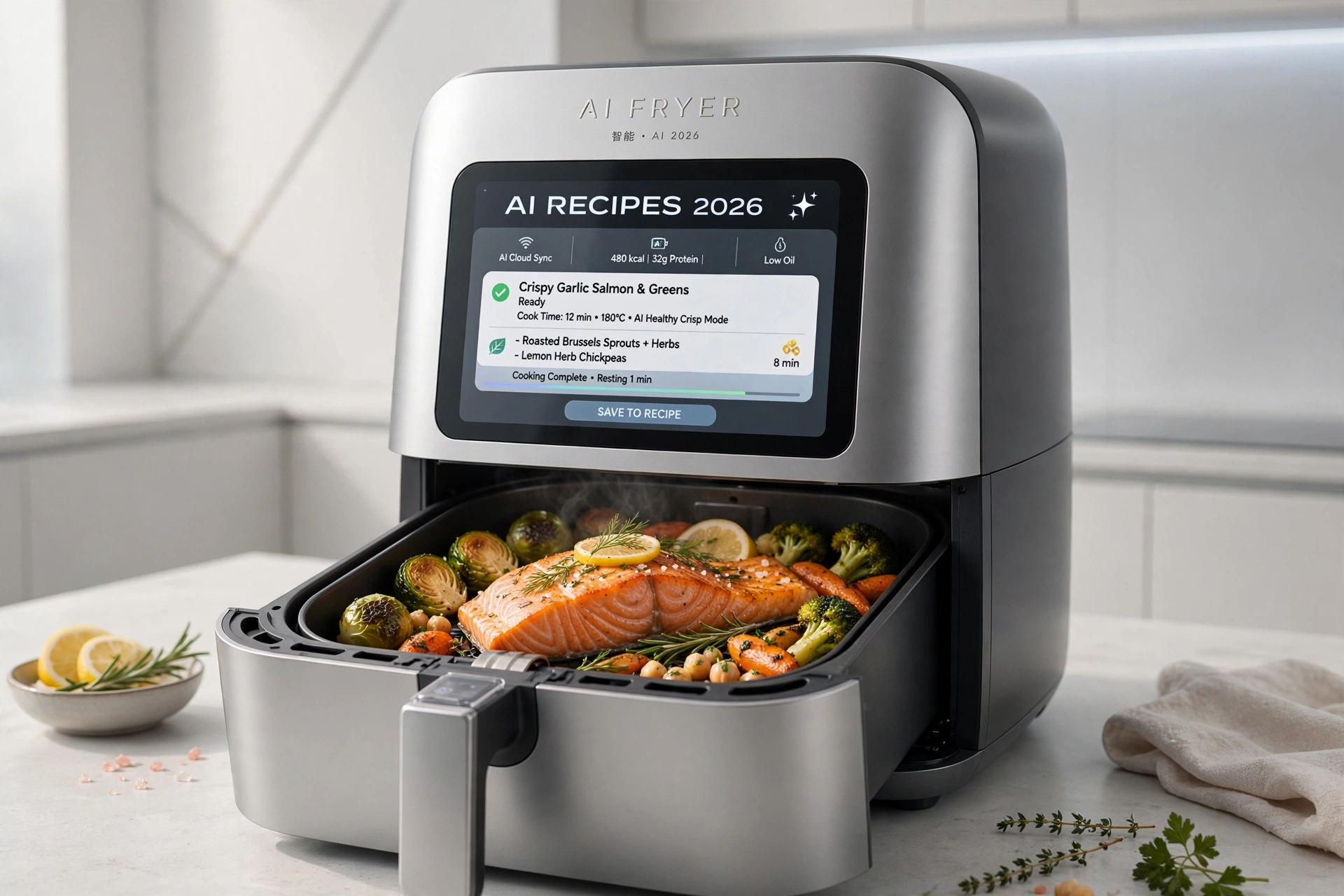
AI air fryer recipes are transforming the way people prepare everyday meals in 2026. By combining smart cooking technology with artificial intelligence, modern air fryers make it easier to prepare delicious, crispy, and nutritious dishes with less oil and less guesswork.
Whether you are a busy professional, a health-conscious individual, a beginner in the kitchen, or someone looking to simplify family meal preparation, AI-powered air fryer cooking offers a practical solution. From crispy chicken and roasted vegetables to homemade snacks and satisfying vegetarian dinners, these smart appliances help make everyday cooking faster, more convenient, and more consistent.
The growing popularity of AI air fryer recipes comes from their ability to combine convenience, customization, and healthier cooking methods. With features such as automatic temperature adjustment, guided cooking programs, food recognition on selected models, and smartphone connectivity, some smart air fryers can help users achieve better results without constantly monitoring their meals.
What Are AI Air Fryer Recipes?
AI air fryer recipes are meal instructions designed to work with intelligent or connected air fryers, often using automated settings, cooking recommendations, or personalized guidance. Depending on the appliance, artificial intelligence features may help identify foods, recommend cooking times, adjust temperatures, or provide notifications when it is time to shake, turn, or check ingredients.
Unlike traditional deep frying, air frying circulates hot air around food to create a browned, crisp exterior with significantly less added oil in many recipes. This makes it an attractive cooking method for people who want to enjoy familiar comfort foods while managing their overall fat and calorie intake.
However, not every air fryer marketed as smart uses advanced AI technology. Some models rely on preset programs, temperature sensors, digital controls, or connected applications rather than genuine food-recognition or adaptive-learning systems. Understanding the features of your particular appliance can help you choose appropriate recipes and get the most from its technology.
Why AI Air Fryer Cooking Is Trending in 2026
AI-powered air fryer cooking is gaining popularity as more people seek quick, effortless meal solutions that complement their busy daily routines. People increasingly want cooking methods that reduce preparation time, simplify cleanup, and deliver reliable results without requiring advanced culinary skills.
Smart cooking assistance can make this process easier by offering recipe suggestions, guiding users through preparation, and helping them select suitable cooking settings. Instead of searching through dozens of recipes and manually estimating every temperature, home cooks can follow structured instructions that match their ingredients and appliance capabilities.
Another important factor is the growing interest in healthier home-cooked food. Air frying can reduce the amount of oil required for foods that would traditionally be deep-fried, while also making it easier to prepare vegetables, lean proteins, and homemade snacks. When combined with balanced ingredients and appropriate portion sizes, these recipes can support a nutritious everyday eating pattern.
Best AI Air Fryer Recipes for Easy and Healthy Meals
1. Crispy Air Fryer Chicken Breast
Crispy air fryer chicken breast is an excellent choice for a high-protein lunch or dinner that requires minimal preparation. Chicken breast provides lean protein, while a simple combination of paprika, garlic powder, black pepper, lemon juice, and a small amount of olive oil adds flavor without relying on heavy sauces or excessive fat.
To prepare this recipe, pat the chicken dry and season it evenly before placing it in a single layer inside the air fryer basket. Cook at approximately 180°C (356°F) for 15–20 minutes, depending on the thickness of the chicken, turning it halfway through cooking.
To ensure the meat is both safe to eat and moist, use a food thermometer to measure the temperature at its thickest point, confirming it reaches 74°C (165°F). AI-assisted cooking programs may provide a starting point for temperature and timing, but the actual cooking time should always be adjusted according to the size of the chicken and your appliance.
Serve the chicken with steamed broccoli, roasted carrots, brown rice, or a fresh green salad for a balanced meal. Leftovers can also be sliced into wraps, added to grain bowls, or used in healthy sandwiches for convenient meals throughout the week.
2. Healthy Air Fryer Salmon
Air fryer salmon is a flavorful recipe for anyone looking to include more fish in their weekly meal plan. Salmon provides high-quality protein and omega-3 fatty acids, making it a valuable addition to a varied and balanced diet.
Begin by brushing salmon fillets lightly with olive oil and seasoning them with lemon juice, garlic, black pepper, and a small amount of salt. Arrange the fillets in the air fryer basket with the skin facing downward, then cook at around 190°C (374°F) for 7–12 minutes, adjusting the cooking time to suit their thickness and preferred level of doneness.
Smart air fryers may feature specialized fish programs and AI-based cooking guidance that simplify preparation and deliver more reliable results without frequent manual changes to cooking settings. Nevertheless, fish thickness, starting temperature, and appliance performance all influence the final result, so check the fish carefully and follow appropriate food-safety guidance.
Pair the salmon with air-fried asparagus, green beans, or sweet potato wedges to create a complete dinner. For a Mediterranean-inspired variation, add fresh parsley, lemon zest, and a side of cucumber and tomato salad.
3. Crispy Air Fryer Sweet Potato Fries
Sweet potato fries are a popular alternative to traditional deep-fried potatoes because they deliver a naturally sweet flavor and a satisfying texture with relatively little added oil. Sweet potatoes also provide dietary fiber and beta-carotene, which the body can convert into vitamin A.
Wash and cut the sweet potatoes into evenly sized strips, then pat them dry to remove excess moisture. Toss them with a teaspoon or two of olive oil, paprika, garlic powder, and black pepper before arranging them in a single layer in the basket.
Set the air fryer to around 190°C (374°F) and cook for 12–20 minutes, giving the basket a shake a few times throughout the process to promote uniform browning. Cooking times vary according to the thickness of the fries, the amount in the basket, and the power of the air fryer.
For a healthier serving option, enjoy sweet potato fries with homemade yogurt dip, hummus, or a tomato-based salsa instead of a large portion of creamy dressing. Avoid overcrowding the basket, as adequate airflow helps produce a better texture.
4. AI Air Fryer Roasted Vegetables
Roasted vegetables are among the easiest and most versatile recipes for smart air fryer cooking. A colorful mixture of broccoli, bell peppers, zucchini, red onions, and carrots provides a variety of nutrients, textures, and natural flavors without requiring complicated preparation.
Cut the vegetables into similar-sized pieces and toss them with a small amount of olive oil, dried herbs, garlic powder, and black pepper. Cook at approximately 180–200°C (356–392°F) for 8–15 minutes, checking the softer vegetables earlier and shaking the basket as needed.
Smart cooking features can make vegetable preparation more convenient by offering preset programs or suggested settings for different ingredients. However, vegetables contain different amounts of water and cook at different speeds, so it is often best to group ingredients with similar cooking requirements.
These roasted vegetables work well as a side dish, a topping for grain bowls, or an ingredient in wraps and salads. You can also combine them with chickpeas, quinoa, or grilled chicken to create a filling meal with fiber, protein, and essential nutrients.
5. Air Fryer Chicken Tenders
Homemade air fryer chicken tenders provide a lighter alternative to many restaurant-style fried chicken options. By using a thin coating of breadcrumbs rather than deep-frying the chicken in oil, you can create a crunchy exterior while controlling the ingredients and portion sizes.
Cut boneless chicken breast into strips and dip each piece in beaten egg before coating it with seasoned whole-wheat breadcrumbs. Arrange the strips in a single layer and lightly spray them with cooking oil to encourage browning.
Cook at approximately 190°C (374°F) for 10–15 minutes, turning the pieces halfway through cooking. The exact time depends on the thickness of the strips, so confirm that the thickest piece reaches an internal temperature of 74°C (165°F).
Serve the tenders with homemade yogurt-based ranch dip, roasted vegetables, or a side salad. For additional flavor, mix dried oregano, paprika, onion powder, and a small amount of grated Parmesan into the breadcrumb coating.
6. Air Fryer Chickpeas for a Healthy Snack
Air fryer chickpeas are an easy snack for people who want a crunchy alternative to packaged chips. Chickpeas contain plant-based protein and dietary fiber, making them a useful option for adding variety to a balanced diet.
Drain and rinse canned chickpeas thoroughly, then dry them as much as possible with a clean kitchen towel. Toss them with a small amount of olive oil, smoked paprika, cumin, garlic powder, or your preferred seasoning blend.
Cook at approximately 190°C (374°F) for 12–20 minutes, shaking the basket regularly to promote even drying and browning. Because chickpea size and moisture levels vary, check them toward the end of cooking and allow them to cool before judging their final crispness.
These crunchy chickpeas can be eaten on their own or sprinkled over soups, salads, and grain bowls. For a different flavor profile, try curry powder, chili and lime seasoning, or dried rosemary with black pepper.
7. Air Fryer Stuffed Bell Peppers
Stuffed bell peppers are a practical option for a nutritious lunch or dinner that can be customized to suit different dietary preferences. Bell peppers provide vitamin C, while the filling can include lean ground turkey, cooked brown rice, black beans, lentils, tomatoes, and herbs.
Cut the tops off the peppers and remove the seeds before filling them with your preferred mixture. Place them upright in a suitable heatproof dish or directly in the basket if the shape and stability allow, then cook at approximately 180°C (356°F) for 15–25 minutes.
Cooking time depends on the size of the peppers and whether the filling is already cooked. If the filling contains raw meat, ensure it reaches the appropriate safe internal temperature before serving, and avoid assuming that a preset cooking time guarantees food safety.
For a vegetarian version, combine black beans, corn, cooked quinoa, tomatoes, cumin, and a modest amount of cheese. The finished peppers can be served with leafy greens or a simple yogurt sauce for a satisfying meal.
8. Air Fryer Breakfast Egg Muffins
Air fryer egg muffins are an easy breakfast option for busy mornings and meal preparation. Eggs provide protein and several important nutrients, while vegetables such as spinach, mushrooms, tomatoes, and bell peppers add flavor and variety.
Whisk eggs with a little milk, black pepper, and your choice of chopped vegetables. Pour the mixture into lightly greased, air-fryer-safe silicone cups or small heatproof molds, leaving enough space for the eggs to expand slightly.
Cook at approximately 160°C (320°F) for 8–15 minutes, checking that the centers are fully set before serving. Since egg mixture depth and mold size can significantly affect cooking time, begin checking early and extend the cooking period when necessary.
These egg muffins are useful for preparing several portions at once. Refrigerate leftovers promptly in shallow containers and reheat them thoroughly before eating, following appropriate food-storage guidance.
How to Use AI Features for Better Air Fryer Results
Choose the Right Cooking Program
Many smart air fryers include preset programs for chicken, fish, vegetables, fries, and baked foods. These programs can simplify cooking by providing a starting temperature and time, especially for beginners who are unfamiliar with how different ingredients respond to circulating hot air.
Some more advanced models may also offer food recognition, adaptive temperature control, or app-based recommendations. These features vary between manufacturers and models, so consult your appliance’s manual to determine which functions are actually supported.
Even when an automated program is available, it is important to inspect the food during cooking. The thickness of ingredients, the amount of food in the basket, and the use of accessories can all influence how quickly a meal cooks.
Personalize Recipes According to Your Preferences
AI-assisted recipe tools can help users adapt meals to their ingredients, preferred flavors, and dietary goals. For example, you might request a high-protein dinner, a vegetarian lunch, a dairy-free snack, or a meal that uses vegetables already available in your refrigerator.
For better results, provide specific information about the number of servings, the ingredients you have, and the model or capacity of your air fryer. This helps generate more relevant recipe suggestions and reduces the likelihood of receiving instructions that do not fit your equipment.
However, AI-generated cooking advice should be treated as guidance rather than a guarantee. Always verify food-safety temperatures, check ingredient substitutions carefully, and avoid following instructions that recommend unsafe cooking or storage practices.
Monitor Cooking Progress and Avoid Overcrowding
One of the most common mistakes in air fryer cooking is filling the basket too tightly. When too much food is packed together, hot air cannot circulate effectively, which may result in uneven browning, softer textures, or longer cooking times.
For foods that benefit from a crisp exterior, arrange ingredients in a single layer whenever possible. If you are preparing a large quantity, cook in batches rather than sacrificing airflow to fit everything into one basket.
Use any available cooking notifications as reminders to shake, turn, or inspect the food. Smart alerts can improve convenience, but visual checks and a reliable food thermometer remain important for achieving consistent and safe results.
Healthy Eating Benefits of AI Air Fryer Recipes
Less Added Oil in Everyday Meals
Air frying can help reduce the amount of oil needed to prepare foods that would traditionally be submerged in hot oil. This is particularly useful for homemade fries, breaded chicken, roasted vegetables, and other dishes where a small quantity of oil can support browning and texture.
Reducing added oil can lower the calorie content of a recipe, although the actual difference depends on the ingredients, portion sizes, and cooking method being compared. Air-fried food is not automatically low in calories, especially when it contains large amounts of cheese, processed meat, sugar, or high-fat sauces.
A balanced approach focuses on ingredient quality, reasonable portions, and variety rather than relying on the cooking appliance alone to make every meal healthy.
More Opportunities to Eat Vegetables
Air fryers can make vegetables more appealing by creating browned edges and concentrated flavors with relatively little preparation. This may encourage people to experiment with ingredients such as Brussels sprouts, cauliflower, zucchini, carrots, green beans, and broccoli.
Combining vegetables with beans, whole grains, fish, eggs, or lean poultry can also make it easier to build meals that contain a useful mix of fiber, protein, vitamins, and minerals. Seasonings such as garlic, paprika, cumin, lemon, and herbs provide flavor without requiring excessive salt.
For the best results, vary your ingredients throughout the week rather than relying on the same vegetable or protein at every meal. A diverse eating pattern is generally more beneficial than focusing exclusively on one cooking technique.
Better Control Over Ingredients
Preparing meals at home allows you to control the amount of salt, added sugar, cooking oil, and processed ingredients in your food. This can be especially useful when adapting recipes to individual preferences or managing specific dietary requirements.
For example, homemade chicken tenders can use whole-wheat breadcrumbs, while dips can be made with plain yogurt instead of a large amount of mayonnaise. Sweet potato fries can be seasoned with herbs and spices, and chickpea snacks can replace some packaged snacks that are high in sodium.
AI-generated recipes may help suggest ingredient substitutions, but nutritional claims should be checked against reliable food-label information or professional guidance when accuracy is important. People with food allergies or medically prescribed diets should verify every ingredient rather than relying solely on automated recommendations.
AI Air Fryer Meal Prep: Save Time Throughout the Week
Meal preparation is one of the most practical uses of air fryer recipes because many ingredients can be cooked in batches and combined into different meals. Preparing a few protein sources, vegetables, and carbohydrate options in advance can reduce the amount of cooking required on busy weekdays.
For example, you could prepare seasoned chicken breast, roasted broccoli, sweet potato wedges, and cooked brown rice at the beginning of the week. These ingredients can then be combined into lunch bowls, wraps, salads, or quick dinners without requiring an entirely new recipe each day.
Smart recipe applications may help organize meal ideas, estimate ingredient quantities, or create shopping lists, depending on the software available. Before relying on an application for automatic planning, check whether it supports your particular appliance and whether its nutrition estimates account for the actual ingredients and portion sizes you use.
Food storage is equally important when preparing meals ahead of time. Refrigerate cooked food promptly, use suitable airtight containers, and follow recognized food-safety guidance for storage periods and reheating temperatures.
Common Mistakes to Avoid When Cooking with an AI Air Fryer
Relying Entirely on Automatic Settings
Automated cooking programs can make meal preparation easier, but they cannot always account for differences in ingredient size, moisture, quantity, or starting temperature. Two chicken breasts of different thicknesses may require different cooking times even when the same program is selected.
Use preset programs as starting points and check the food before the suggested cooking period ends. For meat and poultry, use a food thermometer rather than judging doneness by color alone.
Using Too Much Oil
Although air frying requires less oil than many deep-frying methods, adding excessive oil can make food greasy and increase its calorie content. A light coating is often enough for vegetables and homemade breaded foods.
For recipes that already contain fat, such as salmon or naturally fatty cuts of meat, additional oil may be unnecessary. Experiment with small quantities and adjust according to the ingredients and desired texture.
Ignoring Cleaning and Maintenance
Regular cleaning helps maintain airflow, reduce unwanted smoke, and prevent old food residue from affecting the flavor of new meals. Remove crumbs and grease after the appliance has cooled, and clean the basket and accessories according to the manufacturer’s instructions.
Smart features also depend on properly functioning sensors, controls, and connectivity where applicable. If an appliance displays an error, produces unusual smoke, or behaves inconsistently, stop using it when necessary and follow the manufacturer’s troubleshooting guidance rather than attempting unsafe repairs.
Assuming Every AI Recipe Is Accurate
AI-generated recipes can occasionally provide incorrect temperatures, unrealistic cooking times, unsuitable ingredient substitutions, or incomplete food-safety instructions. A recipe that sounds convincing is not necessarily appropriate for every appliance or ingredient.
Use reputable cooking references, verify important safety instructions, and make adjustments based on the actual food rather than blindly following an automated recommendation. This combination of smart assistance and practical judgment delivers better results than relying on technology alone.
How to Choose the Best AI Air Fryer for Healthy Cooking in 2026
When comparing air fryers, start by considering capacity, cooking performance, ease of cleaning, and the number of people you regularly cook for. A compact appliance may suit an individual or couple, while a larger family may benefit from a bigger basket or a dual-zone model that can cook different foods separately.
Next, evaluate the smart features that are genuinely useful for your cooking routine. Temperature probes, cooking notifications, guided recipes, app connectivity, and automatic food programs can all provide convenience, but their availability varies considerably across models.
It is also worth checking the reliability of the companion application, the availability of replacement accessories, warranty coverage, and the manufacturer’s cleaning and maintenance recommendations. A device with straightforward controls and dependable cooking performance may be more useful than a complicated model whose advanced features are rarely needed.
Finally, consider the overall cost of ownership, including electricity consumption, accessories, and replacement parts. Rather than choosing an air fryer simply because it advertises artificial intelligence, select one that fits your kitchen, cooking habits, budget, and health goals.
Frequently Asked Questions About AI Air Fryer Recipes
Are AI air fryer recipes healthy?
AI air fryer recipes can support healthy eating when they emphasize vegetables, lean proteins, beans, whole grains, and moderate amounts of added oil. The nutritional quality of a meal depends primarily on its ingredients, portion size, preparation method, and overall place in your diet.
Air frying can reduce added oil compared with deep frying, but it does not automatically make every food nutritious. Balanced ingredients and varied meals remain essential.
Can AI air fryers cook meals automatically?
Some connected air fryers offer preset programs, cooking notifications, temperature probes, or adaptive cooking features. More advanced models may provide food-recognition functions or other AI-assisted capabilities.
The level of automation varies by appliance, and most recipes still require users to prepare ingredients, load the basket, and check the food for doneness. Automatic settings should not be treated as a substitute for appropriate food-safety checks.
What are the easiest air fryer recipes for beginners?
Chicken breast, roasted vegetables, sweet potato fries, chickpeas, and salmon are useful starting points because they require relatively few ingredients and straightforward preparation. Beginners should focus on evenly sized portions, a lightly oiled surface when needed, and sufficient space for hot air to circulate.
Following a tested recipe and checking the food during cooking can help build confidence before experimenting with personalized AI-generated variations.
Can I use AI to create air fryer recipes from ingredients at home?
Yes, AI recipe tools can suggest meal ideas based on ingredients you already have. For more useful recommendations, specify the available ingredients, serving size, dietary preferences, desired preparation time, and the make or capacity of your air fryer.
Review the generated instructions carefully, especially when cooking raw meat, fish, or eggs. Confirm safe cooking temperatures and check whether the suggested timing is suitable for your particular appliance.
Do air fryers use less electricity than conventional ovens?
Air fryer electricity consumption depends on the appliance’s power rating, cooking duration, food quantity, and the oven being used for comparison. Because many air fryers have smaller cooking chambers and shorter preheating times, they can use less electricity for some small meals.
However, an air fryer is not always more efficient for large batches or every type of recipe. Comparing the energy rating, cooking time, and amount of food prepared provides a more realistic assessment.
Can I prepare vegetarian and vegan meals in an AI air fryer?
Yes, air fryers are suitable for many vegetarian and vegan dishes, including crispy chickpeas, tofu, roasted vegetables, potato wedges, stuffed peppers, and plant-based patties. Seasonings, marinades, and light coatings can add variety without requiring complicated techniques.
For a balanced vegan meal, combine plant-based protein sources such as beans, lentils, tofu, or chickpeas with vegetables and whole grains. AI-assisted recipe suggestions can help create different combinations using ingredients you already have.
Conclusion: Make Everyday Cooking Easier with AI Air Fryer Recipes
AI air fryer recipes in 2026 offer a convenient way to prepare flavorful meals while making everyday cooking more manageable. From crispy chicken and healthy salmon to roasted vegetables, chickpea snacks, and satisfying vegetarian dishes, the possibilities extend well beyond traditional fries and frozen foods.
Smart features can simplify temperature selection, provide cooking guidance, and help users explore new ingredients, but the quality of the final meal still depends on sound recipes, appropriate portions, and safe cooking practices. Choosing a reliable appliance and learning how its settings work will help you get more consistent results over time.
Whether your goal is to save time, reduce added oil, prepare meals in advance, or discover healthier alternatives to your favorite comfort foods, air fryer cooking offers plenty of opportunities to improve your everyday routine. Start with a few simple recipes, experiment with seasonings and ingredients, and use AI assistance as a practical tool for creating meals that suit your lifestyle.
