


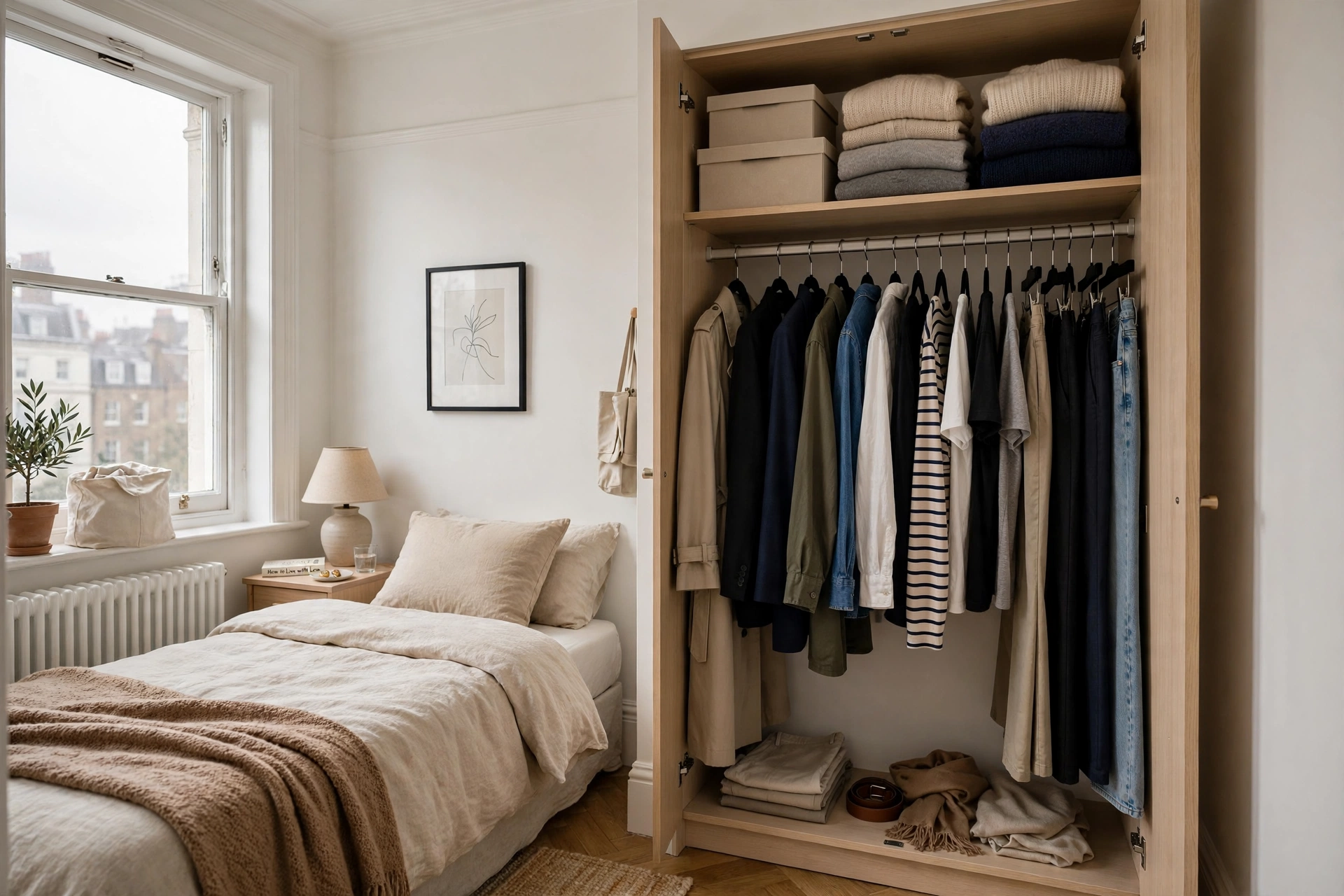
Making a compact UK flat feel spacious and functional often requires using every available inch of space wisely. When wardrobe space is limited, bulky coats, overflowing drawers, and clothes that only work with one outfit can quickly become a problem. A carefully planned capsule wardrobe offers a practical solution by helping you create more outfits with fewer clothes while keeping your bedroom organised and clutter-free.
A capsule wardrobe is a curated collection of versatile clothing items that work well together. Rather than purchasing separate outfits for each occasion, build a versatile collection of wardrobe staples that can be combined, layered, and styled in different ways across all seasons.
For 2026, the ideal capsule wardrobe for a small UK flat combines timeless basics, comfortable everyday clothing, practical outerwear, and a few modern touches. The aim is to create a functional wardrobe that suits British weather, supports your lifestyle, and fits comfortably into a compact wardrobe or chest of drawers.
In this guide, you will discover 20 essential clothing pieces for a small-flat capsule wardrobe, how to style them across different seasons, and practical storage tips to help you maximise limited space without sacrificing personal style.
What Is a Capsule Wardrobe, and Why Is It Ideal for Small UK Flats?
A capsule wardrobe is a carefully selected collection of clothing designed to work together across different outfits and occasions. Instead of keeping dozens of similar items, you choose pieces that offer versatility, comfort, and long-term value.
For flat dwellers in UK cities like London, Manchester, Birmingham, Leeds, and Edinburgh, a capsule wardrobe can be particularly practical when closet space and storage options are limited. Smaller bedrooms often have narrow wardrobes, compact drawers, and little space for seasonal clothing, making it important to prioritise items that earn their place.
A capsule wardrobe also helps reduce decision fatigue. When your trousers, tops, jackets, and shoes coordinate naturally, getting dressed becomes easier because you do not need to spend time searching for matching pieces.
Another advantage is more intentional shopping. By identifying what you already own and what your wardrobe genuinely lacks, you can avoid duplicate purchases and focus on clothing that suits your lifestyle.
In 2026, building a functional capsule wardrobe is more about choosing timeless, versatile clothing than keeping up with every passing fashion trend. Instead, it should combine classic essentials with a few contemporary silhouettes, colours, and accessories that reflect your personal preferences.
The 20 Essential Pieces for a Small-Flat Capsule Wardrobe in 2026
The following 20-piece wardrobe is designed for everyday life in the UK, where temperatures, rainfall, and daylight can change considerably throughout the year. The collection prioritises versatile layers, comfortable fabrics, and pieces that can be worn in multiple combinations.
The suggested palette uses black, navy, cream, grey, denim blue, and earthy neutrals. You can replace these colours with your preferred shades as long as most items coordinate easily.
1. Classic White or Cream T-Shirt
A well-fitting white or cream T-shirt is one of the most useful items in a capsule wardrobe. It works with jeans, tailored trousers, skirts, and casual layers, making it suitable for everyday errands, relaxed weekends, and informal social occasions.
Choose a breathable cotton or cotton-blend fabric that holds its shape after washing. A neutral T-shirt can also be worn under knitwear, blazers, and jackets, allowing you to create different looks without adding bulky clothing to your wardrobe.
2. Black or Neutral Basic T-Shirt
A second T-shirt in black, navy, grey, or another preferred neutral provides additional outfit options. Darker colours are easy to style and can be useful for travel, casual work environments, or days when you want a slightly more understated look.
Choose a shape that complements your existing trousers and outerwear. A regular or slightly fitted silhouette is particularly versatile because it works both as a standalone top and as a comfortable base layer.
3. Long-Sleeved Cotton Top
With the UK’s changeable climate, lightweight layers remain essential, as cooler temperatures and unexpected showers can occur even in spring and summer. A long-sleeved cotton top provides more coverage than a T-shirt without the weight of a jumper, making it ideal for cool mornings and breezy evenings.
White, navy, charcoal, or striped designs can all work well in a compact wardrobe. Wear it with jeans for a casual outfit or underneath a cardigan when temperatures drop.
4. White or Light-Coloured Shirt
A classic button-down shirt can make a casual outfit look more polished without requiring additional clothing. It works with jeans, tailored trousers, and skirts, and can be worn open over a T-shirt or buttoned up for a smarter appearance.
Cotton and cotton-blend shirts are practical choices because they are breathable and suitable for layering. A slightly relaxed fit can also improve versatility by allowing the shirt to be tucked in, worn loose, or layered over a fitted top.
5. Neutral Knit Jumper
A medium-weight jumper is an essential piece for a UK capsule wardrobe because it provides warmth without taking up as much space as multiple heavy sweaters. Choose a neutral shade such as oatmeal, grey, navy, or camel so it coordinates with most of your clothing.
Look for a knit that is comfortable indoors and easy to layer beneath a coat. A well-chosen jumper can be worn with jeans, tailored trousers, or a skirt, helping you transition between casual and smart-casual outfits.
6. Lightweight Cardigan
A cardigan is especially useful when temperatures fluctuate throughout the day. It pairs effortlessly with T-shirts and dresses, can be taken off when moving indoors, and is easier to carry or store than a heavy coat.
Choose a lightweight knit in a colour that complements your main wardrobe palette. A simple cardigan can also serve as an alternative to a jumper when you want adjustable warmth without adding unnecessary bulk.
7. Classic Blue Jeans
A pair of well-fitting blue jeans is a foundation piece for many everyday outfits. Straight-leg and relaxed-straight styles offer flexibility because they work with trainers, ankle boots, flats, and a range of tops.
Choose a wash that suits your existing clothing rather than buying jeans based only on a seasonal trend. Medium or dark blue denim is particularly easy to combine with white shirts, neutral knitwear, and everyday jackets.
8. Black or Dark Neutral Trousers
A pair of black or dark neutral trousers provides a smarter alternative to jeans. They can be worn for office days, appointments, dinners, or occasions when denim feels too casual.
Straight-leg trousers are a practical option for a compact wardrobe because they pair easily with trainers, loafers, and boots. Look for a comfortable fabric with enough structure to maintain its shape without requiring excessive ironing.
9. Comfortable Everyday Trousers
One additional pair of relaxed trousers gives you an option for working from home, travelling, shopping, and other casual activities. Depending on your style, these could be tailored jersey trousers, relaxed cotton trousers, or a neat wide-leg design.
Choose a pair that looks intentional rather than overly worn or exclusively designed for lounging. This makes it easier to transition between home activities and outdoor errands without changing your entire outfit.
10. Versatile Midi Skirt
A midi skirt can introduce variety into a wardrobe dominated by trousers. Depending on the fabric and shape, it can be styled with a T-shirt and trainers during warmer weather or with knitwear, tights, and ankle boots when temperatures fall.
A simple black, navy, or neutral skirt is particularly versatile. Choose a design that feels comfortable for everyday movement and does not require specialised storage or frequent dry cleaning.
11. Simple Everyday Dress
A comfortable dress provides a complete outfit with minimal effort. A knitted dress, shirt dress, or simple midi dress can be suitable for work, social occasions, and everyday activities, depending on the cut and fabric.
For a small flat, select a dress that can be styled in several ways rather than keeping separate dresses for every occasion. Adding a cardigan, blazer, or coat can change the overall appearance without requiring additional pieces.
12. Tailored Blazer
A blazer is one of the easiest ways to make basic clothing look more polished. Worn over a T-shirt and jeans, it creates a smart-casual outfit, while pairing it with dark trousers provides a practical option for professional settings.
Choose a neutral colour and a comfortable fit that allows room for light knitwear underneath. An unstructured or lightly tailored blazer may be easier to wear throughout the year than a heavily padded design.
13. Lightweight Waterproof Jacket
Rain is a regular consideration in many parts of the UK, making a lightweight waterproof jacket an important capsule wardrobe item. It provides practical protection for walking, commuting, shopping, and travelling without taking up the space of a heavy winter coat.
Look for a design with a hood, useful pockets, and enough room for a jumper underneath. A packable style can be particularly helpful in a small flat because it folds away neatly when not in use.
14. Warm Winter Coat
A reliable winter coat is essential for colder months, particularly in northern England, Scotland, Wales, and other areas that experience chilly, wet, or windy weather. Depending on your lifestyle, a wool-blend coat, insulated coat, or padded design may be the most practical choice.
Choose a colour and shape that works with most of your wardrobe. If storage space is extremely limited, prioritise one dependable coat that meets your actual winter needs rather than keeping several bulky alternatives.
15. Lightweight Transitional Jacket
A transitional jacket bridges the gap between warmer and colder weather. A denim jacket, lightweight bomber, or simple utility jacket can work well during spring and early autumn when a winter coat feels too heavy.
For maximum versatility, choose a design that fits comfortably over your everyday tops and lightweight knitwear. A neutral jacket is generally easier to combine with different outfits than a highly distinctive seasonal style.
16. Everyday Trainers
A comfortable pair of trainers is essential for walking, commuting, shopping, and exploring UK towns and cities. Neutral white, grey, black, or cream designs are easy to pair with jeans, trousers, casual dresses, and skirts.
Choose footwear based on comfort and weather suitability rather than appearance alone. If you walk frequently, cushioning, fit, and durability should be more important than owning multiple trend-driven pairs.
17. Smart Flats or Loafers
Smart flats or loafers provide a more polished alternative to trainers without the discomfort that some people experience with formal shoes. They work particularly well with tailored trousers, midi skirts, dresses, and office outfits.
Black or dark brown designs are useful for everyday versatility. Choose a pair that suits your workplace and walking habits, and consider whether the material is appropriate for wet conditions.
18. Ankle Boots
Ankle boots are practical for autumn, winter, and cooler spring days. They can be worn with jeans, tailored trousers, midi skirts, and dresses, making them one of the most versatile footwear options for a UK wardrobe.
A simple black or brown pair can complement most neutral clothing. If you frequently walk in rainy weather, consider a design with suitable grip and water resistance, while avoiding unnecessary decorative details that limit how easily the boots can be styled.
19. Warm Scarf
A warm scarf provides additional comfort during cold weather and introduces texture or colour without requiring more bulky clothing. It can be worn with a winter coat, a transitional jacket, or layered knitwear.
A neutral scarf is a practical choice if you want it to coordinate with several outfits. Alternatively, a single patterned scarf can add visual interest to otherwise simple clothing while occupying very little storage space.
20. Versatile Belt
A belt is a small accessory that can make existing clothing more adaptable. It can help create a more defined shape when worn with trousers, certain dresses, or oversized shirts.
Choose a colour that works with your shoes and everyday clothing. A simple black or brown belt can provide a finishing touch to multiple outfits without taking up meaningful wardrobe space.
How to Build More Outfits From Just 20 Pieces
The key to a successful capsule wardrobe is not simply owning fewer clothes. It is choosing pieces that combine easily, so that each item contributes to several different outfits.
For example, blue jeans can be worn with a white T-shirt and trainers for a relaxed daytime look, or with a light-coloured shirt and blazer for a smarter occasion. The same jeans can also work with a neutral jumper and ankle boots during colder months.
Dark trousers offer similar flexibility. Pair them with a T-shirt and trainers for a comfortable everyday outfit, or wear them with a shirt, blazer, and loafers for work or an evening event.
Layering helps extend the usefulness of each item throughout the year. A long-sleeved top can sit beneath a cardigan, while a lightweight waterproof jacket can be worn over knitwear when the weather changes.
The same principle applies to dresses and skirts. A midi skirt can be paired with a T-shirt in summer and a jumper with tights in winter, while a simple dress can be made more casual or formal through footwear, outerwear, and accessories.
With coordinated colours and versatile silhouettes, 20 carefully selected pieces can support a wide range of everyday combinations. The exact number of outfits will depend on your clothing choices, weather conditions, and personal preferences, but the objective is to maximise the value of every item.
How to Store a Capsule Wardrobe in a Small UK Flat
Limited storage space is one of the biggest challenges of apartment living. Fortunately, a well-organised capsule wardrobe can make a small bedroom feel more spacious without requiring expensive furniture or a complete room makeover.
Use Matching Hangers to Save Wardrobe Space
Slim, sturdy hangers can help create a more consistent arrangement and make it easier to see everything in your wardrobe. Hang items that crease easily, such as shirts, blazers, and dresses, while folding knitwear and heavier casual clothing to prevent stretching.
Keep enough space between hanging items to make choosing outfits easier. An overcrowded rail can make even a carefully curated wardrobe feel disorganised.
Fold Clothes Vertically in Drawers
Vertical folding allows you to see more of your clothing without removing every item from a drawer. This technique works especially well for T-shirts, lightweight tops, and some casual trousers.
Use small drawer dividers if necessary, but avoid buying too many storage accessories before assessing your existing space. The objective is to simplify access, not add more objects to a compact bedroom.
Store Seasonal Clothing Separately
If your flat has limited wardrobe capacity, rotate clothing according to the season. During summer, keep your warmest winter layers in a clean, dry storage container or suitable under-bed storage bag, provided the fabric can be stored safely.
Before storing clothing, ensure it is clean and completely dry. Check delicate fabrics and wool items for care requirements, and avoid compressing garments in ways that could damage their shape.
Make Use of Under-Bed Storage
The space beneath your bed can provide valuable additional storage for seasonal clothing, spare bedding, or accessories. Flat storage boxes or zipped fabric bags can help keep items protected and easy to retrieve.
Choose storage containers that fit your bed clearance and leave enough room to access them comfortably. If you have limited under-bed space, prioritise bulky items that are not needed every day.
Avoid Keeping Clothes You Never Wear
One of the simplest ways to create more room is to identify clothing that no longer fits, feels comfortable, or suits your lifestyle. Consider donating, selling, or responsibly recycling suitable items rather than allowing them to occupy valuable storage space indefinitely.
You do not need to discard everything outside your capsule wardrobe. Special-occasion clothing, sentimental pieces, and specialist garments can remain in your collection if you have a practical reason to keep them.
How to Adapt Your Capsule Wardrobe to UK Weather
The UK climate makes layering especially important because conditions can change between seasons and throughout a single day. Rather than building an entirely separate wardrobe for every season, select a core collection that can be adjusted with different combinations of clothing.
During spring, lightweight jackets, long-sleeved tops, cardigans, and trainers provide a useful foundation. A waterproof layer is particularly helpful when rain is possible, while a scarf can add warmth on colder mornings.
Summer wardrobes can focus on breathable T-shirts, lightweight shirts, skirts, dresses, and comfortable footwear. Keep a cardigan or light jacket available for cooler evenings, especially if you travel by public transport or spend time outdoors.
Autumn is a natural time to introduce knitwear, ankle boots, transitional jackets, and additional layers. The same trousers and tops can remain in rotation, reducing the need to buy a completely new collection of clothes.
Winter requires more effective insulation and weather protection. Your warm coat, knit jumper, scarf, and suitable footwear can provide the main layers, while the waterproof jacket may be useful on milder or particularly wet days.
Regional conditions also matter. Someone living in Edinburgh or northern England may need more substantial cold-weather clothing than someone in a milder part of southern England, so adjust the suggested collection to your local climate and daily routine.
Common Capsule Wardrobe Mistakes to Avoid
A capsule wardrobe should make daily life easier, but a few common mistakes can undermine its benefits. One is choosing clothing solely because it is fashionable or labelled as an essential item, even when it does not suit your body, climate, or lifestyle.
Another mistake is choosing a colour palette that looks coordinated in theory but does not reflect what you actually enjoy wearing. If you prefer brighter colours, patterned clothing, or a more expressive style, you can build your capsule around those preferences rather than limiting yourself to black, white, and beige.
Buying all 20 pieces at once can also lead to unnecessary spending. A better approach is to review your current wardrobe, identify genuine gaps, and purchase only the items that add useful outfit combinations.
Finally, do not treat the 20-piece target as a strict rule. Some people need additional workwear, sportswear, specialist clothing, or religious and cultural garments, while others prefer a smaller collection. Your wardrobe should serve your real life rather than force you into an arbitrary number.
Is a 20-Piece Capsule Wardrobe Enough for 2026?
For many people living in small UK flats, 20 carefully selected clothing pieces can form a useful everyday wardrobe, particularly when the items coordinate well and support different layers and occasions. However, the collection outlined in this guide is a starting point rather than a complete inventory for every lifestyle.
The 20 pieces do not include underwear, socks, sleepwear, gym clothing, or specialist workwear. You may also need additional garments for formal events, outdoor activities, or periods of particularly cold weather.
Your washing routine should influence how many basics you keep. Someone who does laundry frequently may manage comfortably with fewer T-shirts, while a person who washes clothes less often may need additional essentials.
The best capsule wardrobe is therefore not necessarily the smallest one. It is the collection that allows you to dress comfortably, meet your daily needs, and keep your living space organised without unnecessary purchases.
Final Thoughts
Creating a capsule wardrobe for a small UK flat is a practical way to reduce clutter, simplify outfit planning, and make better use of limited storage space. By focusing on 20 versatile pieces, you can build a collection that supports everyday activities, work, social occasions, and changing British weather.
The most effective approach is to prioritise comfort, quality, versatility, and personal style. Neutral basics, dependable outerwear, adaptable trousers, and comfortable footwear can form the foundation of a wardrobe that works across multiple seasons.
You do not need to replace everything you own or follow every fashion trend in 2026. Start with what you already have, identify the gaps, and gradually build a wardrobe where every piece has a clear purpose.
With thoughtful choices and simple storage habits, a small wardrobe can offer plenty of outfit possibilities while keeping your flat organised, functional, and comfortable.
