


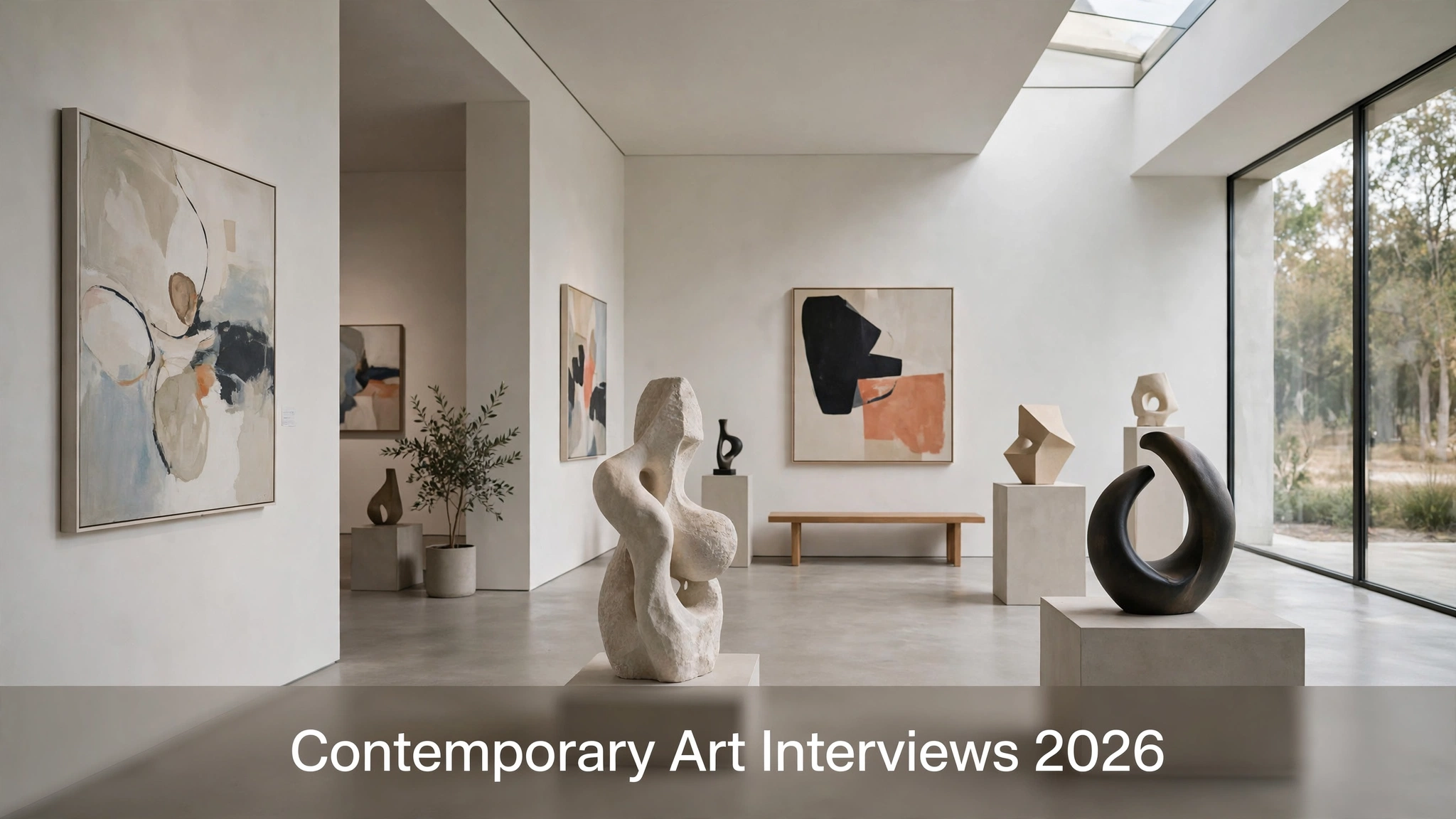
Contemporary art in 2026 continues to redefine how people understand creativity, culture, identity, and the world around them. Across painting, sculpture, photography, digital media, installation, performance, and experimental practices, contemporary artists are exploring new ways to communicate ideas and challenge established perspectives. Their work reflects a rapidly changing society shaped by technological innovation, environmental concerns, social transformation, and evolving cultural identities.
Contemporary Art Interviews 2026 – Cura Magazine offers a compelling editorial perspective on the artists, creative practices, and intellectual conversations shaping the contemporary art landscape. Through artist interviews and critical discussions, contemporary art publications create opportunities for audiences to understand not only what artists produce, but also the ideas, experiences, and creative decisions that inform their work.
Cura Magazine and the Importance of Contemporary Art Interviews
Cura Magazine is associated with contemporary art discourse, providing a context for exploring artistic research, curatorial thinking, and experimental approaches to visual culture. Artist interviews are an important part of this wider conversation because they bring the voices of practitioners into direct contact with readers, collectors, curators, students, researchers, and art enthusiasts. Rather than relying exclusively on exhibition reviews or descriptions of finished artworks, interviews offer a more personal perspective on the creative process.
The value of contemporary art interviews lies in their ability to connect an artwork’s visible qualities with its underlying concepts. An artist may discuss the cultural references behind a painting, the research informing a sculptural installation, or the technical challenges involved in developing a multimedia project. These conversations help audiences recognize that contemporary art is rarely limited to a single interpretation, and that meaning often emerges through the relationship between materials, context, intention, and the viewer’s own experience.
Major Themes Shaping Contemporary Art in 2026
Technology, Artificial Intelligence, and Digital Creativity
Technology remains a significant subject in contemporary artistic practice, particularly as digital tools and artificial intelligence influence how images are created, circulated, and interpreted. Artists are investigating the possibilities of machine-generated imagery, interactive environments, virtual spaces, algorithmic processes, and hybrid forms that combine traditional techniques with emerging technologies. These approaches raise important questions about originality, authorship, artistic labor, and the relationship between human imagination and automated systems.
In interviews with contemporary artists, conversations about technology offer valuable insight into the reasons behind their selection of specific tools, techniques, and creative approaches. Rather than treating innovation as an end in itself, artists may use digital systems to examine surveillance, online identity, the circulation of information, or the influence of technology on everyday life. Such conversations help readers distinguish between the novelty of a medium and the deeper conceptual purpose it serves within an artwork.
Identity, Memory, and Cultural Representation
Identity remains a central theme in contemporary art, as artists explore the connections between individual experiences and broader narratives of shared memory, historical legacy, language, migration, and cultural affiliation. Through portraiture, photography, archival research, installation, textiles, and other media, practitioners explore the ways identities are formed, represented, preserved, and transformed. Their work can challenge dominant historical narratives while creating space for perspectives that have traditionally received less attention within cultural institutions.
Artist interviews provide a valuable opportunity to understand the personal and social contexts behind these practices. By discussing family histories, community relationships, cultural traditions, or experiences of displacement, artists can explain how individual stories connect with broader political and historical questions. These exchanges encourage readers to approach contemporary artworks with greater sensitivity to their cultural contexts and to the different meanings they may hold for different audiences.
Environmental Awareness and the Natural World
Environmental concerns remain a powerful influence on contemporary artistic production. Artists are exploring climate change, biodiversity, resource consumption, ecological loss, and humanity’s changing relationship with the natural world through a wide range of materials and approaches. Some work directly with natural or recycled materials, while others use photography, scientific data, landscape imagery, or immersive installations to make environmental processes more visible and emotionally immediate.
The interviews surrounding these projects can illuminate the relationship between artistic form and ecological responsibility. Artists may explain how material sourcing affects their decisions, how long-term research informs their work, or why a particular landscape or environmental issue has become central to their practice. These discussions also encourage readers to consider the possibilities and limitations of art as a means of generating awareness, inviting reflection, and contributing to wider public conversations about sustainability.
Politics, Society, and Contemporary Realities
Contemporary artists frequently respond to political developments, economic inequalities, social movements, conflict, and changing relationships between individuals and institutions. Their work may take the form of documentary photography, public interventions, conceptual projects, performance, or installations that question how power operates in everyday life. Rather than offering simple explanations, such practices often expose contradictions and invite viewers to examine familiar social structures from unfamiliar perspectives.
Interviews help clarify how artists navigate the relationship between personal expression and public responsibility. They can reveal the research, ethical considerations, and practical decisions involved in addressing sensitive subjects, particularly when artworks engage with vulnerable communities or contested histories. For readers of contemporary art publications, these conversations demonstrate how artistic practice can function as a form of inquiry, cultural commentary, and critical engagement.
Understanding the Artist’s Creative Process
One of the most engaging aspects of contemporary art interviews is the opportunity to learn how an artist develops an idea from an initial question into a finished work. The creative process may involve extensive reading, experimentation with materials, studio research, collaboration, travel, observation, or repeated revisions. In many cases, the final artwork represents only one stage of a much longer investigation, with unsuccessful experiments and unexpected discoveries playing an essential role in its development.
A well-developed interview explores these stages without reducing artistic practice to a simple formula. Readers can discover why an artist chooses a particular material, how a concept changes during production, or what happens when a project does not develop as expected. These insights make contemporary art more accessible to audiences who may be unfamiliar with its methods, while also providing useful perspectives for emerging artists seeking to understand different approaches to research, experimentation, and professional practice.
The Role of Curators, Galleries, and Art Institutions
Contemporary art does not develop in isolation. Curators, galleries, museums, independent art spaces, critics, publishers, and collectors all contribute to the environments in which artists work and present their ideas. Curatorial decisions influence how artworks are displayed, how exhibitions are organized, and how audiences encounter relationships between different artists, historical periods, and cultural contexts. As a result, conversations about contemporary art often extend beyond the studio to include the institutions and networks that support artistic production.
Editorial platforms such as Cura Magazine provide a setting in which these relationships can be examined through interviews and critical writing. Discussions with artists and curators can illuminate the research behind an exhibition, the challenges of presenting experimental work, or the questions involved in interpreting art for different audiences. By connecting artistic perspectives with curatorial and institutional viewpoints, contemporary art journalism can offer a more complete picture of how ideas move from individual practices into public cultural spaces.
Emerging Artists and New Directions in Contemporary Art
Emerging artists are an important part of the contemporary art conversation because they often introduce unfamiliar methods, perspectives, and cultural references. Their practices may cross disciplinary boundaries, combining visual art with sound, moving images, writing, architecture, performance, or community-based research. Many also work across international networks and digital platforms, allowing their ideas to circulate beyond the geographical boundaries traditionally associated with galleries and national art scenes.
Interviews with emerging practitioners can reveal how new artistic voices respond to limited resources, changing exhibition opportunities, and evolving expectations within the art world. They can also highlight the importance of mentorship, collaboration, independent publishing, residencies, and alternative exhibition spaces. For readers interested in discovering new talent, these conversations offer a way to follow developing practices while understanding the ambitions, challenges, and influences that shape an artist’s early career.
Why Contemporary Art Interviews Matter to Collectors and Art Enthusiasts
For collectors and art enthusiasts, artist interviews can provide context that enriches the experience of viewing and acquiring contemporary artworks. Information about an artist’s research, materials, influences, and long-term concerns can help audiences understand the intellectual framework surrounding a particular work. This context does not determine an artwork’s value or dictate how it should be interpreted, but it can encourage a more informed and meaningful engagement with the artist’s practice.
Interviews are also useful for people who are beginning to explore contemporary art and want to move beyond surface-level impressions. Hearing artists explain their choices can make unfamiliar techniques and conceptual approaches easier to understand, while exposing readers to different ways of thinking about creativity. For experienced collectors, curators, and researchers, interviews may provide additional insight into an artist’s evolving interests, working methods, and position within a broader cultural conversation.
Contemporary Art Journalism in the Digital Era
Digital publishing has transformed how audiences discover contemporary art and follow developments across international art communities. Online magazines, artist websites, digital exhibitions, podcasts, and social media platforms allow conversations about artistic practice to reach readers who may not have direct access to major museums or commercial galleries. This broader circulation can create opportunities for artists working outside established cultural centers to share their perspectives with international audiences.
At the same time, the speed of digital communication makes thoughtful editorial work increasingly important. Strong contemporary art journalism requires more than promotional language or brief descriptions of exhibitions; it benefits from careful research, informed questions, contextual writing, and attention to the complexity of artistic ideas. Interviews published by specialist art magazines can help preserve these qualities by giving artists space to explain their work in greater depth and by presenting their perspectives within a wider critical framework.
How to Read and Engage With Contemporary Art Interviews
Readers can gain more from contemporary art interviews by approaching them as conversations that connect artistic intention with interpretation rather than as definitive explanations of an artwork. Paying attention to recurring themes, references to particular materials, and descriptions of the artist’s working environment can reveal patterns that may not be immediately visible in an exhibition. Comparing an interview with the actual artwork, an exhibition text, or a related critical essay can also help readers identify differences between an artist’s intentions and the meanings audiences construct for themselves.
It is equally useful to consider the broader context in which an interview appears. The publication’s editorial perspective, the questions selected by the interviewer, and the moment in an artist’s career when the conversation takes place can all influence what is discussed. Reading critically does not diminish the value of an interview; instead, it allows readers to appreciate it as one important source among many for understanding contemporary artistic practice.
The Future of Contemporary Art Conversations
Looking ahead, contemporary art interviews are likely to remain important as artists navigate new technologies, environmental uncertainty, changing social conditions, and evolving relationships with cultural institutions. The formats through which these conversations are presented may continue to expand, incorporating video, audio, interactive media, and digital archives alongside traditional written interviews. These possibilities can make artist perspectives more accessible while creating new ways for audiences to engage with the process of making and interpreting art.
The enduring value of the interview, however, rests on the quality of the questions and the depth of the exchange. Technology can broaden participation and improve access, but meaningful artistic dialogue still depends on curiosity, careful listening, and a willingness to explore ideas that resist easy conclusions. By documenting artists’ experiences and intellectual concerns, contemporary art publications help create a record of the debates, experiments, and cultural shifts that define their time.
Conclusion: Contemporary Art Interviews 2026 – Cura Magazine
Contemporary Art Interviews 2026 – Cura Magazine represents a useful editorial theme for exploring the people, ideas, and creative processes that shape contemporary visual culture. Through conversations about technology, identity, ecology, politics, materials, and artistic research, interviews offer readers a deeper understanding of the questions that contemporary artists are asking and the methods they use to investigate them. They also connect individual practices with the wider networks of curators, institutions, critics, and audiences that contribute to the contemporary art ecosystem.
For artists, students, collectors, researchers, and art enthusiasts, these conversations provide an opportunity to encounter contemporary art as an evolving field of inquiry rather than a fixed collection of objects or styles. By combining accessible explanations with critical depth, specialist art journalism can encourage curiosity, support informed discussion, and strengthen the connection between artists and the audiences who engage with their work. In 2026, the continuing importance of contemporary art interviews lies in their ability to preserve diverse perspectives and open new avenues for understanding the cultural significance of artistic practice.
Frequently Asked Questions
What is Cura Magazine in contemporary art?
Cura Magazine is associated with contemporary art publishing and critical discourse, offering a context for exploring artists, curatorial practices, exhibitions, and experimental approaches to visual culture. Readers should consult the magazine’s official channels for current editorial content and publication details.
Why are contemporary art interviews important in 2026?
Contemporary art interviews help audiences understand the ideas, research, and creative decisions behind artworks. They also provide insight into how artists respond to technological developments, social change, environmental challenges, and cultural debates.
What topics are discussed in contemporary art interviews?
Common subjects include artistic identity, creative methods, digital media, artificial intelligence, sustainability, political realities, cultural memory, exhibition-making, and the relationship between artists and institutions. The precise focus depends on each artist’s practice and the publication’s editorial approach.
Who can benefit from reading contemporary art interviews?
Artists, art students, curators, collectors, researchers, critics, and general readers can all benefit from these conversations. Interviews provide accessible context for newcomers and deeper insight into artistic methods and ideas for experienced audiences.
How can readers discover contemporary artists through Cura Magazine?
Readers can explore the magazine’s official website and verified publication channels for interviews, features, exhibition coverage, and related editorial material. Checking current listings and publication dates is the best way to confirm which artists and projects are being featured in 2026.
