


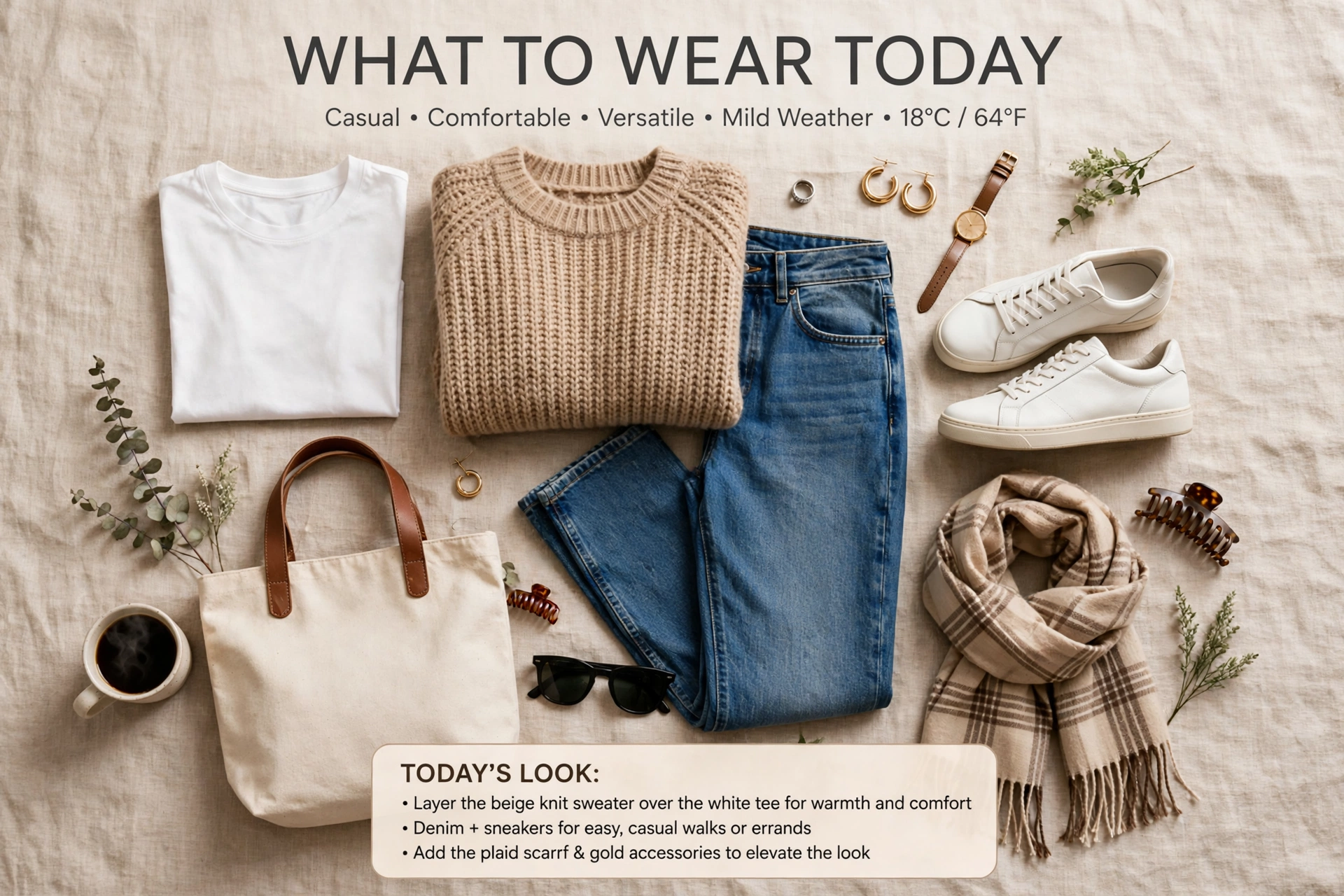
Choosing what to wear today doesn’t have to be complicated. The best everyday outfit combines comfort, personal style, and practicality, while taking into account the weather, your plans, and how much time you want to spend getting ready. A simple combination of well-fitting clothes, comfortable shoes, and a few thoughtful accessories can make you look put together without needing an entirely new wardrobe.
Begin by identifying your destination and the activities you plan to pursue during your visit. A casual day at home calls for breathable fabrics and relaxed fits, while work, university, shopping, or meeting friends may require something a little more polished. After identifying the event, select a standout item as the foundation of your look, then coordinate the remaining pieces to create a cohesive and well-balanced outfit.
Easy Casual Outfit Ideas for Today
Casual outfits are ideal for everyday activities because they are easy to assemble and comfortable enough to wear for hours. A classic combination of jeans, a plain T-shirt, and sneakers works for shopping, running errands, casual meetups, or a relaxed day out. Choose neutral colors such as white, black, beige, navy, or gray if you want pieces that coordinate easily.
For a more polished and contemporary style, pair straight-cut denim with a neatly tucked shirt or an effortlessly draped blouse. Add a belt, a simple watch, or a small shoulder bag to give the outfit a finished appearance without making it feel overdressed. If you prefer looser clothing, wide-leg trousers paired with a fitted top create a balanced silhouette while remaining comfortable.
When the weather is warm, lightweight cotton shirts, linen trousers, breathable tops, and comfortable sandals can make everyday dressing easier. In cooler conditions, layering a T-shirt with a cardigan, sweatshirt, or lightweight jacket adds warmth and gives a simple outfit more depth.
What to Wear to Work or University
An outfit for work or university should balance comfort with the expectations of your environment. Straight-leg trousers, a button-down shirt, and loafers create a neat appearance that works in many settings, while dark jeans paired with a clean, well-fitting top may be appropriate for more relaxed workplaces and campuses.
For a practical everyday option, choose a small selection of coordinating colors so that your clothes are easy to mix and match. Black trousers, blue jeans, neutral shirts, and a versatile jacket can create several different combinations without requiring a large wardrobe. Comfortable footwear is especially important if your day involves walking between classes, commuting, or spending long hours on your feet.
If you want your outfit to look more polished, pay attention to simple details such as clean shoes, wrinkle-free clothing, and a well-fitting bag. You do not need formal or expensive clothes to look professional; thoughtful coordination often makes a greater difference than following every new fashion trend.
Simple Outfit Ideas for Women
Everyday outfits can be stylish without being complicated. High-waisted jeans with a fitted top, a midi dress with flat sandals, or wide-leg trousers with a tucked-in blouse are versatile choices for different occasions. Each combination can be adjusted with accessories, footwear, and an extra layer to suit your personal taste.
For a soft, understated look, try neutral shades such as cream, tan, white, and brown. If you prefer something more expressive, introduce a bright top, patterned scarf, colorful handbag, or statement earrings. Keeping the rest of the outfit relatively simple allows one distinctive piece to stand out.
For days when you want to get dressed quickly, a matching two-piece set or a simple dress can eliminate the need to coordinate several separate items. Add comfortable shoes and a practical bag, and you have an outfit that feels intentional with minimal effort.
Simple Outfit Ideas for Men
A reliable everyday outfit for men can start with a plain T-shirt, straight-fit jeans, and clean sneakers. This combination is easy to wear, suits many casual situations, and can be adapted by changing the colors, fit, or outer layer. A polo shirt or casual button-down offers a slightly smarter alternative without sacrificing comfort.
For work or occasions that call for a more refined appearance, chinos paired with a collared shirt and loafers provide a straightforward solution. Neutral colors such as navy, olive, beige, white, and charcoal are particularly useful because they work together across different outfits.
On relaxed days, a sweatshirt, comfortable trousers, and sneakers make a practical combination. To improve the overall look, focus on appropriate sizing, coordinated colors, and clean footwear rather than adding too many accessories. A sleek watch or a simple belt can elevate your outfit with a subtle touch of sophistication while keeping the overall appearance clean and balanced.
What to Wear in Hot Weather
When temperatures rise, lightweight and breathable clothing should be a priority. Cotton, linen, and other airy fabrics can help you feel more comfortable, especially when spending time outdoors. Loose-fitting shirts, lightweight trousers, skirts, shorts, and breathable dresses are useful choices depending on your plans and local dress expectations.
Light colors such as white, pale blue, beige, and soft pastels can create a fresh summer appearance. Choose footwear that allows comfortable movement, and consider sunglasses, a hat, and sunscreen when spending extended periods in the sun.
In particularly hot or humid conditions, avoid unnecessary layers and heavy fabrics. A simple outfit made from breathable materials often looks better and feels more comfortable than an elaborate combination that is difficult to wear throughout the day.
How to Dress for Cold and Rainy Conditions
Cooler weather makes layering especially useful. Start with a comfortable base layer, add a sweater or sweatshirt, and finish with a jacket or coat appropriate for the temperature. Jeans, thicker trousers, boots, and closed-toe shoes can help create an outfit that is both practical and stylish.
For rainy conditions, choose footwear with good grip and materials that can handle getting wet. A lightweight waterproof jacket or compact umbrella can make a significant difference when the weather changes unexpectedly. If you expect to move between outdoor and heated indoor spaces, removable layers are usually more convenient than one very heavy garment.
Winter outfits do not have to rely entirely on dark colors. A neutral coat can be paired with a colorful sweater, scarf, or hat to add personality while keeping the overall look coordinated.
How to Choose Colors That Work Together
Color coordination is one of the easiest ways to make everyday outfits look more intentional. Begin with a neutral base, such as black trousers, blue jeans, a white shirt, or a beige skirt, and add one or two complementary colors. This approach makes it easier to combine clothes you already own and reduces the time spent deciding what matches.
Monochromatic outfits, which use different shades of the same color, can create a clean and coordinated appearance. For example, combining cream trousers with a beige top or pairing navy trousers with a lighter blue shirt creates visual interest without requiring contrasting colors.
If you enjoy bold colors or patterns, use them to highlight one part of your outfit. A patterned shirt, bright handbag, or colorful pair of shoes can add character to otherwise simple clothing. The goal is not to follow strict fashion rules but to choose combinations that make you feel comfortable and confident.
Accessories That Make Everyday Outfits Better
Accessories can transform an ordinary outfit without requiring a complete change of clothes. A belt can define the shape of an outfit, a watch can add a polished touch, and a practical bag can make commuting or running errands easier. Jewelry, scarves, sunglasses, and hair accessories provide additional ways to express personal style.
The key is to choose accessories that suit the occasion and do not interfere with comfort. For a busy day, a lightweight bag and comfortable shoes may be more useful than decorative items that require constant adjustment. For a dinner or social gathering, you might choose a more distinctive accessory to make a simple outfit feel special.
You do not need to wear every accessory you own. Often, one or two well-chosen details are enough to bring an outfit together.
How to Build a Daily Outfit in Five Minutes
Getting dressed quickly becomes easier when you follow a simple routine. First, check the weather and identify the main activity for the day. Next, select a reliable clothing combination that suits both the temperature and the occasion, then add suitable shoes and any necessary outerwear.
Choose accessories only after the main outfit is complete. This helps prevent unnecessary changes and makes it easier to see whether the overall look feels balanced. If you are unsure, return to a combination you already know works rather than spending time experimenting when you are in a hurry.
It can also help to prepare a few favorite outfits in advance. Keeping versatile basics clean and accessible means you can get ready quickly even on busy mornings, while rotating different tops, trousers, and accessories keeps familiar combinations from feeling repetitive.
Final Thoughts: Wear What Makes You Feel Good
The best outfit for today is one that fits your plans, feels comfortable, and reflects your personal style. You do not need a large wardrobe or expensive clothing to dress well; a few versatile basics, coordinated colors, suitable footwear, and thoughtful accessories can provide plenty of everyday options.
Before leaving home, consider the weather, check that your outfit suits the occasion, and make sure you can move comfortably throughout the day. When your clothes work for your lifestyle and make you feel confident, choosing what to wear becomes less of a daily challenge and more of an enjoyable part of your routine.
