


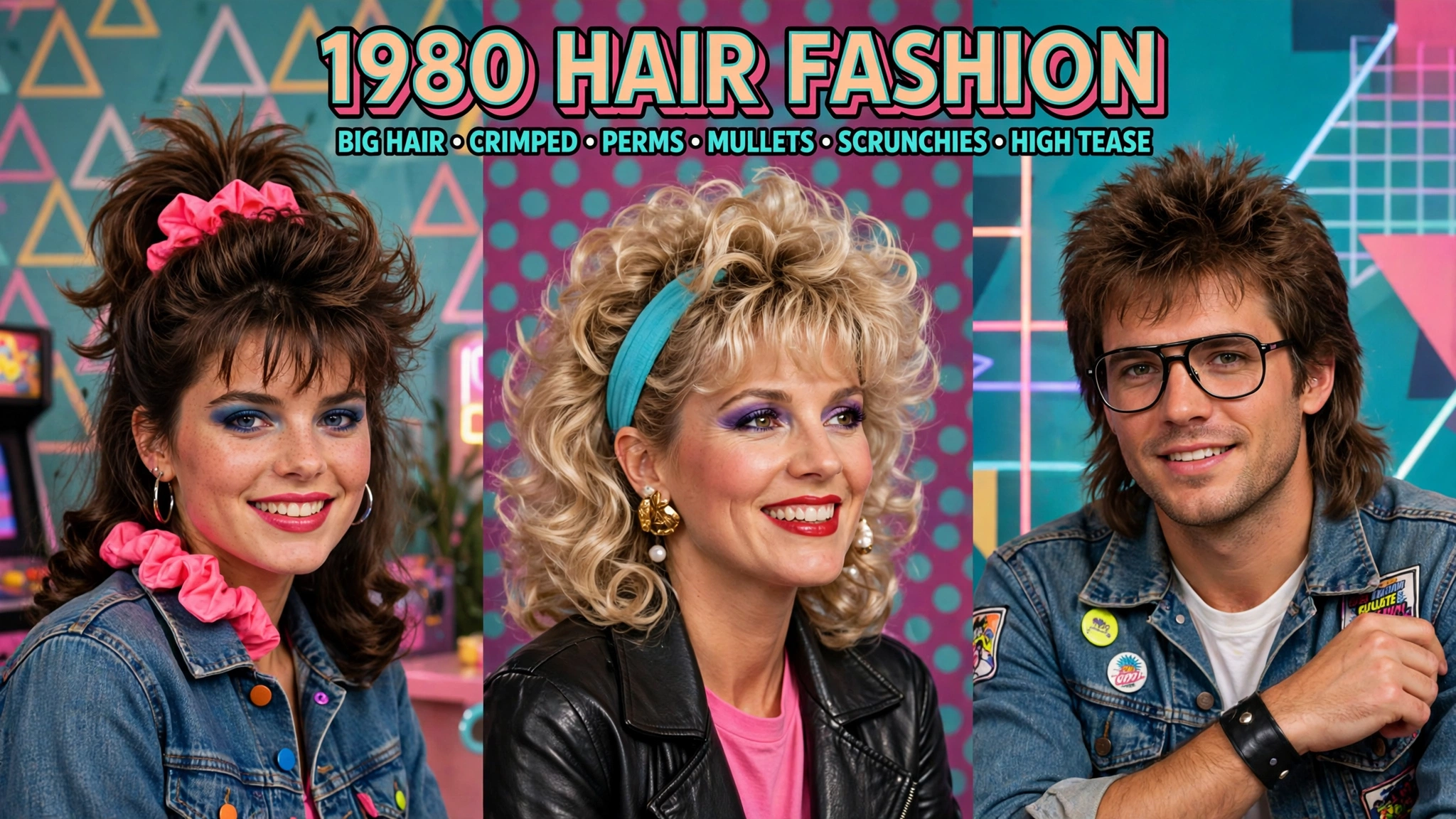
1980s hair fashion was all about volume, personality, and bold self-expression. From sky-high teased hair and bouncy curls to feathered layers, dramatic mullets, and colorful accessories, hairstyles during this decade reflected a culture that embraced individuality and larger-than-life style. Hair was not simply a finishing touch; it was a major part of a person’s identity, often designed to stand out in a crowd.
The decade’s signature looks were influenced by pop music, television, Hollywood movies, fashion magazines, and the rise of celebrity culture. Rock musicians wore long, heavily layered hair, pop stars popularized sculpted curls and distinctive silhouettes, and professional women experimented with voluminous cuts that communicated confidence and sophistication. Hair spray, curling irons, hot rollers, mousse, and teasing combs became essential tools for achieving the era’s recognizable styles.
Although 1980s hairstyles varied across regions, communities, and subcultures, they shared a willingness to experiment. Today, many of these retro looks continue to inspire modern hairstyling, with updated versions offering the same energy and personality in more wearable forms.
Voluminous Hairstyles: The Iconic Beauty Trend of the 1980s
Big hair was arguably the most recognizable feature of 1980s beauty culture. Women and men alike experimented with height, fullness, and dramatic volume, creating hairstyles that looked intentionally larger and more expressive than the sleek styles associated with some earlier decades.
Achieving this look often involved backcombing or teasing the hair at the roots, applying volumizing mousse, and using strong-hold hair spray to maintain the shape. Blow-drying with a round brush helped lift the roots, while curling irons and hot rollers created additional body. The result could range from soft, fluffy volume to highly sculpted hair with a dramatic silhouette.
Big hair appeared in everyday fashion, professional settings, music videos, and glamorous evening looks. While some styles emphasized height at the crown, others focused on wide, rounded curls or voluminous layers around the face. Modern versions often use root-lifting products, large-barrel curling tools, and flexible styling sprays to achieve a similar effect without making the hair feel excessively stiff.
Feathered Hair: Soft Layers and Flipped Ends
Feathered hair was one of the most popular hairstyles of the 1980s, especially among women who wanted volume without the extreme structure of heavily teased hair. This style featured layered sections that curved away from the face, creating a soft, flowing appearance reminiscent of feathers.
The look typically relied on a layered haircut, a round brush, and a blow-dryer. Hair was lifted at the roots and styled outward around the face, allowing the layers to overlap naturally. The technique created movement and fullness while maintaining a relatively polished finish.
Feathered hairstyles worked particularly well on medium-length and long hair, although shorter versions were also common. The style complemented casual outfits, office clothing, and glamorous evening fashion, making it one of the decade’s most versatile trends. Today, feathered layers remain relevant in modern blowouts, curtain-fringe styles, and face-framing haircuts.
The Perm: Bouncy Curls and Lasting Volume
The perm became a defining feature of 1980s hair fashion because it offered a way to achieve long-lasting curls and fullness. Rather than curling the hair every morning, people could use a chemical treatment to create a more permanent wave or curl pattern, depending on their natural hair and the desired result.
Permed hairstyles ranged from loose, romantic waves to tight, springy curls with considerable volume. Many women wore their curls brushed out for a soft, cloudlike effect, while others preferred more defined ringlets. Men also embraced perms, particularly in music and youth culture, where curly hair became an important part of several recognizable looks.
Perms were often paired with layered cuts to distribute volume and prevent the hair from appearing too heavy. However, chemical treatments can weaken or dry out hair, especially when combined with frequent heat styling. Modern approaches tend to emphasize curl definition, moisturizing products, and cuts that work with the hair’s natural texture rather than relying entirely on extreme volume.
The Mullet: A Bold Hairstyle with Short Front Layers and Longer Back Length
The mullet was one of the decade’s most distinctive and debated hairstyles. Its defining feature was shorter hair at the front and sides, combined with longer hair at the back. This contrast created a dramatic shape that could appear sporty, rebellious, glamorous, or deliberately unconventional depending on how it was cut and styled.
The mullet became particularly visible in rock music, sports culture, and popular entertainment. Some versions were relatively subtle, with softly blended layers, while others featured sharply defined sides and a long, flowing back. Men were strongly associated with the trend, but women also wore mullet-inspired cuts, especially in punk and alternative fashion circles.
Today, the mullet has returned in several updated forms, including the shaggy mullet and the wolf cut. Modern interpretations often feature softer transitions, textured layers, and a less rigid silhouette, making the style easier to adapt to different hair types and personal preferences.
Side Ponytails and High Ponytails
Ponytails were another important part of 1980s hair fashion, particularly when worn high on the head or positioned dramatically to one side. Unlike a simple practical ponytail, the decade’s versions were often designed to create movement and visual interest, with curled ends, scrunchies, ribbons, and oversized accessories adding a playful finish.
The side ponytail became especially popular in youthful fashion and workout-inspired looks. Hair was gathered near the upper side of the head, sometimes with the ponytail cascading over one shoulder. High ponytails offered a sporty alternative, often paired with a headband, colorful scrunchie, or teased crown for additional volume.
These hairstyles were relatively easy to recreate and worked across many hair lengths, provided there was enough hair to gather securely. For a modern interpretation, a high ponytail with softly curled ends or a side ponytail secured with a fabric accessory can capture the decade’s spirit without appearing like a costume.
Crimped Hair: Zigzag Texture and Bold Volume
Crimped hair introduced a distinctive zigzag texture that made the 1980s look especially playful and experimental. A crimping iron pressed repeated waves into the hair, producing a ridged pattern that reflected light differently from ordinary curls or straight strands.
Some people crimped their entire head to create maximum texture and fullness, while others used the technique on selected sections to add contrast. Crimped hair was frequently combined with high ponytails, colorful clips, large earrings, and expressive fashion, making it a favorite for parties and youthful looks.
The trend has periodically returned in contemporary styling, often in more selective forms. Crimping a few hidden layers can add volume beneath smoother hair, while crimped sections around a ponytail can introduce a subtle retro detail. Because heat tools can cause damage, a heat protectant and moderate temperature are important when recreating the look.
The Shag Haircut: Layers, Movement, and Rock-Inspired Style
The shag haircut became a natural fit for the rebellious side of 1980s fashion. Built around choppy layers, textured ends, and a relaxed silhouette, the shag offered a less polished alternative to perfectly sculpted curls and structured blowouts.
Depending on the cut, a shag could include a fringe, shorter layers around the crown, and longer pieces around the neck and shoulders. It was especially popular among people influenced by rock music, alternative culture, and an undone, carefree aesthetic. The style could be worn with natural waves, a perm, or a blow-dried finish.
Modern shag haircuts retain the original emphasis on texture but often use more customized layering to suit the wearer’s hair density, curl pattern, and face-framing preferences. A soft shag is a useful option for people who want movement and volume without committing to the more dramatic proportions of a traditional mullet.
Punk Hairstyles and Rebellious Hair Fashion
Punk-inspired hair offered a striking contrast to the glamorous, voluminous styles that dominated mainstream beauty culture. Influenced by punk music and alternative fashion, these hairstyles often challenged conventional ideas of neatness and symmetry through dramatic cuts, unusual colors, shaved sections, and exaggerated shapes.
Mohawks were among the most recognizable punk hairstyles, with a strip of longer hair running down the center of the head while the sides were shaved or closely cropped. Some versions stood upright with strong styling products, while others were worn in softer, less rigid shapes. Spiky hair, asymmetrical cuts, and brightly colored sections also reflected the movement’s experimental attitude.
Hair color was another important form of self-expression. Electric blue, vivid red, purple, and other unconventional shades allowed people to create distinctive looks that stood apart from traditional beauty standards. Although these styles were often associated with particular music scenes, their influence extended into fashion photography, performance, and popular culture.
Men’s Hair Fashion in the 1980s
Men’s hairstyles during the 1980s were remarkably varied, ranging from neat professional cuts to long, curly rock-star hair. Popular options included voluminous quiffs, side-parted styles, feathered layers, mullets, perms, and textured cuts that emphasized height at the front.
The quiff and other lifted styles often relied on blow-drying, mousse, and strong-hold styling products to create height above the forehead. Feathered hair offered a softer alternative, with longer layers brushed away from the face. In contrast, the mullet and longer rock-inspired styles emphasized length at the back and sides, sometimes combined with curls, highlights, or dramatic texture.
Men’s hair fashion was closely connected to music and entertainment. Rock and heavy metal scenes popularized long, layered hair, while pop culture and television helped bring more polished, sculpted looks into everyday fashion. The decade demonstrated that men’s grooming could be just as experimental and expressive as women’s hairstyling.
Black Hair Fashion and Natural Texture in the 1980s
Black hair fashion during the 1980s encompassed a rich range of styles, reflecting cultural identity, artistic creativity, music, and changing beauty trends. High-volume natural hairstyles, sculpted shapes, curls, braids, fades, and carefully shaped cuts all played important roles, with different styles associated with distinct communities and personal preferences.
The Jheri curl became especially visible in mainstream Black popular culture during the decade. It created defined, glossy curls through a chemical process and was associated with a distinctive appearance that required ongoing maintenance. Natural styles and high-top fades also became highly recognizable, particularly as hip-hop culture grew in visibility and influenced youth fashion.
Braids and other protective or culturally significant hairstyles remained important across communities, with their meanings and traditions extending far beyond fashion trends. Contemporary interest in 1980s Black hair often celebrates this diversity while recognizing that styling practices are connected to hair health, cultural expression, and individual choice.
Hair Accessories: Scrunchies, Headbands, and Colorful Clips
Accessories helped make 1980s hairstyles instantly recognizable. Scrunchies, fabric headbands, ribbons, decorative barrettes, oversized bows, and brightly colored clips added personality while helping hold elaborate styles in place.
Scrunchies were particularly associated with high ponytails and side ponytails, while elastic headbands were frequently worn with workout clothing and casual outfits. Decorative clips could secure sections of teased hair or add a colorful accent to otherwise simple hairstyles. For more glamorous occasions, metallic accessories and ornamental pieces complemented voluminous curls and evening fashion.
These accessories remain easy ways to incorporate retro influence into modern outfits. A velvet scrunchie, a fabric headband, or a bold hair bow can create a recognizable 1980s reference without requiring a complicated haircut or a full styling routine.
Hair Products and Tools That Defined the Decade
The dramatic hairstyles of the 1980s were closely associated with the styling products and tools available at the time. Hair spray was essential for maintaining volume and structure, while mousse helped create body and support. Teasing combs lifted the roots, round brushes shaped feathered layers, and hot rollers or curling irons produced the curls and waves that defined many popular looks.
Perming solutions made longer-lasting curls possible, while gels and other strong-hold products helped sculpt spiky, slicked, or sharply defined styles. Crimping irons introduced an additional texture that could be used across the entire head or on selected sections.
Many of these techniques are still used, but contemporary hairstyling often emphasizes flexibility, lighter finishes, and reduced heat exposure. Modern volumizing sprays, texture products, heat protectants, and adjustable styling tools can recreate the character of an 1980s look while allowing hair to move more naturally.
How to Recreate an 1980s Hairstyle Today
Recreating an 1980s hairstyle does not necessarily mean reproducing every detail of the original trend. The easiest approach is to choose one defining feature, such as a voluminous crown, feathered layers, a side ponytail, or a textured fringe, and combine it with a contemporary cut and outfit.
For a classic big-hair look, apply a suitable volumizing product to damp roots, blow-dry while lifting the hair, and use large rollers or a curling iron to add shape. Brush the curls gently if you want a softer finish, then apply a light layer of flexible-hold spray. Avoid excessive teasing or repeated high-heat styling, particularly if your hair is fragile or chemically treated.
For feathered hair, use a round brush to direct the front layers away from the face and create a smooth, lifted shape. For a simpler retro look, gather the hair into a high ponytail and finish with a scrunchie or fabric bow. Those who prefer alternative fashion can explore a modern shag, textured mullet, or piecey fringe to capture the decade’s rebellious edge.
The most important consideration is choosing a style that works with your natural texture, hair length, and maintenance preferences. A retro hairstyle should feel enjoyable to wear, not like a daily styling challenge.
Why 1980s Hair Fashion Is Still Popular
The continued appeal of 1980s hair fashion comes from its unmistakable personality. In contrast to trends that prioritize minimal styling or carefully controlled simplicity, many 1980s looks celebrate volume, movement, texture, and visible individuality. They can make an outfit feel playful, glamorous, dramatic, or rebellious depending on the style chosen.
Modern fashion frequently revisits earlier decades, and 1980s hair offers a particularly recognizable source of inspiration. Contemporary blowouts borrow from feathered layers, shag haircuts echo the decade’s textured cuts, and scrunchies and crimped sections provide accessible references to retro beauty culture.
Social media, vintage fashion, themed events, and renewed interest in music history have also helped introduce these looks to new audiences. Rather than copying the past exactly, modern stylists often adapt its most memorable elements to contemporary preferences for versatility and hair health.
Final Thoughts on 1980s Hair Fashion
1980s hair fashion remains one of the most distinctive periods in modern beauty history, known for big hair, feathered layers, perms, mullets, crimped textures, side ponytails, punk-inspired cuts, and expressive accessories. These styles reflected a decade in which hair became a powerful way to communicate confidence, creativity, cultural identity, and personal taste.
Whether you prefer the glamour of voluminous curls, the softness of feathered layers, the rebellious attitude of a mullet, or the simplicity of a scrunchie-accented ponytail, there are many ways to bring retro inspiration into your look. By adapting classic techniques to your hair type and personal style, you can enjoy the energy of 1980s fashion while creating a hairstyle that feels comfortable, modern, and uniquely yours.
