


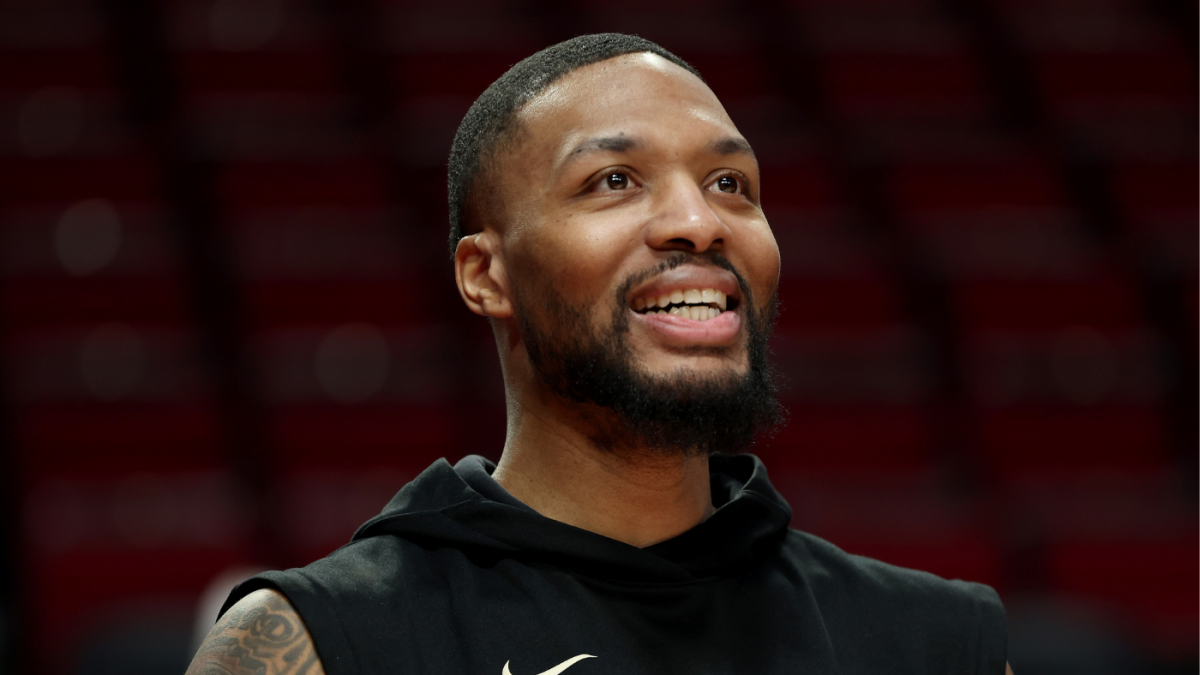
Damian Lillard vs Anthony Edwards is a compelling NBA comparison between an established superstar known for deep three-pointers and clutch performances and a younger, explosive scorer who has become one of the league’s leading offensive talents. Both guards can take over games, create their own shots, and lead an offense, but their strengths, careers, and long-term outlooks are different.
As of October 2026, Anthony Edwards has the stronger case as the better player for the present and future, based on his recent scoring production, physical tools, and defensive potential. Damian Lillard, however, has the more established career résumé, a longer history of elite playmaking, and years of experience performing in high-pressure playoff situations. The answer depends on whether the comparison prioritizes current ability, career accomplishments, shooting, leadership, or long-term potential.
Damian Lillard vs Anthony Edwards: Player Profiles
Damian Lillard: Elite Shooting and Playmaking
Damian Lillard, widely known as “Dame Time,” has built his reputation around exceptional range, confident shot-making, and the ability to deliver in decisive moments. After being selected sixth overall in the 2012 NBA Draft, Lillard became the face of the Portland Trail Blazers before later playing for the Milwaukee Bucks and returning to Portland.
Lillard’s greatest offensive strength is his ability to create scoring opportunities from almost anywhere on the court. His deep three-point shooting forces defenders to extend their coverage, opening driving lanes and passing opportunities for teammates. He is also an experienced pick-and-roll ball handler who can score at all three levels while making reads against changing defensive schemes.
Anthony Edwards: Explosive Scoring and Two-Way Potential
Anthony Edwards entered the NBA as the first overall pick in the 2020 NBA Draft, selected by the Minnesota Timberwolves. His combination of speed, strength, athleticism, and shot-making has helped him develop into a high-volume scorer and a central figure in Minnesota’s championship ambitions.
Edwards has shown the ability to attack the rim, finish through contact, hit difficult jump shots, and score in bunches from beyond the arc. His physical advantages also give him a different defensive profile from Lillard, allowing him to challenge larger wings and apply pressure to opposing guards. At 25, Edwards has more time to refine his playmaking, defensive consistency, and decision-making as he continues developing.
Statistics provide a useful starting point for comparing two players with different roles and career stages. Lillard has accumulated more than a decade of NBA production, while Edwards has established himself as a high-volume scorer during his first six seasons.
The table below combines career accomplishments with their most recent completed-season statistics, rather than treating a handful of early-season games as a reliable measure of long-term performance.
| Statistic | Damian Lillard | Anthony Edwards |
|---|---|---|
| NBA debut | 2012 | 2020 |
| Position | Point guard | Shooting guard |
| Height | 6’2″ | 6’4″ |
| Career scoring average | 25.1 PPG | 24.6 PPG |
| Career assists per game | 6.7 | 4.1 |
| Career rebounds per game | 4.3 | 5.2 |
| All-Star selections through 2025–26 | 9 | 4 |
| All-NBA selections | 7 | 2 |
| Most recent completed season | 2024–25 | 2025–26 |
| Most recent completed-season scoring average | 24.9 PPG in 2024–25 | 28.8 PPG in 2025–26 |
Sources: Basketball-Reference: Damian Lillard, NBA.com: Anthony Edwards.
The numbers highlight two different strengths. Lillard’s career averages reflect his experience as a primary ball handler and offensive organizer, whereas Edwards’ 28.8 points per game in 2025–26 demonstrate his ability to produce at an elite scoring level. Lillard missed the entire 2025–26 season with an Achilles injury, so a direct comparison of their latest completed seasons must account for that difference in availability.
Who Is the Better Scorer?
Damian Lillard’s Scoring Ability
Lillard is one of the NBA’s most dangerous perimeter shot creators. His ability to make three-pointers from well beyond the standard arc forces defenders to pick him up far from the basket, giving him more room to attack off the dribble or create opportunities for teammates.
He is also an accomplished free-throw shooter and can generate offense in late-game situations when defensive pressure intensifies. His career-high 71-point performance against the Houston Rockets in February 2023 illustrated his ability to produce an exceptional scoring night without relying exclusively on shots near the rim.
Anthony Edwards’ Scoring Ability
Edwards combines perimeter shooting with a more powerful driving game. His strength and explosiveness help him attack the basket, finish through contact, and create opportunities against defenders who have difficulty matching his physical profile.
In the 2025–26 regular season, Edwards averaged 28.8 points per game and made 39.9% of his three-point attempts, according to NBA.com. He also recorded a career-high 55-point performance during that season, demonstrating the scoring ceiling that has made him one of the league’s most prominent young stars.
Scoring verdict: Edwards has the edge based on recent production, while Lillard has the longer track record of elite scoring and proven long-range shot creation. Both can lead a team’s offense, but Edwards’ combination of size, athleticism, and recent scoring output gives him the stronger present-day case.
Who Is the Better Three-Point Shooter?
Three-point shooting is a defining feature of both players’ games, but their approaches differ. Lillard has built his reputation around extremely deep shots, pull-up threes off the dribble, and the ability to punish defenders who go under screens.
His career three-point percentage is approximately 37.1%, while his career free-throw percentage is close to 90%. Those figures reflect the consistency and shooting touch that have helped him remain a high-level offensive threat across multiple seasons.
Edwards has also developed into an outstanding perimeter shooter. He made 320 three-pointers in 2024–25, leading the NBA in total makes that season, and shot 39.9% from three in 2025–26. His ability to combine perimeter shooting with rim pressure makes him particularly difficult to defend.
Three-point verdict: Lillard has the advantage in deep-range shot creation and established shooting pedigree. Edwards’ recent accuracy and volume make this a competitive category, especially when considering his age and continued development.
Who Is the Better Playmaker?
Playmaking is one of the clearest areas in which Lillard has an advantage. As a traditional point guard, he has spent years directing half-court offenses, reading pick-and-roll defenses, and finding teammates after drawing multiple defenders toward the ball.
His career average of 6.7 assists per game compares with Edwards’ 4.1. That difference reflects their primary responsibilities: Lillard generally operates as an offense’s lead organizer, whereas Edwards is more often deployed as a scoring-focused shooting guard who also creates for others.
Edwards has made progress as a passer and has shown that he can handle greater playmaking responsibilities. However, Lillard’s experience manipulating defensive coverage, controlling tempo, and creating open shots for teammates gives him the advantage in this category.
Playmaking verdict: Lillard is the better established playmaker. Edwards can develop further in this area, but Lillard’s passing experience and career production remain significant strengths.
Who Is the Better Defender?
Defense is another important difference between the two guards. Edwards has a physical advantage because he is taller, stronger, and more capable of matching up with larger perimeter players. His athleticism gives him the tools to contest shots, fight through screens, and defend multiple positions when engaged.
Lillard’s smaller frame makes certain defensive assignments more difficult, particularly against bigger guards and wings. While experience and positioning can help him compete, his greatest value has historically come from offense rather than being a team’s primary perimeter stopper.
Defensive performance also depends on effort, scheme, health, and team responsibilities. Physical tools alone do not guarantee consistent impact, and Edwards must continue to apply those advantages across an entire season.
Defensive verdict: Edwards has the stronger physical profile and greater two-way potential. His size and athleticism make him the more versatile defensive option.
Who Is Better in the NBA Playoffs?
Playoff basketball places a premium on shot creation, decision-making, defensive adaptability, and the ability to perform against opponents who repeatedly target weaknesses. Both players have demonstrated that they can produce in the postseason, although their experiences differ.
Lillard has a long history of leading playoff offenses and delivering memorable performances in high-pressure games. His 2019 series-clinching buzzer-beater against the Oklahoma City Thunder remains one of the most famous moments of his career, while his overall postseason résumé benefits from years of experience as a team’s primary offensive creator.
Edwards has also built an impressive playoff profile. He has helped Minnesota reach the Western Conference Finals and has produced multiple high-scoring postseason performances. His combination of strength, shooting, and athleticism gives him the tools to become an even more effective playoff star as his experience grows.
Playoff verdict: Lillard has the longer history of clutch performances and established postseason experience. Edwards has demonstrated considerable postseason potential and has already taken meaningful steps toward becoming a leading playoff performer. The distinction is between Lillard’s accumulated résumé and Edwards’ developing career.
Career Accomplishments and Awards
Career accomplishments matter because they provide context beyond a player’s scoring average. Lillard has nine All-Star selections, seven All-NBA selections, and the 2012–13 NBA Rookie of the Year award. He was also selected to the NBA’s 75th Anniversary Team, recognizing his standing among the league’s historically significant players.
Edwards has earned four All-Star selections through the 2025–26 season and was named to the All-NBA Second Team in 2023–24. He has also helped Minnesota achieve sustained postseason success, giving him a strong foundation for future individual and team accomplishments.
Lillard currently leads in career recognition and longevity. Edwards has fewer seasons behind him, so his final résumé will depend on continued development, health, postseason performance, and the team’s success over the coming years.
Age, Health, and Future Potential
Age is an important factor when projecting how the two players may perform over the next several seasons. Lillard, born in 1990, is 36 in 2026, while Edwards, born in 2001, is 25. Edwards is therefore much closer to the typical prime years of an NBA star, while Lillard is at a stage of his career when recovery, workload, and long-term durability become increasingly important.
Health is particularly relevant in this comparison. Lillard missed the 2025–26 season because of an Achilles injury before returning to Portland for the 2026–27 season. Edwards, meanwhile, was reported to be undergoing arthroscopic surgery on his right knee in October 2026, with an expected absence of up to two months. These situations make current availability an important consideration, and neither player’s future performance should be assumed without monitoring recovery updates.
In the longer term, Edwards has the advantage because of his age, athletic profile, and opportunity to improve his all-around game. Lillard’s future value will depend more heavily on his recovery and his ability to retain his shooting, decision-making, and offensive effectiveness.
Damian Lillard vs Anthony Edwards: Final Verdict
So, who is better: Damian Lillard or Anthony Edwards? Anthony Edwards has the stronger case as the better player right now and the more attractive long-term choice, based on his recent scoring production, physical advantages, defensive potential, and age. His 28.8 points per game in 2025–26 underline how far his offensive game has progressed.
Damian Lillard remains the more accomplished player historically. His nine All-Star selections, seven All-NBA selections, superior career assist average, and reputation for deep shooting and clutch performances give him a substantial advantage in career résumé and established playmaking.
The comparison ultimately depends on the criteria. For recent scoring, physical versatility, and future potential, Edwards has the edge. For career achievements, playmaking experience, and a proven history of deep-range shot creation, Lillard has the advantage. Both are elite offensive guards, but their different career stages make Edwards the stronger choice for a team building around the future, while Lillard’s accomplishments remain a benchmark for evaluating his place in NBA history.
Frequently Asked Questions
Is Anthony Edwards better than Damian Lillard?
Edwards has the stronger case based on recent scoring, defensive potential, and age. Lillard has the more accomplished career and remains one of the NBA’s most respected perimeter scorers.
Who scores more points per game?
Edwards averaged 28.8 points per game in the 2025–26 regular season. Lillard averaged 24.9 points per game in his most recent completed season, 2024–25.
Who is the better shooter?
Lillard has the stronger reputation for deep three-point shooting and elite free-throw accuracy. Edwards has developed into a highly effective three-point scorer and produced greater scoring volume in his latest completed season.
Who has more NBA awards?
Lillard has nine All-Star selections and seven All-NBA selections. Edwards has four All-Star selections and two All-NBA selections through the 2025–26 season.
Who would you choose to build a team around?
For a long-term project, Edwards is the more natural choice because he is younger and offers a combination of scoring, athleticism, and defensive potential. For a team prioritizing an experienced lead guard and established offensive playmaking, Lillard’s strengths remain valuable, subject to his health and recovery.
