


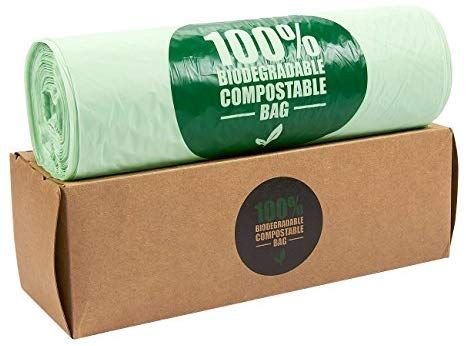
Choosing the best compostable trash bags in 2026 can make everyday waste management more environmentally responsible, but not every bag marketed as eco-friendly delivers the same benefits. The best options combine reliable leak resistance, sufficient strength, convenient sizing, and independently verified compostability.
For households trying to reduce plastic waste, compostable trash bags can be a useful alternative to conventional plastic liners, particularly when collecting food scraps, vegetable peels, coffee grounds, and other compostable kitchen waste. However, the right choice depends on where the bags will be disposed of, because some products require industrial composting facilities rather than breaking down in a backyard compost pile.
Among the options worth considering are UNNI Compostable Trash Bags, BioBag, Green Earth Compostable Bags, and other certified plant-based alternatives. The most important purchasing consideration is not simply whether a bag says biodegradable or natural, but whether it meets recognized compostability standards and is compatible with your local waste collection system.
What Are Compostable Trash Bags?
Compostable trash bags are waste liners designed to break down under suitable composting conditions into carbon dioxide, water, and biomass without leaving harmful levels of toxic residues. They are generally manufactured using plant-derived materials, compostable polymers, or a combination of these materials.
Unlike conventional plastic bags, which can persist in the environment for decades or longer, properly certified compostable bags are designed to decompose within specified conditions and timeframes.
Common materials include cornstarch-based blends, polylactic acid (PLA), and other compostable bioplastics. Some products also contain PBAT, a biodegradable polymer used to improve flexibility and durability.
These materials can provide a practical alternative to traditional plastic, although their environmental benefits depend heavily on proper disposal. A compostable bag sent to a conventional landfill may not break down as intended because landfills often lack the oxygen, moisture, and temperature conditions required for effective composting.
Best Compostable Trash Bags 2026: Top Picks
The following products represent different approaches to compostable waste management, from small kitchen caddy liners to larger household bags. Product availability, certifications, sizes, and formulations can vary by market, so always check the current packaging before purchasing.
1. UNNI Compostable Trash Bags – Top Overall Choice
 UNNI Compostable Trash Bags are a strong choice for households looking for a balance of durability, practical sizing, and verified compostability. The brand offers several sizes, including small liners for countertop food-scrap containers and larger bags designed for kitchen waste bins.
One of the biggest advantages of UNNI is its range of compostability certifications. Certain products carry BPI certification, CMA field-testing credentials, and TÜV AUSTRIA OK compost HOME certification, making them particularly interesting for households that want flexibility between commercial and home composting.
The 13-gallon option is especially useful for everyday kitchen waste, while smaller versions work well for collecting vegetable scraps, fruit peels, coffee grounds, and similar organic materials. Their plant-based construction is designed for composting, although wet or heavy waste should still be handled carefully to prevent leaks and tearing.
Best for: Families looking for versatile compostable bags with multiple certification options.
2. BioBag Compostable Trash Bags – Best for Food Scraps
 BioBag is one of the better-known names in compostable waste collection. Its product range includes small kitchen caddy liners and larger household bags, making it a convenient option for people who separate organic waste from general rubbish.
The bags are made using plant-based materials and compostable polymers. Selected products carry BPI and OK compost HOME certifications, which provide useful information about the conditions under which they are designed to break down.
BioBag is particularly suitable for collecting food scraps before transferring them to an appropriate composting system. Its relatively lightweight construction can be convenient for organic waste, but it also means users should avoid allowing liquid to accumulate inside the bag for extended periods.
Another advantage is the availability of different sizes, allowing households to choose liners that fit their existing containers rather than purchasing an entirely new waste bin.
Best for: Kitchen food scraps and households with an established composting routine.
3. HoldOn Compostable Tall Kitchen Bags – Best Premium Option
HoldOn Compostable Tall Kitchen Bags are worth considering for people who want a more convenient alternative to traditional kitchen liners. Their larger format is designed for standard household waste containers, while the drawstring-style closure available on selected products makes tying and carrying a full bag easier.
The brand focuses on plant-based and compostable materials, with selected products carrying BPI certification for commercial composting. This is an important distinction because industrial compostability does not automatically mean that a product is suitable for backyard composting.
The premium appeal comes from the combination of convenient handling, practical kitchen sizing, and a more sustainability-focused product design. However, shoppers should check the certification of the exact model they intend to purchase rather than assuming every product in the range has identical environmental credentials.
Best for: Households that prefer convenient drawstring bags and premium everyday kitchen liners.
4. Simply Bio Compostable Trash Bags – Best for Larger Kitchen Loads
Simply Bio Compostable Trash Bags are another option for households that need larger liners for regular kitchen waste collection. Their 13-gallon format is designed for common tall kitchen bins, making them suitable for everyday household routines.
Selected products are marketed with compostability certifications, including BPI and OK compost HOME credentials. The brand also offers designs intended to provide a practical balance between flexibility and resistance to everyday handling.
For households that frequently dispose of vegetable scraps, fruit waste, and other organic materials, a larger bag can reduce the need for constant replacements. However, users should avoid filling any compostable liner with excessive liquid or sharp food waste because compostable materials can be more vulnerable to damage than conventional plastic.
Best for: Families that regularly collect larger quantities of kitchen waste.
5. SUPERBIO Compostable Bags – Best for Small Waste Bins
SUPERBIO Compostable Bags are worth considering for smaller waste containers, particularly countertop food-scrap bins and compact kitchen caddies. Their smaller sizes can make everyday organic waste collection more manageable without requiring a large household liner.
Selected products are available with BPI and OK compost HOME certification information, making them relevant to people who want to compare different composting options.
The smaller format is particularly convenient for households that empty their food-scrap containers frequently. Regular emptying also helps prevent moisture buildup, unpleasant smells, and premature weakening of the bag.
Although these liners are not necessarily the best option for large household rubbish bins, they can be a useful addition to a kitchen composting setup.
Best for: Small compost bins, countertop containers, and everyday food-scrap collection.
6. Green Earth Compostable Trash Bags – Best for Everyday Small-Bin Use
Selected product listings describe compostability credentials associated with commercial and home composting. However, shoppers should verify the exact model and certification because similar product names do not always indicate identical materials or disposal requirements.
The main advantage of smaller compostable bags is convenience. They can be replaced regularly, reducing the amount of organic waste sitting inside a liner for several days.
For households that want to introduce compostable products gradually, small-bin liners can be a simple starting point before switching larger kitchen waste containers.
Best for: Small household bins and light everyday waste.
Quick Comparison: Best Compostable Trash Bags in 2026
|
Product |
Best use |
Main advantage |
|---|---|---|
|
UNNI |
Overall household use |
Multiple certification options |
|
BioBag |
Food scraps |
Dedicated composting range |
|
HoldOn |
Premium kitchen use |
Convenient closure options |
|
Simply Bio |
Larger kitchen loads |
Practical tall-kitchen sizing |
|
SUPERBIO |
Small compost bins |
Compact liner options |
|
Green Earth |
Everyday small bins |
Convenient smaller sizes |
These recommendations reflect different product uses rather than a universal laboratory performance ranking. Always check the certification, dimensions, and material information printed on the specific package.
What to Look for When Buying Compostable Trash Bags
Choosing an environmentally responsible trash bag involves more than finding a product with green packaging or plant-based ingredients. The most important considerations include compostability certification, durability, size, material composition, and compatibility with your disposal system.
1. Look for Recognized Compostability Certifications
Certification is one of the most important factors when comparing compostable trash bags. It provides more meaningful information than general marketing phrases such as natural, green, or eco-friendly.
Two common standards and certification systems worth understanding are ASTM D6400 and TÜV AUSTRIA OK compost HOME.
ASTM D6400 relates to plastics designed for municipal or industrial composting conditions. BPI certification indicates that a product has been evaluated against applicable compostability standards for commercial composting.
OK compost HOME is different because it addresses composting under the lower temperatures and less controlled conditions associated with home composting.
If you plan to use a backyard compost pile, look specifically for home-compostability certification. A bag certified only for industrial composting should not automatically be treated as suitable for a home composting system.
2. Choose the Correct Bag Size
The right size depends on the waste container you already own. A bag that is too small may slip into the bin, while an oversized liner can waste material and become inconvenient to handle.
Small bags are generally suitable for countertop food-scrap containers, bathroom bins, and compact office wastebaskets. Medium-sized bags work well for smaller kitchen containers, while larger 13-gallon liners are commonly used in standard household kitchen bins.
Check both capacity and physical dimensions before purchasing. Two bags with the same advertised gallon capacity can have different widths, lengths, and opening sizes.
3. Consider Thickness and Tear Resistance
Durability matters because compostable bags must withstand everyday handling without leaking or splitting. Their strength depends on material formulation, thickness, construction, and the type of waste being collected.
A thicker bag may offer additional resistance to punctures, but thickness alone does not guarantee better performance. A well-designed thinner bag may still perform effectively for lightweight organic waste.
For kitchen use, look for flexible materials, reinforced seams, and a construction suitable for the weight of your usual waste. Avoid placing heavy, sharp, or excessively wet materials inside a bag that is designed primarily for lightweight food scraps.
4. Check Moisture and Leak Resistance
Food waste naturally contains moisture, and that can create challenges for compostable liners. Vegetable peels, fruit scraps, coffee grounds, and leftover food can release liquid as they sit inside a bag.
A suitable liner should handle normal moisture levels without immediately weakening. However, compostable materials can become more vulnerable when exposed to prolonged moisture, heat, and storage conditions.
Draining wet food scraps before placing them in a bag can help reduce leaks. It is also a good idea to empty kitchen compost liners regularly rather than allowing organic waste to accumulate for long periods.
5. Understand the Material Composition
Compostable bags are commonly manufactured using different combinations of plant-based and biodegradable polymers. Cornstarch-derived materials, PLA, and PBAT are among the ingredients used in various compostable formulations.
Cornstarch-based blends can contribute to the plant-derived content of a product, while PLA and PBAT can provide different structural and flexibility characteristics.
However, a plant-based ingredient does not automatically make an entire bag compostable. The complete formulation must meet the relevant compostability requirements.
For this reason, a recognized certification is generally more useful than a simple claim that a bag is made from corn or other renewable resources.
Compostable vs. Biodegradable Trash Bags: What’s the Difference?
The terms compostable and biodegradable are often used interchangeably, but they do not mean exactly the same thing. Understanding the distinction can help you avoid products that make impressive environmental claims without providing clear information about how they break down.
Compostable Trash Bags
Compostable bags are designed to break down under specific composting conditions within established timeframes. Properly certified products are assessed for biodegradation, disintegration, and the quality of the resulting compost.
Their intended purpose is to become part of a managed composting process rather than remain as conventional plastic waste.
Biodegradable Trash Bags
Biodegradable bags are designed to break down through the activity of microorganisms, but the term alone does not establish how quickly this happens or what environmental conditions are required.
Some biodegradable products may require specialized conditions, while others may leave unwanted residues if they do not decompose completely.
This is why shoppers should prioritize independently verified compostability claims instead of relying on the word biodegradable alone.
Benefits of Using Compostable Trash Bags
Switching to compostable liners can support better waste management, especially in households that already separate organic materials.
One major benefit is their compatibility with appropriate composting programs. When accepted by a composting facility, certified liners can make it easier to collect food scraps without requiring users to handle loose organic waste.
They can also reduce dependence on conventional plastic bags in specific waste collection applications. Plant-derived materials offer another approach to product manufacturing, although the overall environmental impact depends on production methods, transportation, and disposal.
Convenience is another advantage. Compostable bags are available in different capacities and styles, making them suitable for kitchen caddies, household bins, and certain commercial applications.
However, these benefits are most meaningful when the bags reach a suitable composting facility or home composting environment.
Are Compostable Trash Bags Really Better for the Environment?
Compostable trash bags can be a more suitable option than conventional plastic liners in the right waste management system, but they are not automatically better in every situation.
Their environmental value depends on how they are manufactured, whether they are certified, and what happens after disposal.
For example, a certified compostable bag sent to an industrial composting facility that accepts it may contribute to an effective organic waste management process. The same bag placed in a conventional landfill may not decompose as intended.
There is also an important issue with recycling. Compostable bags generally should not be placed in conventional plastic recycling streams because they can interfere with recycling processes.
The most responsible approach is to choose a bag that matches your local waste collection requirements and use compostable products only where their intended disposal pathway is available.
How to Dispose of Compostable Trash Bags Properly
Proper disposal is essential if you want to receive the environmental benefits associated with compostable products.
Start by checking whether your local waste management provider accepts compostable liners. Some municipal and commercial composting facilities accept certified bags, while others require food scraps to be delivered without any liner.
If you have a home composting system, choose bags specifically certified for home composting and follow the manufacturer’s instructions. Industrially certified bags may not break down effectively in a typical backyard compost pile.
Avoid putting compostable bags into conventional plastic recycling bins. If composting is unavailable, follow local waste disposal guidance rather than assuming the bag will break down naturally in the environment.
For households in areas without dedicated composting facilities, reducing disposable packaging and separating food waste for an appropriate disposal method may offer more practical environmental benefits.
Common Mistakes to Avoid When Buying Compostable Trash Bags
A common mistake is assuming that every bag labeled eco-friendly is compostable. Some products are simply made with a percentage of plant-derived material and may not meet recognized compostability standards.
Another mistake is purchasing industrially compostable bags for a backyard compost pile. These products are designed for controlled composting conditions and may not break down properly in a home environment.
Buying bags in excessively large quantities can also create problems. Compostable materials may have recommended storage periods, and prolonged exposure to heat, moisture, or sunlight can affect their performance.
Finally, choosing the cheapest available option without checking the bag dimensions, construction, and certification can lead to disappointing results. A slightly more expensive certified product may offer better suitability for your household’s actual waste management needs.
Frequently Asked Questions
What are the best compostable trash bags in 2026?
UNNI is a strong overall choice because selected products offer multiple compostability certifications and different household sizes. BioBag is another worthwhile option for food-scrap collection, while HoldOn and Simply Bio are alternatives for larger kitchen waste containers.
The best option depends on your bin size, composting facilities, and preferred bag design.
Can compostable trash bags go in regular garbage?
Yes, they can generally be disposed of with regular garbage when no suitable composting option is available, subject to local waste regulations. However, conventional landfills often do not provide the conditions needed for compostable bags to break down as intended.
Are compostable trash bags safe for food waste?
Certified compostable bags designed for organic waste collection are generally suitable for collecting food scraps according to their intended use. Check the manufacturer’s product information and avoid assuming that a compostable waste liner is automatically approved for direct food contact.
Do compostable trash bags break down in home compost?
Some do, but not all. Look for an explicit home-compostability certification, such as TÜV AUSTRIA OK compost HOME.
Industrial composting certification alone is not sufficient evidence that a bag will break down effectively in a backyard compost pile.
How long do compostable trash bags take to decompose?
The timeframe varies depending on the material, product formulation, temperature, moisture, oxygen availability, and composting conditions.
Industrial compostability standards assess decomposition under controlled conditions, so their timeframes should not be assumed to apply to home composting or landfills.
Are cornstarch trash bags actually compostable?
Some cornstarch-based bags are compostable, but the ingredient alone does not prove that the finished product meets compostability standards. Look for independent certification covering the complete bag.
Are compostable bags suitable for outdoor use?
Some products can be used outdoors for collecting appropriate organic waste, but exposure to sunlight, rain, heat, and moisture may weaken them. Follow the manufacturer’s storage and usage recommendations.
Final Verdict: Which Compostable Trash Bags Should You Buy in 2026?
The best compostable trash bags combine dependable everyday performance with clear, independently verified compostability credentials. For most households, UNNI is a strong starting point because of its different sizes and selected products with multiple certifications.
BioBag is worth considering for regular food-scrap collection, while HoldOn offers a convenient premium-style alternative. Simply Bio, SUPERBIO, and Green Earth provide additional options for different household waste containers and everyday needs.
Before making a purchase, check the exact product certification, bag dimensions, material composition, and local composting requirements. These details matter more than attractive packaging or broad environmental marketing claims.
Ultimately, compostable trash bags are most useful when they are part of a complete waste management routine. Choosing the right product, separating organic waste, avoiding unnecessary moisture, and disposing of the bags correctly can help make your household’s approach to waste more responsible and practical.
