


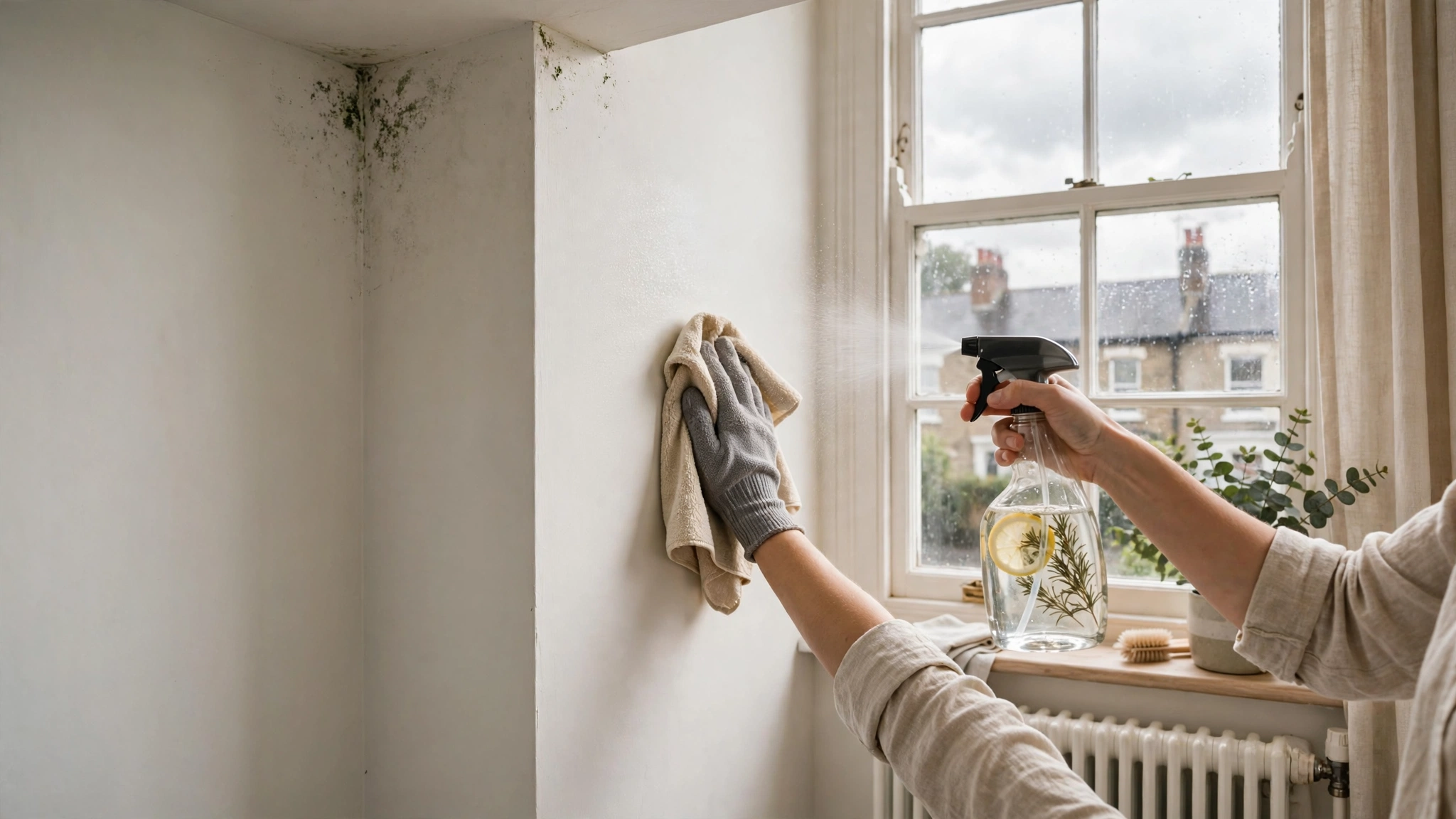
Mould on walls is a common household problem in the UK, particularly during the colder months when condensation, limited ventilation, and damp conditions can create the ideal environment for fungal growth. Small patches may appear around windows, behind furniture, in corners, or on colder external walls, and leaving them untreated can allow the problem to spread.
The good news is that you do not necessarily need bleach to remove mould from walls. For small areas of surface mould, a careful cleaning method combined with better ventilation and moisture control can often deal with the visible growth.
However, cleaning the mould is only part of the solution. If excess moisture continues to affect the wall, the mould is likely to return, so successful mould removal should always involve identifying and addressing the underlying source of dampness.
Why Does Mould Grow on Walls?
Mould thrives when moisture, a suitable surface, and sufficient time come together to support its growth. In UK homes, the moisture often comes from condensation produced by everyday activities such as showering, cooking, drying clothes, and even breathing.
When warm, moist indoor air comes into contact with a cold wall or window, water can condense on the surface. If the area remains damp for long enough, mould can begin to develop.
Poor ventilation can make the situation worse. A bathroom without effective extraction, a kitchen with limited airflow, or a bedroom where windows remain closed throughout the winter can all experience increased humidity.
Cold spots also matter. External walls, corners, areas around windows, and spaces behind large pieces of furniture can remain colder than the rest of the room, making them particularly susceptible to condensation and mould growth.
Is Bleach Necessary for Removing Wall Mould?
Bleach is not essential for dealing with small areas of mould on walls. In fact, using household bleach on porous surfaces such as plaster, wallpaper, and some painted walls may not be the most appropriate approach because the visible staining can return even after the surface has been treated.
The more important objective is to physically remove the mould contamination while avoiding unnecessary exposure to cleaning chemicals.
A suitable household mould-cleaning product designed for the particular wall surface can be used according to its manufacturer’s instructions. Alternatively, for minor surface mould, careful cleaning with detergent and water may be appropriate for some washable painted surfaces.
Never mix cleaning products together. In particular, do not combine bleach with other household cleaners because dangerous gases can be produced.
Before You Start: Check How Serious the Problem Is
Before cleaning, look carefully at the affected area. A few small patches of surface mould are very different from extensive mould growth, persistent dampness, visibly damaged plaster, or mould caused by an ongoing leak.
If mould covers a large area, keeps returning despite cleaning and moisture control, or is associated with significant damp or water damage, professional assessment may be more appropriate than repeatedly treating the surface.
You should also consider whether the mould is appearing because of a plumbing leak, roof problem, penetrating damp, rising damp, or another structural issue. Cleaning the wall without resolving the source will only provide a temporary solution.
What You Need to Remove Small Areas of Mould
For a small patch of mould on a suitable washable painted surface, keep the process simple. You will generally need disposable gloves, appropriate eye protection if there is a risk of splashing, disposable cleaning cloths or paper towels, a suitable detergent or mould-cleaning product, and a rubbish bag for contaminated disposable materials.
Good ventilation is also important. Open a window or use appropriate mechanical extraction where possible, while avoiding actions that unnecessarily spread mould spores around the home.
If you have asthma, severe allergies, a weakened immune system, or another condition that makes exposure to mould or cleaning products a particular concern, consider asking someone else to carry out the cleaning or seek professional advice.
Step 1: Improve Ventilation Before Cleaning
Before starting, increase airflow through the room where practical. Opening a window and using an extractor fan can help reduce humidity and prevent the room from remaining damp during and after cleaning.
Do not deliberately create strong air currents that could spread mould particles throughout the home. The objective is controlled ventilation rather than blowing air directly at the mould.
If the room is a bathroom or kitchen, use the extractor fan according to the manufacturer’s guidance and continue ventilating after activities that generate significant moisture.
Step 2: Protect Yourself
Put on disposable gloves before handling mould-contaminated materials. Eye protection can also be sensible if there is a possibility of splashing cleaning solution or disturbing mould close to eye level.
Avoid brushing, sanding, or aggressively scrubbing dry mould because these actions can disturb contaminated material and release particles into the air.
The less you disturb the mould unnecessarily, the better. Gentle, controlled cleaning is preferable to attempting to remove a patch through vigorous dry scrubbing.
Step 3: Apply a Suitable Cleaning Solution
For washable painted walls with a small amount of surface mould, apply an appropriate detergent solution or a commercially available mould cleaner that is suitable for the specific surface.
Always read the product label before using a specialist mould treatment. Some products may be unsuitable for wallpaper, unsealed plaster, certain paints, wood, or other porous materials.
Do not mix different cleaning products, even if you believe combining them will make the treatment stronger. Household chemicals can react with one another and produce hazardous substances.
Step 4: Gently Clean the Affected Area
Use a disposable cloth or suitable cleaning material to gently remove the mould from the surface. Work carefully rather than aggressively scrubbing, particularly if the wall has a delicate painted finish.
Avoid spreading the cloth over clean areas unnecessarily. The aim is to remove contamination while keeping the affected area controlled.
If the wall surface begins to deteriorate, paint starts coming away, or the underlying material appears damaged or persistently wet, stop and investigate the cause rather than continuing to scrub.
Step 5: Dispose of Used Materials Carefully
Place disposable cloths, paper towels, and other contaminated waste into a suitable rubbish bag. Avoid shaking materials indoors or leaving them lying around where mould particles could be redistributed.
After finishing, wash your hands thoroughly even if you wore gloves. Clean reusable equipment according to its instructions before storing it.
The cleaning process should leave the affected surface visibly clean, but removing the visible mould does not mean the underlying moisture problem has been solved.
Step 6: Dry the Wall Thoroughly
Drying is one of the most important stages. A damp wall provides precisely the conditions that allow mould to return, so the cleaned surface should be allowed to dry properly.
Maintain reasonable ventilation while the area dries. If the room is naturally humid, improving extraction or using a dehumidifier can help reduce moisture in the air.
Do not immediately cover a damp wall with furniture, wallpaper, or a new coat of paint. Give the surface time to dry and make sure the source of excess moisture has been addressed.
How to Stop Mould Coming Back
Removing mould without addressing moisture is usually only a temporary solution. The most effective long-term strategy is to reduce excess humidity and prevent surfaces from remaining damp.
Use extractor fans when showering or cooking, and continue ventilation for an appropriate period afterwards. Keeping internal doors closed during high-moisture activities can also help prevent humid air from moving into colder rooms.
Avoid drying large quantities of wet laundry indoors without adequate ventilation. If indoor drying is unavoidable, increase ventilation and consider using a dehumidifier to help manage the additional moisture.
Reduce Condensation on Windows and Walls
Condensation is one of the most common causes of mould in UK homes. During colder weather, warm indoor air can deposit moisture onto cold windows and walls, particularly in rooms with limited airflow.
Wipe away significant condensation rather than allowing water to remain on windowsills and surrounding surfaces. More importantly, work on reducing the amount of moisture entering the air in the first place.
Heating can also influence condensation. A consistently cold room can encourage moisture to settle on cold surfaces, while appropriate ventilation helps remove humid air. The goal is to maintain a reasonably balanced indoor environment rather than simply turning the heating up as high as possible.
Give Furniture Some Space From the Wall
Large wardrobes, beds, sofas, and cabinets placed tightly against external walls can restrict airflow. The space behind the furniture may therefore become colder and more humid than the rest of the room.
Leaving a reasonable gap between large furniture and colder external walls can improve air circulation. This is particularly useful in bedrooms, where condensation levels can increase overnight.
If you repeatedly find mould behind a particular piece of furniture, do not simply clean the visible patch and push the furniture back into place. Investigate why that location remains damp and improve airflow around it.
Use a Dehumidifier if Necessary
A dehumidifier can be useful when indoor humidity remains high despite reasonable ventilation and moisture-control measures. It removes water from the air, helping reduce the conditions that encourage condensation.
However, a dehumidifier should not be treated as a cure for structural dampness. If water is entering the building through a leak, defective guttering, penetrating damp, or another building defect, removing moisture from the indoor air will not resolve the underlying problem.
Use the dehumidifier according to its instructions and empty or drain it regularly. Some models include humidity controls that allow them to operate only when moisture levels rise above a chosen threshold.
Should You Paint Over Mould?
Painting directly over mould is not a reliable solution. If the wall remains damp or contaminated, the mould can return through or around the new coating.
Clean and dry the affected surface first, then address the cause of the moisture. Once the wall is properly dry and suitable for painting, you can consider redecorating with an appropriate paint designed for the surface and environment.
Anti-mould or mould-resistant paints may provide additional protection in some circumstances, but they should not be regarded as a substitute for ventilation, moisture control, or repairing leaks.
What About Vinegar, Baking Soda and Other Natural Remedies?
You may find many online recommendations for vinegar, bicarbonate of soda, hydrogen peroxide, or other household substances as alternatives to bleach. Some substances can have cleaning or antimicrobial properties, but their suitability depends on the material, concentration, and type of contamination.
More importantly, a household remedy does not remove the need to control moisture. Even if a substance temporarily reduces visible mould, the growth can return if the wall remains damp.
For predictable results, a cleaning product specifically intended for mould and suitable for your particular wall surface can be easier to use. Always follow the manufacturer’s instructions and never combine different chemical treatments.
When Should You Call a Professional?
Professional help may be appropriate when mould is extensive, repeatedly returns, or appears to be associated with a building defect. Persistent dampness, leaking pipes, roof problems, damaged masonry, or significant water ingress should be investigated at the source.
You should also avoid treating extensive mould contamination as a routine household cleaning job. Large areas can require specialist assessment, particularly where porous building materials have become heavily affected.
If you are renting, report persistent damp and mould to your landlord or housing provider rather than repeatedly attempting to solve a potentially structural problem yourself. Keep records of the affected areas and any communication about the issue.
Is Mould Dangerous?
Mould can release spores and other particles into the indoor environment, and exposure can be particularly problematic for people with allergies, asthma, or certain respiratory sensitivities. The potential health effects depend on the individual, the type and extent of exposure, and the condition of the building.
This is one reason why mould should not simply be ignored. At the same time, not every small patch of household mould represents an immediate medical emergency.
If someone in the household develops persistent respiratory symptoms or experiences worsening symptoms in a mould-affected environment, appropriate medical advice should be sought rather than relying solely on household cleaning measures.
How to Prevent Mould in a UK Home During Winter
Winter is often the most challenging season because homes are colder while everyday activities continue generating moisture. A simple routine can make a significant difference.
Ventilate bathrooms and kitchens, use extractor fans, avoid excessive indoor moisture, manage condensation, and keep airflow around colder walls. Where appropriate, maintain consistent heating rather than allowing rooms to become extremely cold and damp.
Regularly inspect areas that are prone to condensation, including window frames, external corners, behind furniture, and around bathroom fittings. Finding a small problem early is considerably easier than dealing with widespread mould later.
Final Thoughts
Learning how to get rid of mould on walls without bleach is largely about taking a controlled approach. For small areas of surface mould, gentle cleaning with an appropriate product, good ventilation, careful disposal, and thorough drying can be a sensible starting point.
But cleaning alone is rarely the complete answer. The most effective long-term solution is to identify why the wall is becoming damp and reduce condensation, improve ventilation, repair leaks, or address any underlying building problem.
If the mould is extensive, persistent, associated with water damage, or returning despite reasonable moisture control, professional assessment is the safer option. A clean wall is only a temporary achievement if the conditions that caused the mould remain unchanged.
