


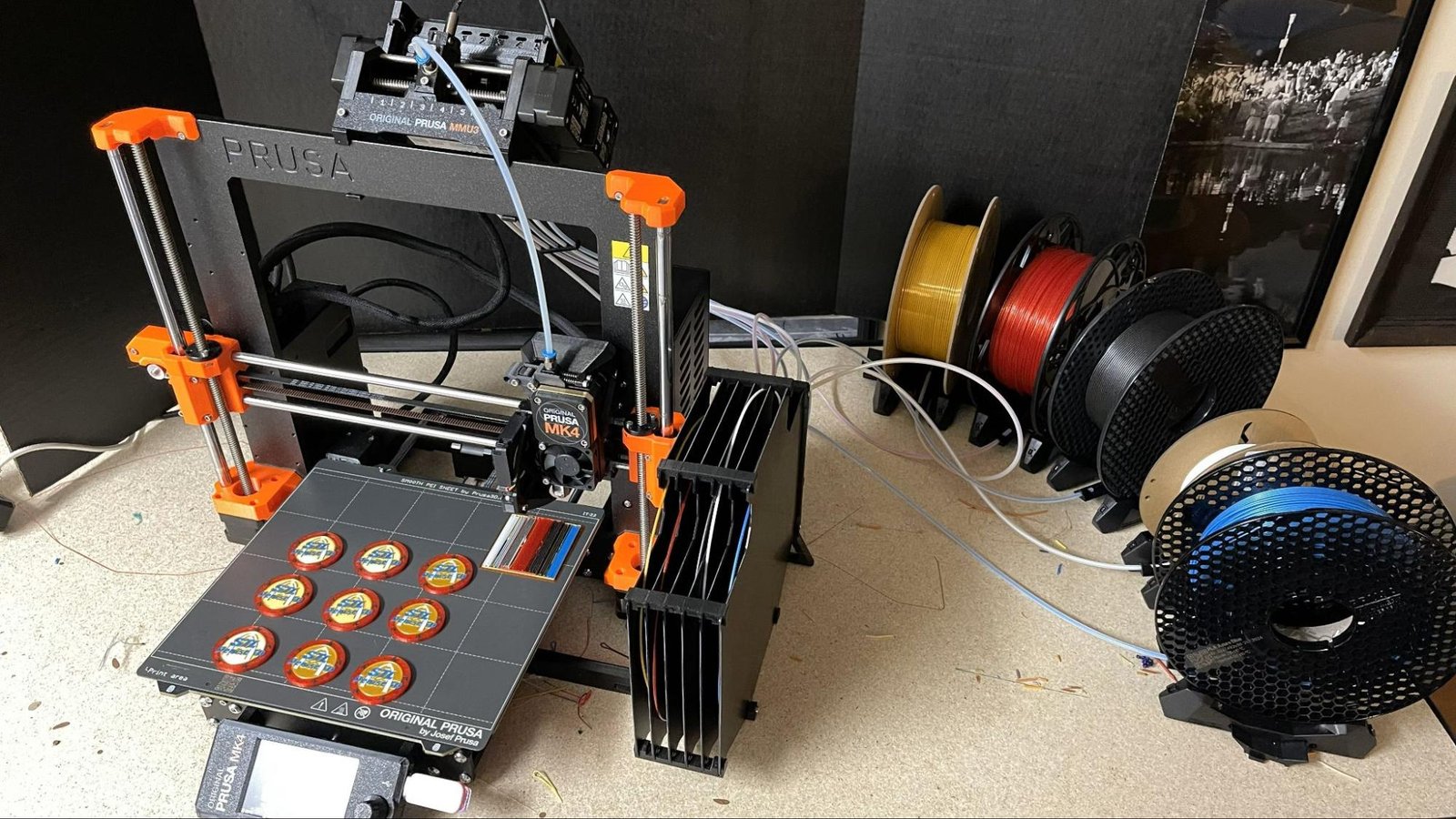
A multicolor 3D printer is a 3D printing machine capable of producing objects with multiple colors in a single print. Unlike conventional single-color 3D printers, these systems can combine different filaments, inks, or materials to create models with more detailed and visually complex appearances.
Multicolor 3D printing is increasingly used for prototypes, educational models, product designs, artwork, miniatures, decorations, and engineering projects. Depending on the printing technology, a machine may create different colors by switching between materials, mixing colors, or controlling multiple print channels.
What Is a Multicolor 3D Printer?
A multicolor 3D printer is a type of additive manufacturing machine designed to print objects using two or more colors. It builds an object layer by layer while controlling the color or material used in different sections of the model.
Some printers use multiple filament inputs and automatically switch between them during printing. Others use specialized printheads that can mix or deposit different materials to create a wider range of colors.
The result is a finished 3D object that can contain several colors without requiring the user to manually paint every section after printing.
How Does a Multicolor 3D Printer Work?
The basic printing process begins with a digital 3D model created or downloaded using compatible design software. The model is then processed through slicing software, which converts the design into instructions that the printer can follow.
For a multicolor print, the slicing process also determines where each color should be deposited. The printer then follows these instructions layer by layer while changing or combining materials according to the design.
The exact process depends on the printer’s technology. Some machines automatically change filament, while others use multiple nozzles or specialized color-mixing systems.
Types of Multicolor 3D Printers
Multicolor 3D printers can be categorized according to how they handle different colors and materials. Each approach has its own advantages, limitations, and suitable applications.
Multi-Filament 3D Printer
A multi-filament printer uses several filament sources and can switch between them during a print. Each filament may have a different color, allowing the machine to create multicolored sections within the same object.
This approach is useful when a model requires clearly separated colors, such as lettering, logos, patterns, or character designs.
Multi-Nozzle 3D Printer
A multi-nozzle 3D printer uses two or more printheads or nozzles to deposit different filaments. Each nozzle can be assigned to a particular material or color.
Because the printer does not necessarily need to unload and reload the same nozzle for every color change, multi-nozzle systems can be useful for complex prints. However, calibration and nozzle alignment are important for achieving accurate results.
Color-Mixing 3D Printer
A color-mixing 3D printer combines different base colors before or during extrusion to produce a wider range of shades. Instead of being limited to several individually loaded colors, the printer can potentially create many intermediate colors.
This technology can be useful for artistic models, decorative objects, and projects where smooth color transitions are important.
Dual-Extruder 3D Printer
A dual-extruder printer has two extrusion systems that can work with different filaments. One extruder may print one color while the other handles another color or material.
Dual-extrusion systems can be used for multicolor models as well as prints that require different materials, such as a primary filament combined with a support material.
Resin Multicolor 3D Printer
Multicolor resin printing uses liquid photopolymer resin rather than filament. Specialized systems can use multiple resin sources or color-management methods to produce objects with different visual characteristics.
Resin printing is often associated with detailed models and miniatures, although the available multicolor capabilities vary significantly between printer technologies.
Benefits of a Multicolor 3D Printer
The most obvious advantage of a multicolor 3D printer is the ability to produce visually detailed objects without relying entirely on post-print painting. Multiple colors can be integrated directly into the digital design and reproduced during the printing process.
This can save time for certain projects and make the finished model more suitable for presentation, demonstration, or direct use.
Produces Detailed and Attractive Models
Multiple colors can make a 3D model easier to understand and visually appealing. Different colors can distinguish separate components, highlight features, or reproduce the appearance of a real-world object.
This is especially valuable for educational models, product prototypes, architectural designs, and decorative projects.
Reduces Manual Painting
Traditional single-color printing often requires the finished object to be painted manually when several colors are needed. A multicolor printer can automate much of this process.
Although some models may still require finishing or painting, integrating colors during printing can reduce the amount of manual work for suitable designs.
Improves Prototyping
Color can provide useful information during product development. Designers can use different colors to distinguish components, indicate functions, or represent different materials in a prototype.
A multicolor prototype can therefore communicate a product concept more clearly than a plain single-color model.
Supports Creative Projects
Artists and creators can use multicolor printing to experiment with patterns, gradients, characters, sculptures, and decorative objects.
The ability to incorporate colors directly into a digital model opens up creative possibilities that may be difficult or time-consuming to achieve through manual painting.
Useful for Educational Models
Teachers and students can use multicolor 3D prints to represent complex subjects. Different colors can identify anatomical structures, geographical features, mechanical components, mathematical shapes, or scientific concepts.
Color coding can make physical models easier to interpret and discuss.
Common Uses of Multicolor 3D Printers
Multicolor 3D printers are used across several industries and creative fields. Their applications range from simple decorative projects to professional product-development work.
Product Prototyping
Designers and engineers can create prototypes that more closely resemble the intended final product. Different colors can represent separate components or design elements.
This can make it easier for teams, clients, and stakeholders to evaluate a concept before manufacturing begins.
Educational Models
Multicolor printing can create physical teaching aids for classrooms, laboratories, and training environments. Complex information can be represented through distinct colors and shapes.
For example, a model can use different colors to identify separate parts of a machine, biological structure, or scientific system.
Architecture and Design
Architects and designers can use multicolor 3D printing to create presentation models. Different building materials, zones, structural elements, or landscape features can be represented with separate colors.
This can help clients understand a proposed design more easily than viewing a two-dimensional drawing alone.
Gaming and Miniatures
Multicolor printing is useful for tabletop gaming pieces, character models, collectibles, and decorative miniatures. Color can be integrated into clothing, equipment, scenery, and other small details.
For highly detailed miniature work, the choice between filament and resin technology depends on the required resolution, size, and finishing requirements.
Art and Decoration
Artists can use multicolor 3D printers to create sculptures, decorative objects, ornaments, geometric designs, and personalized pieces.
Color combinations can become part of the design itself rather than being added after printing.
Functional Prototypes
Color can also have a practical purpose. Different colors may indicate buttons, handles, components, labels, or assembly positions.
This can make prototypes easier to operate, inspect, and explain during development.
Multicolor 3D Printing vs. Single-Color 3D Printing
The main difference between the two approaches is the ability to incorporate multiple colors during the printing process. A single-color printer generally produces an object using one filament or resin at a time, while a multicolor printer can use several colors within one model.
Multicolor printing can create more visually complete objects and reduce certain post-processing tasks. However, it may also involve more complicated hardware, software settings, material management, and longer print times.
For simple functional parts where appearance is not important, a single-color printer may be sufficient. For models where visual differentiation matters, multicolor printing can offer significant advantages.
Limitations of Multicolor 3D Printers
Despite their benefits, multicolor 3D printers are not suitable for every project. Color changes can increase printing time, particularly on systems that need to purge or replace filament between colors.
Material waste can also be higher in some filament-switching systems because unused material may need to be purged before the next color is printed. The amount of waste depends on the printer technology, model design, and number of color changes.
Multicolor systems can also require more careful calibration and software preparation than basic single-color printers. Users may need to configure color assignments, filament profiles, and other printing parameters before starting a complex project.
How to Choose a Multicolor 3D Printer
Choosing a multicolor 3D printer starts with identifying the type of projects you plan to create. Consider how many colors you actually need, the size of your models, the desired level of detail, and the materials you want to use.
The printer’s color-management system is another important factor. A simple dual-color printer may be enough for basic designs, while users who need many colors may benefit from a system capable of handling multiple filaments or mixing colors.
Print volume, resolution, material compatibility, automatic calibration, software support, and maintenance requirements should also be considered. These features can have a major impact on the overall printing experience.
Materials Used in Multicolor 3D Printing
The materials available depend on the printer technology. Filament-based systems commonly use materials such as PLA, PETG, and ABS, provided that the specific printer supports them.
PLA is popular for models, prototypes, educational objects, and decorative projects because it is relatively easy to print. PETG can be useful when greater durability and temperature resistance are desired, while ABS is used for applications requiring specific mechanical properties and suitable printing conditions.
Resin-based systems use liquid photopolymer materials formulated for compatible resin printers. Always follow the manufacturer’s material specifications and recommended printing settings.
Tips for Better Multicolor 3D Prints
Good results depend on both the printer and the digital model. Preparing the design carefully can reduce unnecessary color changes and improve the final appearance.
Using clearly defined color regions can make slicing and printing easier. It is also important to use appropriate filament profiles and ensure that each material is stored and loaded correctly.
Regular maintenance is equally important. Clean nozzles, properly calibrated extrusion systems, suitable build surfaces, and accurate bed leveling can all contribute to consistent print quality.
Is a Multicolor 3D Printer Worth It?
A multicolor 3D printer can be worth the investment for users who frequently create visually detailed models, prototypes, educational objects, artwork, or customized products. Its ability to integrate multiple colors into a print can reduce some post-processing work and improve presentation.
However, users who mainly produce simple mechanical parts may not need multicolor functionality. In those situations, a conventional single-color printer may offer a simpler and potentially more economical solution.
The right choice ultimately depends on the type of objects being printed, the importance of appearance, the desired number of colors, and the user’s budget and workflow.
Final Thoughts
A multicolor 3D printer expands the possibilities of additive manufacturing by allowing objects to be produced with multiple colors directly from a digital design. From multi-filament and dual-extruder systems to multi-nozzle and color-mixing technologies, different approaches are available for different printing requirements.
These printers can be useful for prototyping, education, architecture, gaming, art, product design, and many other applications. By selecting the appropriate printing technology, materials, color system, and features, users can create detailed and visually distinctive 3D objects with greater efficiency and creative flexibility.
