


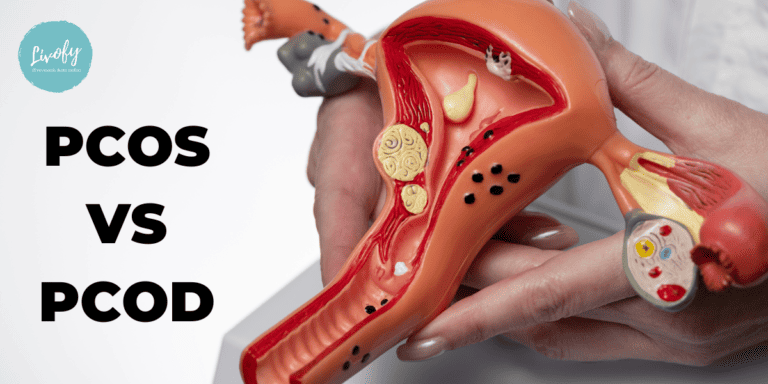
The main difference between PCOD and PCOS is that they are not the same condition, even though the terms are often used interchangeably. PCOD, or Polycystic Ovarian Disease, is commonly used to describe a condition in which the ovaries may produce multiple immature or partially mature eggs, while PCOS, or Polycystic Ovary Syndrome, is a broader hormonal and metabolic syndrome involving irregular ovulation, increased androgen activity, and sometimes insulin resistance.
Both can cause irregular periods, acne, unwanted facial or body hair, weight changes, and difficulty becoming pregnant. However, their underlying patterns, long-term health considerations, diagnosis, and management can differ considerably.
What Is PCOD?
PCOD stands for Polycystic Ovarian Disease. The term is widely used in South Asia, although modern medical literature generally discusses PCOS rather than treating PCOD as a distinct, universally defined diagnosis.
In everyday use, PCOD is often described as a condition in which the ovaries release eggs irregularly because some follicles do not mature normally. This can result in irregular menstrual cycles and hormonal changes.
Women who are told they have PCOD may experience delayed periods, heavier or lighter-than-usual bleeding, acne, increased hair growth, or changes in body weight. Some women may have few symptoms beyond irregular cycles.
It is important to understand that having multiple small follicles on an ultrasound does not automatically mean that a woman has PCOS or another disease. Ovarian appearance is only one part of the overall clinical picture.
What Is PCOS?
PCOS stands for Polycystic Ovary Syndrome. It is a complex hormonal disorder that can affect the ovaries, menstrual cycle, fertility, skin, hair, and metabolism.
One of its important features is increased exposure to androgens, sometimes called “male hormones,” although women naturally produce and use these hormones as well. Higher-than-usual androgen activity can contribute to acne, excess facial or body hair, and scalp hair thinning.
PCOS can also interfere with regular ovulation. When ovulation does not occur consistently, periods may become irregular or infrequent, and conception can become more difficult.
For some women, PCOS is also associated with insulin resistance and increased risks of metabolic problems. However, not every woman with PCOS has insulin resistance, and PCOS can occur in women across different body sizes.
PCOD vs PCOS: What Is the Difference?
The biggest distinction is that PCOS is a well-established medical syndrome with recognized diagnostic criteria, whereas PCOD is a term commonly used in some regions but does not have the same standardized status as PCOS.
PCOS involves a combination of reproductive, hormonal, and sometimes metabolic features. PCOD is often used more loosely to describe irregular ovulation or ovarian changes.
Another important difference is the way the terms are used clinically. A doctor diagnosing PCOS considers a woman’s menstrual history, symptoms, physical findings, hormone-related features, and other possible causes rather than relying solely on an ultrasound.
Because “PCOD” can mean different things depending on the healthcare setting, a woman who has been given that label may benefit from asking exactly what findings led to the diagnosis.
PCOD and PCOS Symptoms
The symptoms can overlap so much that it is often impossible to distinguish the two simply by looking at symptoms.
Irregular periods are among the most common concerns. Some women have long gaps between periods, while others experience unpredictable bleeding.
Hormonal changes may also cause persistent acne, excess facial or body hair, or thinning hair on the scalp. Some women experience difficulty conceiving because they are not ovulating regularly.
Changes in weight can occur as well, although being overweight is not required for PCOS. A woman with a normal body weight can still have PCOS and can still experience significant hormonal or metabolic effects.
Why Do PCOS Symptoms Happen?
PCOS does not have one single cause. Genetics, hormone regulation, ovarian function, and metabolic factors can all contribute.
Androgen excess is one important part of PCOS. Increased androgen activity can interfere with normal follicle development and contribute to symptoms such as acne and unwanted hair growth.
Insulin resistance is another factor for some women. When the body responds less effectively to insulin, the pancreas may produce more insulin to maintain normal blood glucose levels. Higher insulin levels can influence ovarian hormone production and may worsen androgen-related features in susceptible women.
This does not mean that every woman with PCOS has high blood sugar or diabetes. These are related but separate issues, which is why an individualized medical assessment is important.
Does Having Polycystic Ovaries Mean You Have PCOS?
No. This is one of the most important points to understand.
The ovaries can naturally contain multiple follicles, and an ultrasound may show a polycystic-appearing ovarian pattern without the woman having PCOS. Conversely, some women with PCOS may not have the classic polycystic appearance of the ovaries.
PCOS is therefore diagnosed from the overall pattern rather than from an ultrasound image alone.
A doctor may evaluate menstrual regularity, signs of androgen excess, hormone levels, ovarian findings, and other possible explanations for the symptoms before reaching a diagnosis.
How Is PCOS Diagnosed?
There is no single blood test that confirms PCOS in every woman. Diagnosis usually involves a combination of medical history, examination, laboratory testing when appropriate, and sometimes pelvic ultrasound.
In adults, commonly used diagnostic approaches look for a combination of features such as irregular or absent ovulation, clinical or biochemical evidence of increased androgen activity, and polycystic ovarian morphology.
Importantly, other conditions can cause similar symptoms. Thyroid disorders, elevated prolactin, certain adrenal conditions, medication effects, and other hormonal problems may need to be considered depending on the individual situation.
This is why self-diagnosing PCOS from irregular periods or an ultrasound report can be misleading.
PCOD vs PCOS and Fertility
Both terms are commonly associated with fertility concerns, but the relationship is more nuanced than simply saying that either condition causes infertility.
The main fertility issue in PCOS is often irregular or absent ovulation. If an egg is not released regularly, the opportunities for conception are reduced.
The encouraging part is that many women with PCOS are able to become pregnant, either naturally or with appropriate treatment. Management depends on the reason for difficulty conceiving and may include lifestyle measures, ovulation-inducing medication, or other fertility treatments under medical supervision.
Having PCOS does not automatically mean that pregnancy is impossible.
Can PCOS Affect Pregnancy?
Women with PCOS can become pregnant, but the condition may be associated with a higher likelihood of certain pregnancy complications. These can include gestational diabetes, high blood pressure during pregnancy, and other complications depending on the individual’s health and pregnancy circumstances.
This does not mean that every pregnancy affected by PCOS will develop complications. Preconception care and appropriate prenatal monitoring can help identify and manage individual risk factors.
A woman planning pregnancy should discuss her menstrual cycle, medications, metabolic health, and existing medical conditions with her healthcare professional.
PCOD vs PCOS Treatment
Treatment depends on the symptoms, reproductive plans, metabolic health, and individual circumstances rather than simply on whether someone uses the term PCOD or PCOS.
For women who are not trying to become pregnant, treatment may focus on regulating menstrual cycles, managing acne or unwanted hair, and addressing metabolic risk factors when present.
For women trying to conceive, treatment generally focuses on restoring or inducing regular ovulation when ovulation is the problem. The appropriate approach depends on the woman’s circumstances and should be selected with a healthcare professional.
Lifestyle measures can also be useful, particularly when metabolic factors are involved. Regular physical activity, adequate sleep, a balanced eating pattern, and maintaining a healthy weight for the individual can support overall health. Importantly, these measures should not be presented as a universal “cure” for PCOS.
Can PCOD or PCOS Be Cured?
There is an important difference between treating symptoms and permanently eliminating a condition.
PCOS is generally considered a long-term condition rather than something that can simply be cured with a single treatment. Its symptoms used inconsistently, so whether it is described as something that can be “cured” depends heavily quick cure through a particular supplement, detox, restrictive diet, or herbal can often be managed effectively, and the way symptoms appear can change over time.
The term PCOD is used inconsistently, so whether it is described as something that can be “cured” depends heavily on what the healthcare professional actually meant by the diagnosis.
Promises of a quick cure through a particular supplement, detox, restrictive diet, or herbal treatment should be approached cautiously.
Diet and Lifestyle for PCOS
There is no single PCOS diet that works for every woman. A sustainable eating pattern that provides adequate protein, fiber, healthy fats, vitamins, minerals, and appropriately balanced carbohydrates is generally more useful than extreme dietary restriction.
Regular movement can also support cardiovascular and metabolic health. Strength training, walking, cycling, swimming, and other forms of exercise can all have a place depending on a woman’s preferences and physical ability.
Sleep and stress management deserve attention as well. They may not “cure” PCOS, but improving overall health can make symptom management more sustainable.
For women who have significant weight concerns, even modest, medically appropriate changes may improve some metabolic and reproductive outcomes. At the same time, treatment should remain respectful and should not assume that weight is the cause of every symptom.
PCOS and Mental Well-Being
PCOS can affect more than periods and fertility. Persistent acne, unwanted hair growth, hair thinning, changes in weight, and difficulties with conception can affect confidence, relationships, and emotional well-being.
Some women with PCOS also experience anxiety or depressive symptoms. These concerns deserve to be taken seriously rather than dismissed as simply part of having a hormonal condition.
Seeking support from a healthcare professional or mental-health provider can be appropriate when symptoms are persistent or interfere with daily life.
When Should You See a Doctor?
You should consider medical evaluation if your periods are consistently very irregular, disappear for extended periods, become unusually heavy, or are accompanied by significant pelvic symptoms.
Medical advice is also worthwhile when you develop persistent acne, new or excessive facial or body hair, unexplained scalp hair thinning, or difficulty becoming pregnant.
A particularly important reason to seek assessment is a sudden or significant change in menstrual or androgen-related symptoms. Similar symptoms can occur with conditions other than PCOS, so getting the underlying cause identified matters.
PCOD vs PCOS: The Key Takeaway
The simplest way to remember the difference is this: PCOS is a recognized hormonal and metabolic syndrome, while PCOD is a commonly used term that does not have the same standardized diagnostic meaning.
The two terms are often treated as interchangeable in everyday conversation, particularly in South Asia, but a diagnosis should be based on the woman’s actual symptoms, medical history, examination, and appropriate investigations rather than the label alone.
Most importantly, irregular periods, acne, unwanted hair growth, or an ultrasound showing multiple follicles do not automatically mean that a woman has PCOS. A proper evaluation can identify the cause of the symptoms and help determine whether treatment, monitoring, fertility support, or additional testing is appropriate.
