


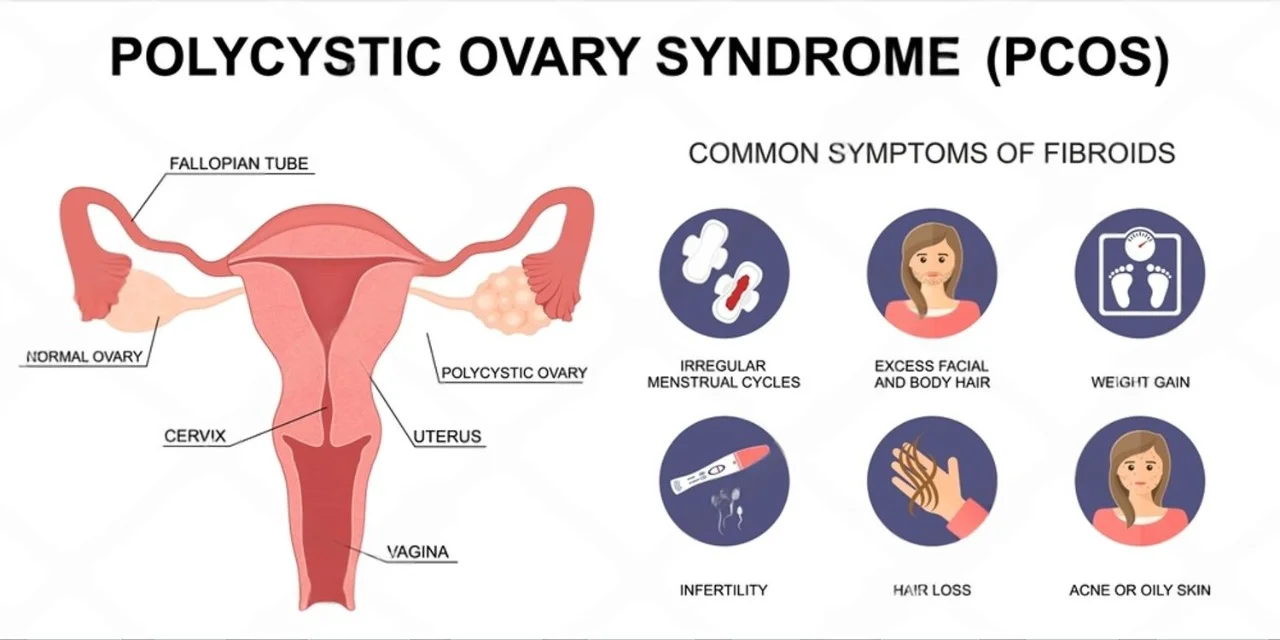
The early signs of polycystic ovary syndrome, commonly called PCOS, can be easy to overlook because they vary considerably from one woman to another. Irregular or absent periods, increased facial or body hair, persistent acne, scalp hair thinning, and difficulty becoming pregnant are among the symptoms commonly associated with PCOS.
PCOS is a common hormonal and metabolic condition that affects the ovaries and can influence menstrual cycles, androgen levels, fertility, skin, hair, and the body’s response to insulin. Not everyone with PCOS has the same combination of symptoms, and some women discover they have the condition only after seeking help for fertility or another health concern.
What Is PCOS?
PCOS is a hormonal disorder associated with irregular ovulation and higher-than-usual androgen activity. Androgens are hormones that are present in everyone but are typically found at higher levels in males; in women, elevated androgen levels or increased sensitivity to these hormones can contribute to several recognizable PCOS symptoms.
Despite the condition’s name, ovarian cysts are not necessary for someone to be diagnosed with PCOS. Some women with PCOS have ovaries containing many small follicles, while others do not have this particular ultrasound finding.
PCOS can affect women at different stages of life, and symptoms may become noticeable during adolescence or later. The condition can also change over time, meaning that symptoms experienced in the teenage years may not look exactly the same as those experienced during adulthood.
Irregular Periods
Menstrual cycle changes are among the most frequent signs that may prompt a healthcare professional to assess someone for PCOS. Periods may arrive infrequently, occur at unpredictable intervals, or disappear for several months.
These changes often happen because ovulation does not occur regularly. When ovulation is irregular, the menstrual cycle can become difficult to predict, which may make it challenging to know when a period is due or when ovulation is occurring.
An occasional irregular period does not necessarily mean someone has PCOS. Stress, significant changes in body weight, intense exercise, thyroid disorders, pregnancy, certain medications, and other hormonal conditions can also affect menstrual cycles.
Very Heavy or Prolonged Periods
Although PCOS is often associated with infrequent periods, some women experience unusually heavy or prolonged bleeding when menstruation does occur. When ovulation is absent or irregular, the uterine lining can continue developing without the normal hormonal pattern that follows ovulation.
When the lining eventually sheds, bleeding may be heavier or last longer than expected. Persistent heavy menstrual bleeding deserves medical evaluation because PCOS is only one possible explanation.
Heavy bleeding can also contribute to iron deficiency and anemia, particularly when it happens repeatedly. Symptoms such as unusual fatigue, weakness, dizziness, or shortness of breath can warrant medical attention.
Excess Facial or Body Hair
Another recognizable PCOS symptom is increased growth of coarse, dark hair on areas such as the chin, upper lip, chest, abdomen, or back. This is called hirsutism and can occur when androgen activity is elevated.
The amount of body hair considered unusual varies considerably between individuals and populations. Genetics also plays a major role, so having more facial or body hair by itself does not establish that someone has PCOS.
A sudden or rapidly increasing amount of coarse hair is more concerning than a stable pattern that has been present for many years. Sudden shifts in hormone levels may stem from various underlying factors and should be evaluated by a qualified healthcare professional.
Acne and Oily Skin
Persistent acne can sometimes be associated with increased androgen activity. Women with PCOS may develop acne that continues beyond the teenage years or appears primarily around the lower face, jawline, or chin.
Hormonal acne can fluctuate with the menstrual cycle and may be difficult to control with ordinary skin-care measures. However, acne is extremely common and has many possible causes, so it is not a specific sign of PCOS on its own.
When persistent acne occurs alongside irregular periods, increased facial hair, or other hormonal symptoms, it can provide additional reason to discuss PCOS with a healthcare professional.
Thinning Hair on the Scalp
PCOS can sometimes contribute to androgen-related hair thinning, particularly around the crown or front of the scalp. The pattern can resemble male-pattern hair loss, although women can experience it for many different reasons.
Hair shedding and thinning are not specific to PCOS. Thyroid problems, nutritional deficiencies, significant stress, illness, medications, postpartum hormonal changes, and other conditions can produce similar symptoms.
For that reason, persistent or unexplained hair loss is worth discussing with a healthcare professional rather than assuming it is caused by PCOS.
Weight Gain or Difficulty Losing Weight
Some women with PCOS experience weight gain or find it unusually difficult to lose weight. Insulin resistance, hormonal changes, appetite regulation, genetics, sleep, activity levels, medications, and many other factors can influence body weight.
PCOS can affect women across all body sizes, regardless of their weight or physical build. Being overweight or having obesity is not required for PCOS, and a person with a lower body weight can still have the condition.
Weight alone therefore cannot be used to diagnose or rule out PCOS. A broader pattern of symptoms and appropriate medical testing is more informative.
Darkened Skin and Skin Tags
Some women with PCOS develop areas of darker, thicker, velvety-looking skin, particularly around the neck, armpits, groin, or other skin folds. This change is known as acanthosis nigricans and can be associated with insulin resistance.
Small skin tags may also occur more frequently in people with insulin resistance. These skin changes are not exclusive to PCOS, but when they appear alongside menstrual irregularities and other symptoms, they can provide useful information for a healthcare professional.
Changes in skin color or texture should not automatically be attributed to PCOS. Several dermatological and metabolic conditions can cause similar findings.
Difficulty Becoming Pregnant
PCOS is one of the common causes of difficulty conceiving because irregular ovulation can reduce the number of opportunities for an egg to be released.
Some women with PCOS ovulate occasionally and become pregnant without fertility treatment, while others may require medical support to stimulate or regulate ovulation. Having PCOS does not mean that pregnancy is impossible.
If pregnancy has not occurred after a period of trying, or if menstrual cycles are very irregular from the beginning, discussing fertility with a healthcare professional can help identify whether irregular ovulation or another factor is involved.
Mood Changes and Mental Health Symptoms
Women with PCOS can also experience depression, anxiety, or changes in mood. These concerns may be influenced by hormonal factors, metabolic health, sleep problems, fertility difficulties, or the emotional impact of symptoms such as acne, hair growth, or weight changes.
Mental health symptoms should be taken seriously regardless of whether PCOS is ultimately diagnosed. Feeling persistently sad, anxious, overwhelmed, or unable to function normally is a reason to seek appropriate support.
PCOS does not mean that mood symptoms are inevitable, and experiencing anxiety or depression alone does not indicate that someone has PCOS.
Symptoms During the Teen Years
PCOS can be difficult to recognize during adolescence because irregular periods, acne, and other hormonal changes are common during puberty.
A teenager with persistent menstrual irregularity, significant excess hair growth, severe acne, or other concerning symptoms may need an evaluation. Healthcare professionals generally consider the person’s stage of puberty and the normal changes associated with adolescence before diagnosing PCOS.
Parents and teenagers should avoid assuming that every irregular period during the first years after menstruation begins represents a hormonal disorder. At the same time, persistent or pronounced symptoms should not simply be dismissed as normal puberty.
What Causes PCOS?
The exact cause of PCOS is not fully understood. Genetics, hormone regulation, insulin resistance, and other metabolic factors appear to contribute to its development.
Insulin resistance is common among people with PCOS. When the body does not respond efficiently to insulin, the pancreas may produce more insulin, and elevated insulin levels can contribute to increased androgen production in the ovaries.
Family history also appears to matter. Women with a close relative who has PCOS may have a higher likelihood of developing the condition, although having a family history does not guarantee that someone will develop it.
How Is PCOS Diagnosed?
There is no single blood test that can independently confirm PCOS. Healthcare professionals generally consider a combination of symptoms, medical history, physical findings, laboratory testing, and sometimes pelvic ultrasound.
For adults, commonly used diagnostic approaches look for a combination of irregular or absent ovulation, evidence of elevated androgen activity, and polycystic ovarian morphology, while also excluding other conditions that can produce similar symptoms.
The precise diagnostic approach can differ depending on age and the guideline being followed. In adolescents, diagnosis requires particular care because normal puberty can resemble some features of PCOS.
What Tests Might Be Used?
A healthcare professional may order blood tests to evaluate hormone levels and rule out other causes of irregular periods or androgen-related symptoms. Depending on the situation, testing may include thyroid function, prolactin, androgen levels, glucose regulation, and other relevant markers.
A pelvic ultrasound may also be recommended in some circumstances. However, an ultrasound showing multiple follicles does not automatically mean a woman has PCOS, and a normal-looking ultrasound does not necessarily exclude the condition.
The purpose of testing is therefore broader than simply looking for ovarian cysts. A clinician considers the entire clinical picture and excludes alternative explanations.
When Should You See a Doctor?
It is worth arranging a medical evaluation if periods are consistently irregular, disappear for extended periods, or become unusually heavy. Persistent excess facial or body hair, significant acne, unexplained scalp hair thinning, or difficulty becoming pregnant can also justify an evaluation.
You should seek prompt medical attention for extremely heavy bleeding, severe pelvic pain, fainting, severe weakness, or other symptoms that feel urgent. These symptoms can have causes unrelated to PCOS and should not be assumed to be part of the condition.
Keeping a record of menstrual dates, bleeding patterns, symptoms, medications, and major changes in weight or health can make a medical appointment more productive.
PCOS Is More Than an Ovarian Condition
Although PCOS was named for its appearance in the ovaries, its effects can extend beyond reproductive health. The condition is associated with metabolic concerns, including insulin resistance and an increased risk of developing type 2 diabetes in some women.
For this reason, appropriate long-term care may involve more than managing periods or fertility. Depending on an individual’s circumstances, healthcare professionals may monitor blood glucose, cholesterol, blood pressure, weight-related health, and other metabolic factors.
The goal is not simply to eliminate one visible symptom. Effective management considers the person’s reproductive goals, metabolic health, symptoms, and overall quality of life.
Can PCOS Symptoms Be Managed?
Yes. PCOS can usually be managed even though there is currently no single treatment that permanently eliminates the underlying condition.
Treatment depends on the symptoms and the person’s goals. Someone who is not trying to become pregnant may receive treatment aimed at regulating menstrual cycles, controlling acne or excess hair, or addressing metabolic risk. Someone trying to conceive may need a different approach focused on ovulation and fertility.
Lifestyle measures can also play an important role. Regular physical activity, nutritious eating patterns, adequate sleep, and appropriate management of metabolic health can support overall well-being. Treatment should be individualized rather than based on a single diet, supplement, or weight-loss strategy.
Final Takeaway
The early signs of PCOS can include irregular or absent periods, increased facial or body hair, persistent acne, scalp hair thinning, weight-related changes, skin changes, and difficulty becoming pregnant. However, none of these symptoms by itself proves that a woman has PCOS.
Because several other conditions can cause similar symptoms, diagnosis requires a broader medical assessment. If several of these signs occur together—particularly persistent menstrual irregularity and symptoms of increased androgen activity—speaking with a healthcare professional can help determine whether PCOS or another condition may be responsible.
