


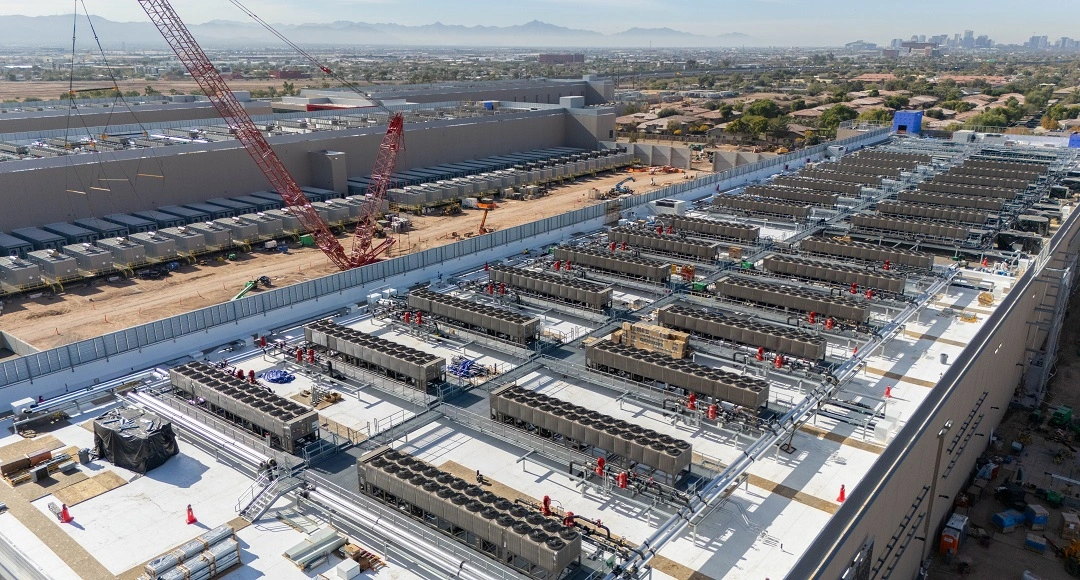
Tesla’s China battery project has become an important part of the company’s expansion beyond electric vehicles and into large-scale energy storage. The centerpiece is Tesla’s Megafactory in Shanghai, a dedicated facility designed to manufacture Megapack utility-scale battery systems for electricity-storage projects.
The Shanghai facility began production in February 2025, marking a significant step in Tesla’s strategy to regionalize its energy-storage manufacturing. By 2026, the project had moved beyond the initial factory launch and become part of a broader global energy-storage network spanning manufacturing, renewable-energy integration, grid services, and battery software.
What Is Tesla’s China Battery Project?
Tesla’s China battery project is centered on the company’s Shanghai Megafactory, located in the Lingang area of Shanghai. Unlike Tesla’s much larger Shanghai vehicle factory, which produces Model 3 and Model Y vehicles, the Megafactory is focused on stationary energy-storage products.
The primary product is the Megapack, a large-scale battery system designed for utilities, renewable-energy developers, commercial customers, and other grid applications. Tesla says Megapack can store and dispatch electricity at large scale, helping stabilize grids and integrate variable renewable generation.
When Did the Shanghai Megafactory Start Production?
The Shanghai Megafactory officially entered production in February 2025. Chinese state media reported the production launch on February 11, 2025, making the facility Tesla’s second major Megapack manufacturing location after its Lathrop, California operation.
The factory was strategically important because it allowed Tesla to manufacture large-scale energy-storage systems closer to customers in China and other Asian markets. Regional manufacturing can reduce transportation requirements and help companies respond more efficiently to local demand and supply-chain conditions.
Shanghai Megafactory Capacity
Tesla’s reported capacity figures have evolved as the Shanghai facility has ramped. In early 2025, Tesla disclosed that the Shanghai Megafactory had 20 GWh of annual capacity, with the ability to eventually double that capacity to 40 GWh.
Tesla’s later disclosures have shown that installed annual capacity can change as production and factory configurations are adjusted. Its January 2026 filing listed Shanghai Megapack capacity at 40 GWh, while a subsequent April 2026 filing listed 20 GWh. This illustrates why capacity figures should be distinguished from actual production rates and interpreted according to the date of each Tesla filing.
What Is a Tesla Megapack?
Megapack is Tesla’s utility-scale battery-storage system. It integrates battery modules, power-conversion equipment, thermal-management systems, and other components into a standardized product designed for large energy-storage installations.
Tesla describes Megapack as a system for storing electricity and releasing it when needed. Depending on the project, it can help manage peak demand, provide grid-support services, shift renewable electricity from one period to another, and provide backup or resilience capabilities.
How Megapack Supports Renewable Energy
Solar and wind power are variable resources because their electricity output depends on weather and time of day. Solar generation, for example, can peak around midday even when electricity demand is higher in the evening.
Battery storage helps bridge this timing difference. Electricity generated when renewable production is high can be stored and discharged later, allowing more renewable energy to be used when it is most valuable rather than being curtailed or wasted.
Tesla specifically positions Megapack as a product that can be paired with renewable generation. Its applications include storing solar and wind output and dispatching electricity according to grid conditions.
Why China Is Important for Energy Storage
China is one of the world’s largest energy markets and has rapidly expanded renewable generation, particularly solar and wind capacity. That creates a major requirement for flexible resources capable of balancing electricity supply and demand.
Large-scale battery storage can complement this renewable expansion by providing short-duration flexibility and grid services. For Tesla, establishing local Megapack manufacturing in China places the company closer to one of the world’s most important clean-energy and battery ecosystems.
Tesla’s First Large-Scale Chinese Energy-Storage Project
The Shanghai factory is not simply a manufacturing investment. In June 2025, Tesla signed an agreement reportedly worth approximately $556.8 million to build its first large-scale energy-storage station in China.
The project involves Tesla, China Kangfu International Leasing Co., and the Shanghai local government and is designed to use Tesla Megapack batteries. The agreement represented a significant step because it connected Tesla’s Chinese manufacturing presence with an actual large-scale domestic energy-storage deployment.
How the Shanghai Storage Station Could Work
A utility-scale battery station can function as a flexible electricity resource rather than a conventional power plant. It can charge when electricity is relatively abundant and discharge during periods of high demand or when additional grid support is required.
This type of system can also provide services such as frequency regulation, capacity support, and renewable-energy balancing. The exact commercial value depends on electricity-market rules, local grid requirements, project configuration, battery duration, and the contracts governing the facility.
Battery Storage and China’s Renewable-Energy Growth
China’s rapid deployment of solar and wind generation creates both opportunities and challenges for grid operators. Renewable power can reduce dependence on fossil fuels, but variable generation creates periods when electricity production does not perfectly match consumption.
Energy storage provides one mechanism for addressing that mismatch. A battery can absorb electricity during periods of surplus and return it to the grid when demand rises, effectively moving electricity through time rather than generating new electricity.
Tesla’s Energy Strategy
Tesla increasingly presents energy storage as a major business rather than a secondary product category. Its energy-generation-and-storage segment includes Megapack and Powerwall products, while the company continues to expand manufacturing capacity in several regions.
Tesla reported record energy-storage deployments in 2025, with growth driven in part by Megapack. The company has also described its energy business as benefiting from rising electricity demand and increasing requirements for grid stability.
Why Local Manufacturing Matters
Building batteries in China gives Tesla several potential advantages. Manufacturing close to customers can shorten supply chains, reduce shipping requirements, improve responsiveness, and provide access to a mature battery manufacturing ecosystem.
Local production can also help Tesla manage changing international trade conditions. Tesla has explicitly described regionalizing energy-storage manufacturing capacity as important in the context of changing tariffs, trade policies, and fiscal policies.
Tesla and China’s Battery Supply Chain
China has a highly developed battery ecosystem covering raw materials, cell manufacturing, component suppliers, electronics, industrial automation, and battery-system integration. Establishing Megapack production in Shanghai therefore gives Tesla access to an environment with extensive existing battery-industry infrastructure.
At the same time, Tesla’s China energy-storage strategy should not be confused with complete dependence on Chinese manufacturing. The company maintains major energy-storage operations in the United States, including its Lathrop Megafactory, while continuing to develop additional capacity elsewhere.
Shanghai Compared With Lathrop
Tesla’s Lathrop, California Megafactory has an annual manufacturing capacity of approximately 40 GWh and is one of the company’s principal Megapack manufacturing facilities in North America. Tesla describes Lathrop and Shanghai as two of its largest industrial battery manufacturing facilities.
The strategic difference is geographic. Lathrop primarily strengthens Tesla’s North American supply network, while Shanghai provides a manufacturing base for China and potentially other Asian markets.
Tesla’s Global Megapack Manufacturing Network
Tesla’s energy-storage manufacturing footprint is continuing to expand. In addition to Lathrop and Shanghai, the company has been developing a new Megafactory near Houston, Texas.
Tesla has said that production of its next-generation Megapack 3 and Megablock products is planned at the Houston facility, with Megapack 3 production beginning there in 2026 and planned capacity of up to 50 GWh per year.
Megapack 3 and the Next Generation of Storage
Tesla unveiled Megapack 3 as part of its next generation of industrial energy-storage products. The company has also introduced Megablock, a pre-engineered medium-voltage battery system that integrates four Megapack 3 units.
The objective is to simplify utility-scale deployment by integrating hardware, software, and services more extensively into a standardized architecture. Tesla says this can reduce complexity and support faster deployment and grid interconnection.
Software Is a Major Part of the Business
Tesla’s energy-storage strategy is not based only on selling batteries. Megapack installations use integrated software for monitoring, control, optimization, and management of stored electricity.
Tesla says its software can optimize system performance and revenue potential while providing automated diagnostics and ongoing updates. This software layer is important because the economic value of a battery depends not only on its physical capacity but also on when and how that capacity is dispatched.
Autobidder and Energy Trading
Tesla’s energy software ecosystem includes tools designed to optimize battery operations according to market conditions. These systems can help determine when storage assets should charge, discharge, or provide grid services.
The underlying concept is straightforward: electricity has different values at different times. A well-managed battery can potentially earn revenue by shifting energy across those price differences while simultaneously providing grid-support functions.
Applications Beyond Renewable Energy
Megapack is not limited to solar and wind projects. Tesla lists utility-scale grid stabilization, commercial and industrial power management, microgrids, and data-center applications among its potential uses.
This diversification matters because energy-storage demand is increasingly being driven by more than renewable integration. Electrification, data centers, grid congestion, extreme weather, and rising electricity demand can all increase the value of flexible power resources.
Data Centers and Battery Demand
The growth of data centers is becoming an important factor in electricity markets because artificial intelligence and cloud computing require large amounts of power. Battery storage can help data centers manage outages, reduce exposure to peak electricity costs, and provide additional grid flexibility.
Tesla has specifically identified growing electricity demand from areas such as AI as a factor supporting the broader need for energy storage.
The Role of Battery Storage in Grid Stability
A modern electricity grid must continuously balance generation and consumption. Batteries can respond rapidly to changes in grid conditions, making them useful for certain services that are difficult or expensive to provide with conventional power plants.
Grid-forming and other advanced battery technologies are also receiving increasing attention as renewable penetration grows. However, the precise role of batteries varies by market, and storage does not eliminate the need for transmission, generation capacity, demand flexibility, and other grid infrastructure.
Environmental Benefits and Limitations
Battery storage can support renewable energy by allowing more clean electricity to be used at times when solar and wind production would otherwise be mismatched with demand. In this sense, storage can help reduce reliance on fossil-fuel peaker generation and improve renewable utilization.
However, batteries are not themselves a source of primary energy. They store electricity generated elsewhere, and their overall environmental impact depends on battery materials, manufacturing, electricity sources, operating patterns, useful life, and recycling practices.
Competition in China’s Energy-Storage Market
Tesla enters a highly competitive Chinese energy-storage market. Domestic battery manufacturers and energy-storage companies have substantial manufacturing scale and experience, while Chinese suppliers also benefit from an extensive local industrial ecosystem.
This creates both an opportunity and a challenge for Tesla. The Shanghai factory gives Tesla local manufacturing capability, but the company must compete on cost, technology, reliability, software, project execution, and customer relationships in a market with sophisticated domestic competitors.
Key Challenges for Tesla
One challenge is maintaining adequate battery-cell supply as energy-storage volumes grow. Tesla has explicitly noted that continued growth requires sufficient cell supply for its energy products.
Another challenge is the economics of large storage projects. Battery costs, electricity prices, grid-market rules, financing costs, land, interconnection requirements, and project duration all influence whether a storage installation produces attractive returns.
2026 Outlook for the China Project
The 2026 outlook for Tesla’s China battery strategy is broadly focused on scaling production, developing domestic projects, and integrating the Shanghai operation into Tesla’s wider global energy-storage network. The factory is no longer simply a construction story; it is an operating manufacturing asset.
Tesla’s filings show that the company continues to ramp Megafactories in Shanghai and Lathrop while building new capacity in Texas. That suggests the long-term strategy is not to make Shanghai the sole center of production but to create a geographically distributed manufacturing network.
Will Tesla Expand China’s Battery Capacity?
Tesla has indicated that Shanghai’s Megapack manufacturing capability can reach 40 GWh annually, although reported installed-capacity figures have varied between filings. This means additional expansion remains possible, but it would be premature to assume that every announced or theoretical capacity figure represents actual output.
Future expansion will likely depend on demand, factory utilization, supply-chain economics, regulatory conditions, and Tesla’s global allocation of Megapack production. The company’s strategy increasingly emphasizes regional manufacturing rather than concentrating all production in one country.
2026 Renewable-Energy Opportunity
The broader renewable-energy outlook remains one of the strongest arguments for large-scale battery storage. As solar and wind penetration increases, the need for flexible resources capable of balancing variable generation also grows.
Tesla’s Shanghai facility therefore sits at the intersection of several major trends: renewable-energy expansion, electrification, grid modernization, battery-cost competition, and increasing electricity demand from digital infrastructure.
What the Project Means for Tesla
For Tesla, the China battery project represents a strategic shift in the company’s identity. Tesla is still one of the world’s best-known electric-vehicle manufacturers, but energy storage is becoming an increasingly important component of its business.
The Shanghai Megafactory strengthens that transition by giving Tesla a major production base in one of the world’s most important battery and renewable-energy markets. Its importance extends beyond the factory itself because it supports Tesla’s ambition to build a global energy-storage ecosystem involving hardware, software, project development, and long-term services.
What the Project Means for China
For China, Tesla’s investment adds another major international participant to the country’s rapidly expanding energy-storage sector. The project also demonstrates the attractiveness of Shanghai as a manufacturing and technology center for advanced energy products.
The larger significance is the potential connection between battery manufacturing and renewable-energy deployment. As more storage capacity becomes available, utilities and developers have another tool for integrating renewable generation and managing electricity demand.
Key Facts at a Glance
Tesla’s Shanghai Megafactory began Megapack production in February 2025. Tesla’s filings have reported annual Shanghai capacity figures ranging from 20 GWh to 40 GWh as the facility has ramped and its manufacturing configuration has evolved.
Tesla also signed a roughly $556.8 million agreement in 2025 for a large-scale energy-storage station in Shanghai, marking an important connection between local manufacturing and domestic deployment.
Frequently Asked Questions
What is Tesla’s China battery project?
It is primarily Tesla’s Shanghai Megafactory for manufacturing Megapack utility-scale battery-storage systems, together with major Chinese deployment projects such as the Shanghai energy-storage station.
When did Tesla’s Shanghai battery factory start production?
Production began in February 2025, according to China’s Xinhua news agency as reported by Reuters.
What does the Shanghai factory produce?
The facility produces Tesla Megapack systems for large-scale stationary energy storage. These systems are designed for applications including renewable-energy integration, grid stabilization, commercial and industrial power management, and microgrids.
How large is the factory?
Tesla has reported Shanghai Megapack annual installed capacity at different levels as the facility has ramped. Its January 2026 filing listed 40 GWh, while its April 2026 filing listed 20 GWh, so the latest filing should be used when making point-in-time comparisons.
Is Tesla building an energy-storage station in China?
Yes. Tesla signed an agreement in 2025 for a large-scale Shanghai energy-storage station reportedly valued at approximately $556.8 million.
Why are Megapacks important for renewable energy?
Solar and wind generation can fluctuate, while electricity demand does not always follow the same pattern. Batteries can store electricity during periods of high renewable production and release it when demand or grid requirements increase.
Conclusion
Tesla’s China battery project has evolved into one of the company’s most important energy-storage initiatives. The Shanghai Megafactory provides Tesla with local Megapack manufacturing capacity in a country that combines enormous electricity demand, rapid renewable-energy deployment, advanced battery manufacturing, and a highly competitive energy-storage industry.
The 2026 outlook is therefore broader than simply asking how many batteries the Shanghai factory can produce. Tesla is building a global energy-storage business in which Shanghai, California, and new U.S. facilities can serve different regional markets, while Megapack hardware is increasingly combined with software and long-term services.
If Tesla can continue scaling production, secure sufficient battery-cell supply, compete effectively on cost and performance, and win large regulated projects, the Shanghai operation could become an important pillar of its renewable-energy and grid-storage strategy. The project also illustrates a broader transformation in the energy sector: batteries are increasingly becoming critical infrastructure for a power system built around renewable generation, electrification, and rapidly growing electricity demand.
