


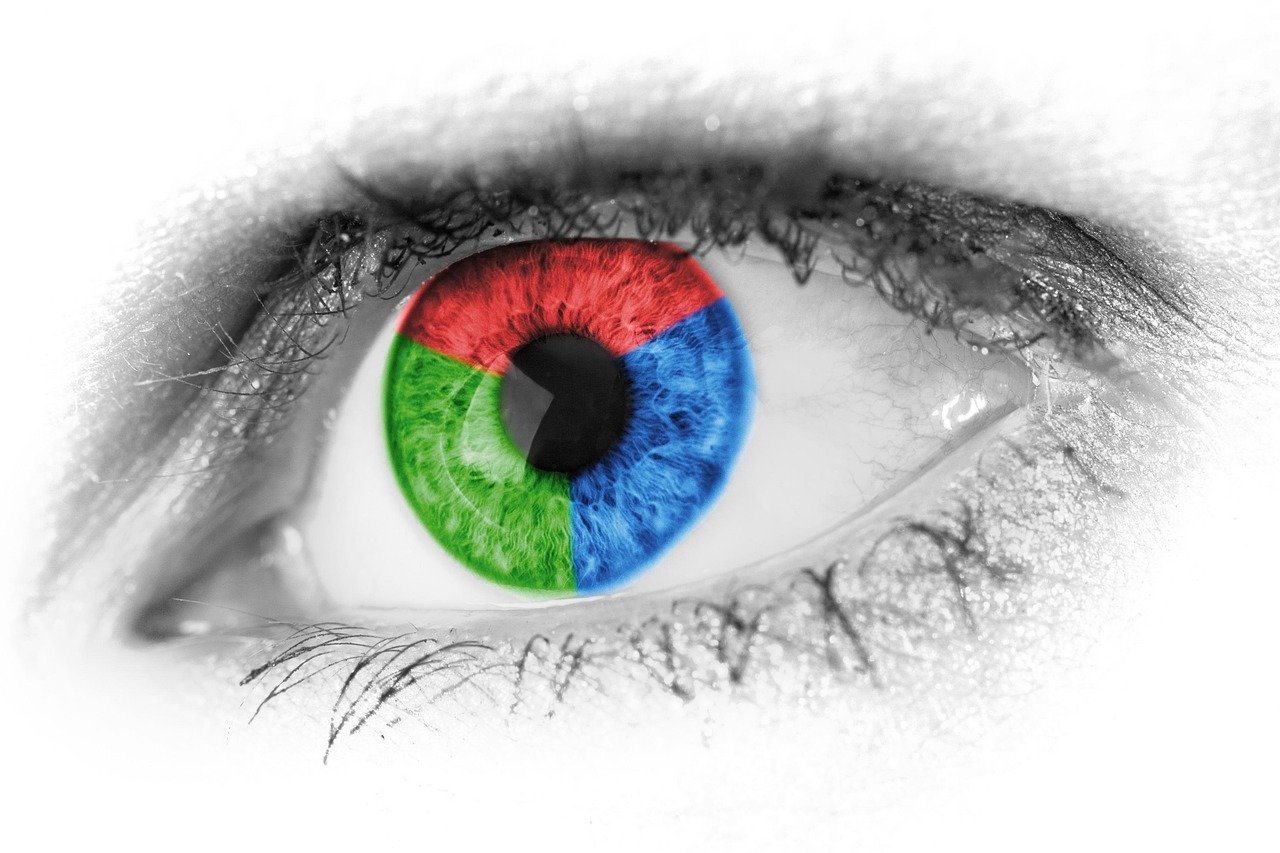
Primary colours are the foundation of many colour systems and are used to create a wide range of other colours. A solid understanding of primary colours is essential across various fields, including art, graphic design, printing, photography, education, and digital media.
However, there is an important detail to understand: there is not just one universal set of three primary colours. The definition of the three primary colours varies according to the colour model in use and whether the colours are produced through light or physical pigments.
In traditional art instruction, red, yellow, and blue (RYB) are widely recognized as the three fundamental primary colours. In digital displays, the primary colours of light are red, green, and blue (RGB), while modern colour printing generally uses cyan, magenta, and yellow (CMY), often combined with black in the CMYK system.
What Are Primary Colours?
Primary colours are colours that serve as starting points within a particular colour model. In that model, they are used to produce or represent a broad range of other colours.
The definition depends on the physical process involved. Mixing coloured light works differently from mixing paints or inks, which is why different colour systems have different primary colours.
This distinction is important because saying simply that “the three primary colours are red, yellow, and blue” is accurate in the traditional RYB model but does not describe every modern colour system.
The Traditional Primary Colours: Red, Yellow, and Blue
In traditional painting and art education, the three primary colours are red, yellow, and blue. This model is commonly known as RYB.
Artists have traditionally used these colours as the basic building blocks for mixing secondary and intermediate colours. By combining primary pigments in different proportions, painters can create many additional hues.
For example, red and yellow are traditionally mixed to produce orange, while yellow and blue produce green. Red and blue are traditionally combined to create purple or violet.


The RYB model remains widely used in basic colour theory because it is straightforward and useful for teaching artists how colour relationships work.
However, it is not the same as the scientific model used for mixing light or the modern process used in commercial printing.
Red as a Primary Colour
Red is one of the traditional primary colours in the RYB colour model. It is a strong, visually prominent colour that can be used to create other colours when combined with traditional pigments.
When red is mixed with yellow in the RYB model, it produces orange. When red is combined with blue, it is traditionally used to produce purple or violet.
Red also has an important role in other colour systems. In RGB, for example, red is one of the three primary components of coloured light.
Yellow as a Primary Colour
Yellow is another traditional RYB primary colour. It occupies an important position between red and green on a traditional colour wheel.
Mixing yellow with red produces orange, while mixing yellow with blue traditionally produces green. These combinations form the basis of many introductory colour-mixing exercises.
Yellow is also important in printing, although modern printing systems generally use cyan, magenta, and yellow rather than RYB as their primary ink colours.
Blue as a Primary Colour
Blue completes the traditional RYB primary colour set. It is commonly used with yellow to produce green and with red to produce purple or violet.
Blue also plays a major role in digital colour systems, although the exact system differs from traditional paint-based colour theory.
In RGB, blue is one of the three primary colours of light alongside red and green.
What Are the Primary Colours of Light?
When dealing with light rather than physical pigments, the primary colours are red, green, and blue. This system is known as RGB.
RGB is an additive colour model, meaning coloured light is combined to produce other colours. It is widely used in televisions, computer monitors, smartphones, cameras, and other digital displays.


When red and green light are combined, the result is yellow. Green and blue produce cyan, while red and blue produce magenta.
When red, green, and blue light are combined at full intensity, they produce white light.
What Are the Primary Colours in Printing?
Printing generally uses the CMY colour model, which consists of cyan, magenta, and yellow. In professional printing, black is added to the CMY colour model to form the widely used CMYK system.
Unlike the RGB model, CMY uses a subtractive approach to colour mixing, where pigments absorb specific wavelengths of light. Inks work by absorbing specific wavelengths of light and reflecting the remaining wavelengths back to the observer.


Cyan, magenta, and yellow can be combined to produce a broad range of colours. Black is added in CMYK printing to improve contrast, detail, and efficiency when producing dark areas.
This is why the colours used by a printer are different from the RGB colours used by a computer screen.
Additive vs. Subtractive Colour Models
One of the easiest ways to understand why different primary colours exist is to distinguish between additive and subtractive colour systems.
Additive colour mixing involves light. RGB is the most familiar example, and adding more coloured light generally makes the resulting colour brighter. When red, green, and blue light are combined at full intensity, they merge to create white light.
Subtractive colour mixing involves physical materials such as inks, dyes, or pigments. These materials absorb portions of the light that reaches them, so combining them generally removes more wavelengths from the reflected light.
This fundamental difference explains why RGB and CMY use different primary colours.
What Colours Do Primary Colours Make?
In traditional RYB colour theory, primary colours can be combined to create secondary colours. Mixing red with yellow produces orange, blending yellow with blue results in green, while combining blue and red creates shades of purple or violet.
These secondary colours can then be combined with primary colours to produce tertiary colours. This creates a much larger colour wheel containing numerous hues and variations.
The exact results of physical paint mixing depend on the pigments being used. Real-world pigments do not always behave like perfectly theoretical colours, so mixtures can vary in saturation and appearance.
Primary Colours and the Colour Wheel
A colour wheel is a visual tool used to show relationships between colours. Traditional colour wheels commonly arrange red, yellow, and blue as the primary colours and place secondary and tertiary colours between them.
Colour wheels help artists understand concepts such as complementary colours, analogous colours, warm colours, cool colours, and colour harmony.
For example, colours positioned opposite one another on a traditional colour wheel are considered complementary. These combinations can create strong visual contrast when used together.
Are Red, Yellow, and Blue the True Primary Colours?
The answer depends on what is meant by “true.” Red, yellow, and blue are primary colours within the traditional RYB model, particularly in basic art and painting education.
However, they are not the universal scientific primary colours for every application. Modern colour science uses different models depending on how colour is generated, measured, displayed, or reproduced.
For light-based systems, RGB is fundamental. For printing, CMY and CMYK are more relevant.
Therefore, the most accurate answer is that primary colours depend on the colour model being used.
Why Do Different Colour Systems Exist?
Colour is not produced in exactly the same way in every situation. A computer screen creates colours by emitting light, while paint creates colour by reflecting some wavelengths and absorbing others.
A printing press uses inks that interact with light differently from a display. Because the physical processes are different, the colour models used to describe them are also different.
Understanding this difference is particularly useful for designers, photographers, artists, printers, and anyone working with digital media.
Primary Colours in Digital Design
Digital designers generally work with RGB because screens produce images using red, green, and blue light. Each colour can be represented using different intensity values for these three components.
RGB colour values allow computers to represent millions of different colours. Web designers and developers may also work with hexadecimal colour codes, which provide another way to represent RGB values.
When designing graphics for websites, applications, social media, or digital advertisements, understanding RGB helps ensure that colours are represented appropriately on digital displays.
Primary Colours in Art and Painting
Artists often learn primary colours through the RYB model because it provides a practical introduction to colour mixing. Paint can be combined to create secondary and tertiary colours, allowing artists to build a wide palette from a relatively small number of pigments.
However, experienced artists often work with more than three pigments. Different paints have different properties, including hue, saturation, transparency, opacity, and colour temperature.
As a result, professional colour mixing can be more sophisticated than simply combining red, yellow, and blue.
Common Misunderstandings About Primary Colours
One common misconception is that the same three primary colours apply to every situation. As discussed above, RYB, RGB, and CMY serve different purposes.
Another misconception is that every combination of traditional primary paints will produce perfectly bright secondary colours. In practice, pigment characteristics can affect the final result.
It is also important not to confuse primary colours with the concept of “basic colours.” A colour can be visually important or commonly used without being a primary colour within a particular technical colour model.
Frequently Asked Questions
What are the three traditional primary colours?
The three traditional primary colours are red, yellow, and blue. They are commonly taught in basic art and colour theory using the RYB model.
What are the primary colours of light?
The primary colours of light are red, green, and blue, represented by the RGB colour model.
What are the primary colours used in printing?
Modern colour printing generally uses cyan, magenta, and yellow, with black added in the CMYK system.
Can primary colours make every colour?
Primary colour systems are designed to represent or produce a broad range of colours, but no practical set of physical pigments reproduces every possible colour perfectly. The achievable range depends on the specific colour model and materials.
Why are RGB colours different from paint colours?
RGB uses emitted light, while paint relies on pigments that absorb and reflect light. Because these processes work differently, their colour systems use different sets of primary components.
Final Thoughts
The question “What are the three primary colours?” has more than one answer because colour depends on the system being used. In traditional art, the primary colours are generally red, yellow, and blue, while digital displays use red, green, and blue, and modern printing is based on cyan, magenta, and yellow.
Understanding these differences makes colour theory much easier to apply in real-world situations.
Whether you are painting a picture, designing a website, editing photographs, or preparing artwork for printing, knowing which colour model you are working with can help you achieve more accurate and predictable results.
