


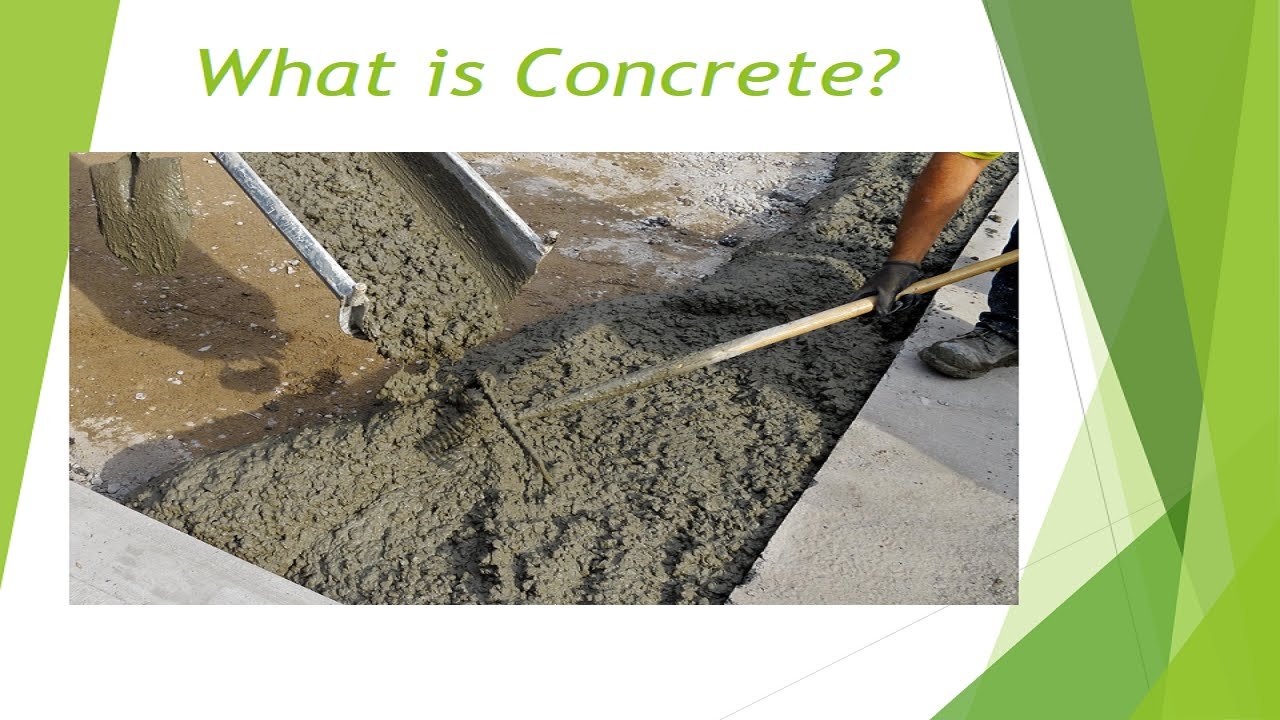
Concrete is one of the most widely used construction materials in the world. It is valued for its strength, durability, versatility, and ability to form almost any shape when freshly mixed.
From residential foundations and sidewalks to bridges, highways, dams, tunnels, and skyscrapers, concrete plays an essential role in modern construction. Its widespread use comes from the fact that it can be engineered for different strength levels, environments, finishes, and structural requirements.
Understanding what concrete is, how it is made, and where it is used can help homeowners, builders, students, and construction professionals make better decisions about construction projects.
This complete guide explains the composition of concrete, its different types, common applications, major benefits, limitations, and the basic process used to produce and place it.
What Is Concrete?
Concrete is a composite construction material made by combining a binding material, water, fine aggregate, and coarse aggregate. Cement is commonly used as the binder, while materials such as sand and gravel provide the aggregate portion.
When water is added to cement, a chemical reaction called hydration begins. This reaction causes the cement paste to harden and bind the aggregates together, eventually producing a solid and durable material.
Concrete can be produced in different mixtures depending on the intended application. The proportions of cement, water, aggregates, and additional materials can be adjusted to achieve specific properties such as strength, workability, durability, or resistance to environmental conditions.
What Is Concrete Made Of?
Concrete is generally composed of four primary ingredients: cement, water, fine aggregate, and coarse aggregate.
Cement
Cement acts as the binding component of concrete. Portland cement is one of the most commonly used types.
When cement comes into contact with water, hydration begins. The resulting chemical reactions create compounds that bind the aggregate particles together as the mixture hardens.
Water
Water is essential because it activates the cement and allows hydration to occur.
Nevertheless, the water content needs to be measured and regulated carefully to achieve the desired concrete quality. Too much water can reduce the final strength and increase the risk of cracking, while insufficient water can make the mixture difficult to place and compact.
Fine Aggregate
Fine aggregate usually consists of sand or similar granular material.
It fills spaces between larger aggregate particles and contributes to the overall workability and texture of the concrete mixture.
Coarse Aggregate
Coarse aggregate includes materials such as gravel, crushed stone, or recycled aggregate.
It forms a significant portion of the concrete’s volume and contributes to strength, stability, and dimensional resistance.
Admixtures
Some concrete mixtures also contain chemical or mineral admixtures.
These materials can modify properties such as setting time, workability, water resistance, strength development, and durability.
How Is Concrete Made?
Concrete production begins by measuring and combining the required ingredients according to a specific mix design.
Cement, aggregates, water, and any necessary admixtures are mixed until the materials are evenly distributed.
Fresh concrete is then transported to the construction site or directly to the location where it will be placed.
After placement, the concrete is compacted to remove unwanted air pockets and ensure that the mixture fills the required form properly.
The surface may then be finished according to the project’s requirements. Finally, the concrete must be cured properly so that it can develop its intended strength and durability.
Types of Concrete
Different construction projects require different concrete properties. For this reason, numerous types of concrete have been developed.
Normal Strength Concrete
Normal strength concrete is commonly used for general construction applications.
It can be found in sidewalks, residential structures, floors, foundations, driveways, and other projects where extremely high strength is not required.
High-Strength Concrete
High-strength concrete is designed to achieve greater compressive strength than conventional concrete.
It is frequently used in high-rise buildings, bridges, columns, foundations, and heavily loaded structural elements.
Lightweight Concrete
Lightweight concrete uses lightweight aggregates or specialized materials to reduce its overall density.
It can help reduce structural loads and is useful in certain floors, walls, roofs, and structural applications.
Heavyweight Concrete
Heavyweight concrete contains dense aggregates that give it significantly greater weight than conventional concrete.
It is often used where radiation shielding or high-density construction materials are required.
Reinforced Concrete
Reinforced concrete combines concrete with steel reinforcement.
Concrete performs particularly well under compression, while steel reinforcement helps provide tensile capacity. Together, these materials create a strong structural system used in beams, slabs, columns, foundations, and many other components.
Prestressed Concrete
Prestressed concrete uses tensioned steel reinforcement to introduce compressive forces into the concrete.
This technique allows structural elements to handle substantial loads and span greater distances while controlling cracking and deformation.
Ready-Mix Concrete
Ready-mix concrete is produced at a batching plant and delivered to a construction site in a ready-to-use condition.
It provides consistent mixing and can improve efficiency on projects where large quantities of concrete are required.
Self-Compacting Concrete
Self-compacting concrete is designed to flow into forms and around reinforcement without requiring extensive mechanical vibration.
Its high flowability makes it useful for complex structural shapes and heavily reinforced sections.
Fiber-Reinforced Concrete
Fiber-reinforced concrete contains small fibers made from materials such as steel, glass, synthetic materials, or natural fibers.
These fibers can help control cracking, improve toughness, and enhance certain performance characteristics.
Common Uses of Concrete
Concrete is used in almost every major area of construction because of its versatility.
Foundations
Concrete provides a strong and stable base for residential, commercial, and industrial structures.
Footings, foundation walls, slabs, and other foundation components commonly use concrete because they must support substantial loads and resist ground-related forces.
Buildings
Concrete is used extensively in structural frames, floors, columns, walls, staircases, and other building components.
Reinforced concrete is particularly important in multi-story and high-rise construction.
Roads and Highways
Concrete is commonly used for pavements, highways, intersections, curbs, and drainage structures.
Concrete roads can provide long service lives when properly designed, constructed, and maintained.
Bridges
Bridges frequently use reinforced or prestressed concrete for decks, beams, piers, foundations, and other structural elements.
Its strength and durability make it suitable for structures exposed to heavy traffic and changing weather conditions.
Sidewalks and Driveways
Residential and commercial properties commonly use concrete for sidewalks, patios, driveways, and walkways.
Decorative finishes can also be applied to improve the appearance of these surfaces.
Dams and Water Structures
Concrete is widely used in dams, reservoirs, canals, water treatment facilities, and other infrastructure exposed to water.
Properly designed concrete can provide excellent resistance to many environmental conditions.
Benefits of Concrete
High Strength
Concrete can withstand significant compressive forces, making it suitable for foundations and structural components.
Its strength can also be modified through mix design, reinforcement, curing, and the selection of appropriate materials.
Long-Term Durability
Properly designed and maintained concrete can remain functional for decades.
Its resistance to weather, fire, moisture, and physical wear contributes to its long service life.
Versatility
Concrete can be poured into molds and forms of almost any shape.
It can also be finished in many ways, including smooth, textured, stamped, polished, and decorative surfaces.
Fire Resistance
Concrete is generally non-combustible and provides good resistance to high temperatures.
This characteristic makes it useful in buildings where fire performance is an important consideration.
Low Maintenance
Once properly installed, many concrete surfaces require relatively little routine maintenance.
Regular cleaning, inspection, and timely repairs can help extend the service life of concrete structures.
Wide Availability
The basic ingredients used to manufacture conventional concrete are widely available in many regions.
This availability makes concrete practical for both small residential projects and major infrastructure developments.
Disadvantages of Concrete
Despite its many advantages, concrete also has limitations.
Concrete has relatively low tensile strength compared with its compressive strength. This is one reason reinforcement is commonly incorporated into structural concrete.
Concrete can also crack because of shrinkage, temperature changes, settlement, excessive loading, poor construction practices, or environmental exposure.
Another consideration is its weight. Conventional concrete is relatively heavy, which can increase structural loads and transportation requirements.
The production of cement, a major component of conventional concrete, also has significant environmental impacts. For this reason, modern construction increasingly explores supplementary cementitious materials, recycled aggregates, optimized mix designs, and other approaches to reduce concrete’s environmental footprint.
Concrete vs. Cement: What Is the Difference?
Concrete and cement are not the same thing.
Cement is a binding material used as one of the primary ingredients in concrete. Concrete is the finished composite material created by combining cement with water and aggregates, along with other materials when required.
A simple way to understand the relationship is that cement is an ingredient of concrete, while concrete is the final construction material.
This distinction is important because the two terms are often incorrectly used interchangeably.
How Long Does Concrete Take to Cure?
Concrete begins hardening relatively soon after water and cement are mixed, but achieving its intended strength is a longer process.
A common reference point in concrete construction is 28 days, because many standard concrete strength specifications are based on strength measured at that age.
However, concrete continues to hydrate and gain strength beyond 28 days, depending on the mixture and environmental conditions.
Proper curing is particularly important during the early stages. Maintaining suitable moisture and temperature conditions helps the concrete develop strength and reduces the risk of certain forms of cracking and surface deterioration.
What Causes Concrete to Crack?
Concrete cracking can occur for many different reasons.
Drying shrinkage happens as excess moisture leaves the hardened concrete, while thermal movement can cause expansion and contraction as temperatures change.
Structural loading, foundation movement, settlement, inadequate reinforcement, poor curing, improper mix proportions, and environmental exposure can also contribute to cracking.
Not every crack indicates a serious structural problem. However, large, widening, or recurring cracks should be evaluated by a qualified professional to determine their cause and appropriate repair method.
How to Maintain Concrete
Regular maintenance can significantly extend the life of concrete surfaces and structures.
Keeping concrete clean helps prevent the accumulation of substances that can contribute to surface deterioration. Spills, chemicals, and other potentially damaging materials should be removed promptly when possible.
Cracks and damaged areas should also be inspected and repaired appropriately.
In outdoor environments, proper drainage is particularly important because standing water and repeated freeze-thaw exposure can accelerate deterioration in susceptible climates.
Is Concrete Environmentally Friendly?
Concrete has both environmental advantages and challenges.
Its long service life and durability can reduce the need for frequent replacement, which can lower resource consumption over the life of a structure.
At the same time, cement production is energy-intensive and contributes substantially to global carbon dioxide emissions. The concrete industry is therefore working on lower-carbon cement, supplementary cementitious materials, carbon capture technologies, recycled materials, and more efficient mix designs.
The environmental performance of concrete depends on factors such as material selection, transportation, mix design, construction methods, service life, and end-of-life recycling.
Frequently Asked Questions About Concrete
Is concrete stronger than cement?
Concrete is generally much stronger as a construction material because it combines cement paste with aggregates. Cement itself is primarily a binder rather than a complete structural material.
How long does concrete last?
A properly designed, constructed, and maintained concrete structure can last for many decades. Actual service life depends on concrete quality, environmental exposure, structural demands, construction practices, and maintenance.
Can concrete be recycled?
Yes. Hardened concrete can be crushed and processed into recycled aggregate for certain construction applications.
Why is steel used in concrete?
Steel reinforcement helps concrete resist tensile forces. Concrete is strong in compression but comparatively weak in tension, so steel and concrete work together to provide better structural performance.
What is the strongest type of concrete?
There is no single strongest concrete for every situation. High-performance and ultra-high-performance concrete can achieve extremely high strength, but the appropriate mixture depends on the project’s structural and environmental requirements.
Conclusion
Concrete is a versatile and durable construction material that forms the foundation of much of the modern built environment.
Its basic composition of cement, water, fine aggregate, and coarse aggregate can be modified to create specialized mixtures for different structural and environmental requirements.
From foundations, buildings, roads, and bridges to dams and decorative surfaces, concrete provides strength, durability, versatility, and long-term performance.
Understanding the different types, ingredients, benefits, limitations, and applications of concrete makes it easier to select the right material and construction approach for a particular project. With advances in mix design, reinforcement, recycling, and low-carbon technologies, concrete continues to evolve while remaining one of the most important materials in construction.
